How Can Venues Create Christmas Party Venue Space?
Christmas party demand can create a valuable seasonal opportunity for venues, but existing function rooms, dining spaces or event areas may not provide enough capacity to sell the programme confidently.
In Short
Venues can create additional Christmas party venue space with a temporary event structure when the space is planned for winter use, guest comfort and live event operations. The structure needs more than covered floor area; it must support heating, flooring, lighting, weather-protected access, catering, bars, toilets, cloakrooms and safe guest movement.
Christmas venue planning priorities
A temporary event structure can help hotels, golf clubs, estates and event venues create extra venue space for Christmas events without committing to permanent construction. The opportunity is strongest where the venue has proven festive demand but limited indoor capacity, restricted function space or underused external areas that could be brought into commercial use.
The decision needs to be made early enough to support sales and delivery. Before a venue can market a temporary Christmas party venue, it needs confidence in the likely capacity, layout, guest journey, winter specification, installation timing and operational support required to run events properly.
The main planning priorities are:
- whether the available site can support a guest-facing winter event structure
- how the space will remain warm, dry, lit and comfortable
- how guests will arrive, queue, enter, circulate and leave
- how bars, toilets, cloakrooms, catering and back-of-house areas will operate
- whether planning, safety, access or installation constraints need early review
- whether the structure is needed for a few events, a full Christmas season or repeated annual use
The structure itself is only one part of the decision. For Christmas party use, the more important question is whether the venue can create a complete winter event environment that feels credible to guests and workable for staff.
Table of contents
Why Christmas party venue space needs early planning
Christmas party venue space is usually planned under a fixed commercial window. Venues need to confirm capacity, event format, guest flow and operational feasibility before they can sell dates with confidence, particularly where corporate Christmas parties or larger festive events are part of the opportunity.
For many venues, the pressure is not simply a lack of space. It is the need to know whether additional space can be created in a way that supports the standard of experience the venue is known for. A hotel may want to add corporate Christmas party capacity without displacing dining or accommodation guests. A golf club may want to use underused winter ground for festive events. An estate or wedding venue may want to create a seasonal event offer outside its peak summer programme.
In each case, the commercial decision depends on practical clarity. The venue needs to understand how many guests the space can realistically support, where it can be positioned, how it will connect to existing facilities, and what supporting infrastructure will be required. Without that clarity, sales teams may be unable to promote the space properly, or they may risk selling a format that later proves difficult to deliver.
Winter also introduces additional demands that are easier to manage when considered early. Heating, flooring, lighting, weather protection, wet-weather access and evening arrival routes all influence whether the space feels like a credible festive event venue. If these decisions are left too late, the venue may face avoidable compromises, installation pressure or additional cost exposure from specification changes.
Early planning also protects the existing venue operation. Installation may need to take place while the venue is still hosting weddings, dinners, meetings, member activity or overnight guests. Vehicle access, delivery routes, temporary works areas and fit-out activity need to be sequenced so the additional structure does not create unnecessary disruption before the Christmas programme begins.
The most useful starting point is not to ask whether a marquee can be added. It is to ask whether the venue can create a winter event space that can be sold, installed and operated with confidence.
Can venues create temporary Christmas party space?
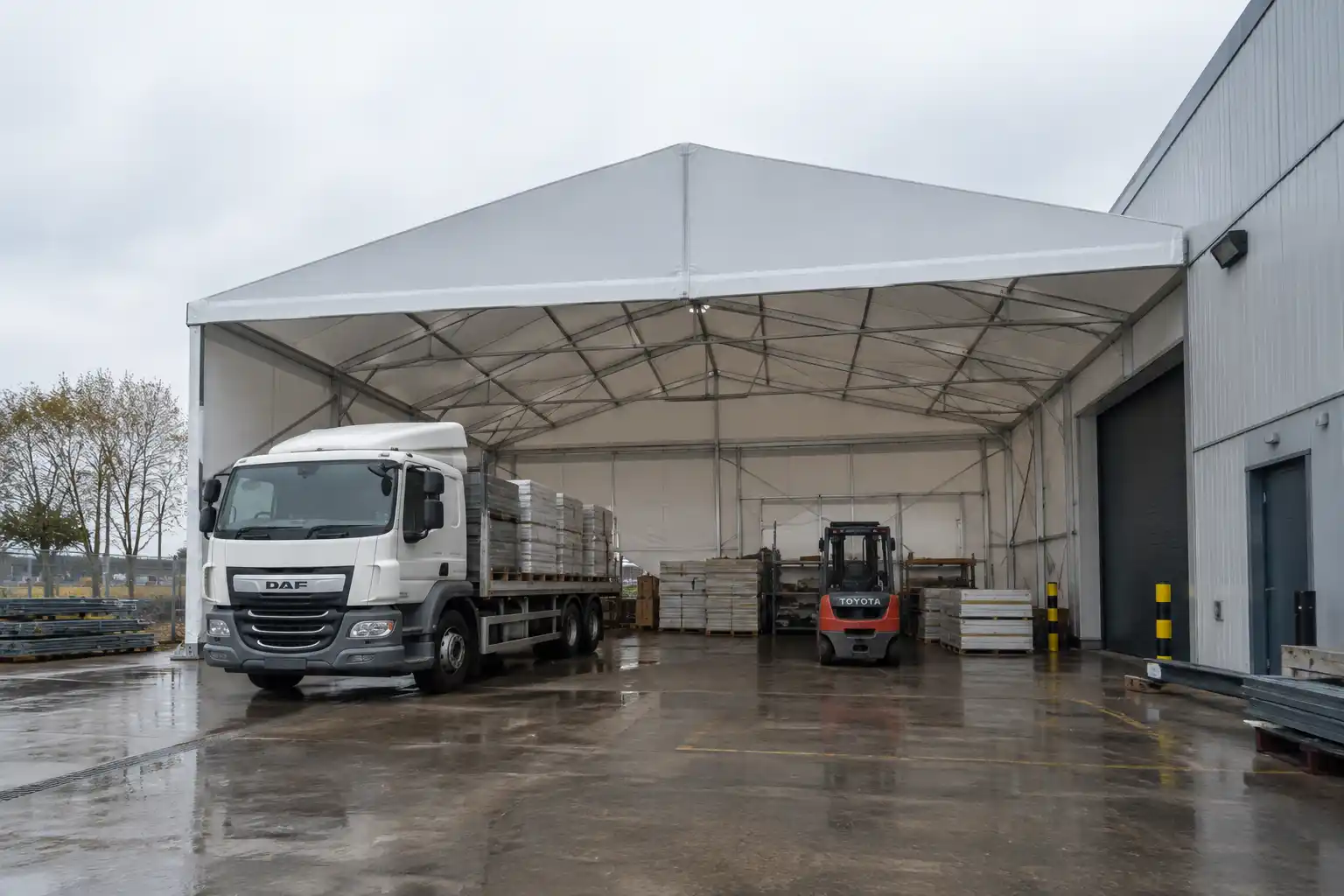
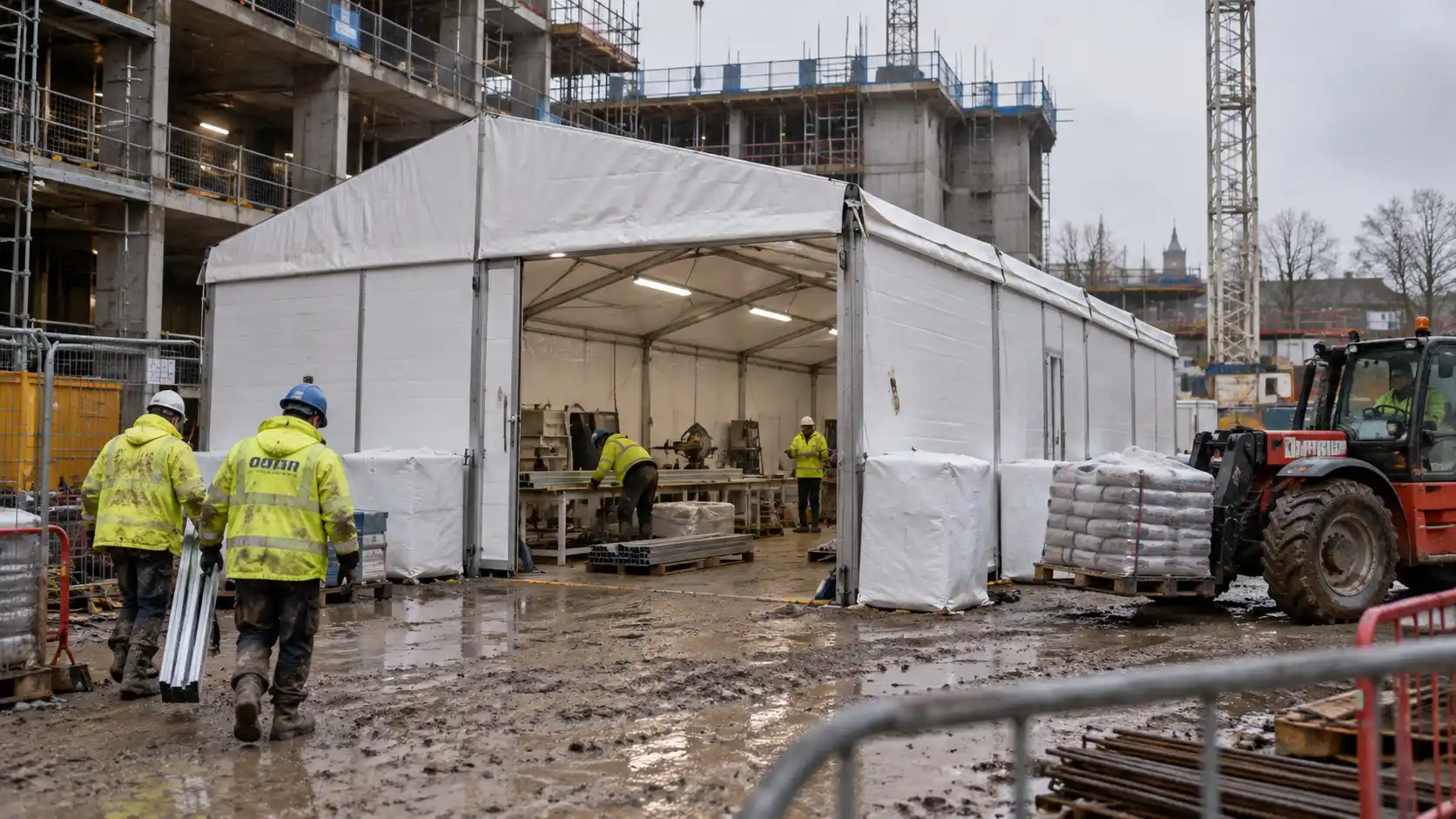
Venues can create temporary Christmas party space where the site is suitable and the structure is specified as a winter-ready event environment. Suitable locations may include lawns, terraces, courtyards, car parks, estate land or areas adjacent to existing buildings, provided access, ground conditions, servicing and guest movement can be managed properly.
A temporary structure can be commercially useful because it allows the venue to expand seasonal capacity without permanent construction. It may help the venue accept larger Christmas party enquiries, create a dedicated festive event space, separate party activity from existing dining or member areas, or make better use of outdoor space during the winter trading period.
However, the structure should not be treated as a standalone cover. A temporary structure for Christmas parties needs to operate as part of the wider venue. Guests need to arrive safely, move comfortably, access toilets and cloakrooms, receive food and drinks efficiently, and leave without confusion or congestion. Staff, suppliers, caterers, AV teams and cleaning teams also need routes and working areas that support repeated event use.
This is where the distinction between a basic marquee and a managed temporary event building becomes important. For venue-side Christmas use, the requirement is not just shelter. It is a warm, dry, guest-ready winter event space that supports the venue’s commercial offer and operational standards.
LM Structures supports venues with temporary event buildings for seasonal venue space, helping teams assess site suitability, winter specification, installation requirements and the practical infrastructure needed for additional event capacity.
The decision should still be grounded in feasibility. A temporary Christmas party venue may not be appropriate for every site, every duration or every guest number. The available space, access routes, ground conditions, utilities, planning context and operational layout all need to be considered before the venue commits to marketing the space.

What does a winter event structure need to include?
A winter event structure needs to include the elements required to make the space warm, stable, safe, operational and commercially presentable throughout the Christmas period. The exact specification will depend on the venue, guest numbers, event format, duration and site conditions, but the core requirements usually extend well beyond the structure itself.
For Christmas party venue space, the specification may need to consider:
- heating suitable for winter event use
- flooring and subfloor appropriate for dining, dancing and repeated footfall
- weatherproof roof and side systems
- linings or insulation where appropriate
- lighting for both atmosphere and safe movement
- power distribution for heating, bars, catering, AV and entertainment
- ventilation and condensation management
- entrance treatments to reduce draughts and protect guest arrival
- emergency lighting and exit routes
- guest access from car parks or existing venue areas
- bars, service points and drinks storage
- toilets and cloakrooms
- catering routes or temporary back-of-house areas
- AV, staging, dance floor and entertainment infrastructure
- waste, cleaning and reset access between events
This specification should be developed around how the venue intends to use the space. A seated festive dinner, shared corporate party, ticketed Christmas event or drinks-led celebration may each place different demands on floor layout, bar position, catering support, cloakroom capacity and guest movement.
Safety and compliance considerations should also be reviewed early. HSE guidance on temporary demountable structures reinforces the importance of safe planning, installation and management of temporary event structures. GOV.UK fire safety guidance for places of assembly also includes marquees, tents and temporary structures, with considerations around escape routes, emergency lighting and fire performance: fire safety risk assessment guidance for small and medium places of assembly.
For venue operators, the practical point is that winter readiness depends on the whole environment, not one individual feature. Heating will be less effective if entrances are exposed, flooring is poorly suited to cold or wet ground, or guest routes bring rain and draughts directly into the space. Lighting will not solve poor access if the route from the car park is unsurfaced or exposed. A well-planned specification considers these factors together.
Venues assessing a more detailed fit-out should also consider the guest-ready temporary event building specification and the wider Compliance & Safety considerations that may apply to public-facing seasonal structures.
How do heating, flooring and weather protection affect guest comfort?
Guest comfort is one of the most important differences between creating Christmas party venue space and installing a temporary structure for warmer-weather use. In winter, guests are more likely to arrive in cold, wet or windy conditions, often after dark. If the structure does not feel warm, dry, stable and easy to enter, the venue experience can be affected before the event has properly begun.
Heating should be considered as part of the whole environment, not as a separate add-on. The size of the structure, entrance position, lining, ventilation, layout, door use and expected guest movement all influence how effectively the space can be kept comfortable. A heated marquee for Christmas parties may still underperform if draughts are not controlled, if the entrance is exposed, or if guests regularly move between cold external areas and the main event space.
Flooring is equally important. Christmas events may involve dining, dancing, bar service, entertainment, repeated guest movement and staff carrying food, drinks or equipment through the space. The floor needs to feel stable, level and appropriate for the event format. Where ground conditions are wet, uneven or cold, the subfloor and surface finish can have a direct effect on comfort, safety and the overall impression of the temporary winter venue.
Weather protection needs to extend beyond the roof and walls of the structure. Guests will judge the experience from the point they leave their car, coach, hotel room or main venue building. A poorly lit or exposed route can undermine the sense of quality, even if the structure itself is well specified. Covered or surfaced access, clear wayfinding, suitable lighting and a protected entrance can help the temporary Christmas party venue feel connected to the rest of the venue rather than detached from it.
Condensation and ventilation should also be considered, especially where large numbers of guests are dining, dancing or moving between heated and colder areas. The aim is not to overcomplicate the specification, but to recognise that heat, moisture, airflow and usage patterns all interact. A winter event structure for venues should be planned as a complete guest environment, not simply as a space with heaters added.
These decisions have commercial consequences. If guests are cold, damp or uncomfortable, the issue is unlikely to be seen as a temporary structure problem. It will be experienced as a venue problem. For corporate Christmas party space, where clients may be booking for employees, customers or senior stakeholders, comfort and reliability can influence feedback, repeat bookings and the venue’s wider festive reputation.
What operational areas need to be planned for Christmas events?
A Christmas party venue structure needs to support the visible guest experience and the less visible operational activity behind it. The more frequently the space is used across the festive period, the more important this becomes.
Guest arrival should be planned first. The venue needs to understand where guests will park or be dropped off, how they will reach the structure, where they will queue, how they will enter, and where coats, bags or reception activity will be managed. If several events are being held across consecutive dates, these routes need to work consistently in different weather conditions and under evening lighting.
Bars and drinks service need careful positioning. A bar placed in the wrong area can create congestion, block circulation or interfere with catering routes. Drinks storage, glass collection, staff access and restocking all need to be considered, particularly for high-volume Christmas parties where demand may peak at arrival, during dinner and after entertainment begins.
Catering routes are another key operational factor. Some venues may serve food from an existing kitchen, while others may need temporary back-of-house space, service areas or covered routes between preparation and guest areas. The structure layout should reduce unnecessary movement through guest zones and allow staff to work efficiently without crossing key circulation points wherever possible.
Toilets, cloakrooms and guest support areas should not be treated as secondary details. These are often the areas where guests experience delay or discomfort if planning is weak. Cloakroom flow matters during arrival and departure. Toilets need to be accessible without creating long or exposed routes. Guest support areas should be easy to find and positioned so they do not disrupt service, entertainment or emergency movement.
Entertainment, staging, AV and dance floor requirements also affect structure planning. Power, rigging considerations, sightlines, floor loading, noise management and supplier access may all influence layout. A festive event programme may involve repeated use by DJs, bands, production suppliers, photographers, caterers, decorators and cleaning teams. The structure needs to support that delivery chain rather than make each event harder to reset.
HSE guidance on venue and site design highlights the need to consider the safety of both visitors and workers, while its guidance on crowd management controls identifies arrival, onsite circulation and leaving as key phases. These points are highly relevant when a venue is adding temporary Christmas party space to an existing site.
For venues reviewing the practical scope of the structure, fit-out and supporting elements, What’s Included can help clarify which parts of the environment need to be considered as part of the wider solution.

How early should venues plan a Christmas party marquee or event structure?
Venues should plan a Christmas party marquee or event structure early enough to confirm feasibility, guest capacity, specification and installation timing before the festive booking window is fully active. The correct lead time will vary, but the need for early planning is consistent because the structure affects sales, operations, safety, fit-out and guest experience.
The first stage is usually feasibility. The venue needs to understand whether the proposed location can support a temporary event structure, how access will work, what ground conditions are like, where services may be needed, and whether the structure can connect sensibly with the existing venue. A site survey can help identify practical constraints before the venue commits to a layout or sales capacity.
Internal approval may also take time. Venue owners, general managers, operations teams, commercial teams and estates teams may all need to understand the scale of the opportunity and the implications for the site. If the venue is part of a hotel group, estate, members’ club or heritage property, there may be additional approvals or stakeholder considerations before the project can move forward.
Specification should then be developed around the intended event format. A shared corporate Christmas party programme may have different requirements from a festive dining extension, a ticketed winter event or a private seasonal celebration. Guest numbers, seating style, entertainment, bar provision, catering routes, toilets, cloakrooms, heating and flooring all need to align before the venue can confidently promote the space.
Planning considerations should also be checked early where duration, location, scale or site sensitivity may be relevant. The Planning Portal notes that temporary buildings may be permitted development only where specific criteria are met, and advises checking with the local planning authority where needed: temporary building planning permission guidance. The article should not be read as planning advice, but it is a reminder that planning should not be left until after the Christmas programme has been sold.
Installation timing is another practical constraint. The structure may need to be installed while the venue is still operating, which means delivery access, working areas, guest routes and existing bookings all need to be coordinated. The installation window also needs to allow time for flooring, heating, lighting, bars, toilets, AV, interior fit-out, testing and handover before the first event.
For venues concerned about active trading during installation, installing temporary event space without disrupting venue operations should be considered alongside the project programme. LM Structures’ Planning & Installation approach also supports early coordination around surveys, sequencing and practical delivery requirements.
The commercial value of early planning is straightforward. It gives the venue a stronger basis for confirming capacity, pricing packages, managing internal approvals and selling dates with confidence. It also reduces the likelihood of rushed changes once marketing, enquiries or confirmed bookings are already underway.
When does a Christmas structure become seasonal or semi-permanent?
A Christmas structure may start as a short-term event solution, but the duration can quickly change the nature of the decision. A structure used for one or two events creates different considerations from one installed for several festive weekends, a full winter programme or repeated annual use.
For a short programme, the main focus may be installation timing, guest comfort, access and event delivery. For a full Christmas season, the venue also needs to consider how the structure will perform across repeated use. Heating, flooring, entrances, toilets, cloakrooms, cleaning, waste routes and maintenance access all become more important when the structure is used repeatedly rather than occasionally.
Repeated seasonal use can also influence commercial justification. If the venue expects to recreate the same temporary Christmas party venue each year, the decision may become less about one season and more about a recurring winter capacity strategy. That does not automatically make the structure permanent, but it does mean the venue should think carefully about specification, planning, maintenance, storage, access and how the space sits within the wider estate.
Duration can also affect planning sensitivity. A short installation may be treated differently from a structure retained for a full season or repeated annually, depending on the site and local authority context. GOV.UK guidance explains that permitted development rights are subject to conditions and limitations, so venues should avoid assuming that temporary use removes the need for planning consideration: permitted development rights guidance.
For a more detailed review of duration-based decision-making, venues should consider how long a venue should keep a temporary event structure in place. Where planning sensitivity is part of the decision, planning permission for a seasonal marquee should also be reviewed early.
Longer or repeated winter use may also require more attention to checks, servicing and condition monitoring. A structure used across multiple Christmas events is part of the venue’s operating environment for that period, not a one-off installation that can be forgotten after opening night. LM Structures’ Maintenance & Servicing support can help venues think about ongoing reliability where seasonal or longer-term use is being considered.
What matters most when planning a temporary Christmas venue?
A temporary Christmas party venue can create valuable seasonal capacity, but it needs to be planned as a complete winter event environment. Heating, flooring, lighting, access, weather protection, catering support, toilets, bars, cloakrooms and guest flow all need to work together before the space can be sold confidently.
The most important decision is not whether a structure can physically fit on the site. It is whether the venue can create a space that supports its commercial offer, protects guest comfort and works operationally across the full festive programme. That means considering the guest journey, staff routes, supplier access, safety factors, installation timing and duration before the venue commits to packages, capacity or dates.
For venue decision-makers, this approach reduces uncertainty. It helps the venue understand whether additional Christmas party space is a realistic commercial opportunity, what needs to be specified, and where further planning may be required before the project moves forward.
Next step
When your venue has a clear Christmas trading opportunity but limited permanent event space, the next step is to assess whether a winter-ready temporary event structure can be planned, installed and operated to the standard your guests and commercial team need.
At this stage, early engagement is useful because the decision affects more than structure size. Site suitability, heating, flooring, access, guest flow, catering support, toilets, installation timing and seasonal duration all influence whether the space can be marketed and delivered with confidence.
LM Structures helps venues explore Venue Marquees & Temporary Event Buildings as practical, guest-ready solutions for additional Christmas party venue space. The aim is to help you understand what is feasible before the festive programme is sold, so the structure supports your venue operation rather than adding uncertainty to it.
Ready to find out more? Speak to a member of the team on 0333 358 4989 or email enquiries@lmstructures.co.uk
Written by LM Structures, specialists in temporary buildings, venue marquees and semi-permanent structures for commercial, hospitality and event environments.
Christmas party venue space FAQs
Planning requirements depend on duration, location, use, site context and local authority interpretation. Venues considering a structure for a full season, repeated annual use or a sensitive site should investigate planning considerations early rather than assuming temporary use is automatically exempt.
In most winter event scenarios, heating is essential for guest comfort and commercial viability. Heating should be considered alongside flooring, entrances, linings, ventilation and layout so the space remains comfortable during arrival, dining, entertainment and departure.
Venues should plan early enough to confirm feasibility, specification, installation timing and guest capacity before the festive booking window is fully active. Larger or more complex structures may need additional lead time for planning checks, access coordination, fit-out and installation sequencing.
A temporary Christmas party venue usually needs heating, suitable flooring, weather protection, lighting, power, safe entrances, bars, toilets, cloakrooms and catering support. The exact specification depends on guest numbers, event format, site conditions, duration and how the space connects to the existing venue.
Yes, a venue can create additional Christmas party space with a temporary event structure where the site is suitable and the structure is planned for winter guest use. The venue will need to consider heating, flooring, lighting, weather protection, access, catering, toilets and safe guest movement before selling the space.