How to Manage a temporary warehouse for peak demand
When stock volumes rise ahead of a seasonal peak, the pressure is rarely limited to finding somewhere to put extra pallets. The real challenge is keeping goods moving, orders accurate and fulfilment stable while the warehouse is working harder than usual.
In Short
Warehouse overflow during peak demand should be managed before stock volume starts disrupting access, picking, dispatch and fulfilment. A temporary warehouse for peak demand can provide additional storage capacity, but it must be planned around layout, stock movement, vehicle access and operational flow rather than treated as spare space alone.
At a glance
- Peak demand overflow affects warehouse flow, not just available storage space.
- Early planning helps prevent congestion, fulfilment delays and stock mismanagement.
- Temporary warehousing can support seasonal peaks when integrated into live operations.
- Layout, access, stock movement and timing are critical to whether extra capacity works.
- The right approach depends on stock type, site conditions, handling methods, duration and operational requirements.
Table of contents – in this article
Why warehouse overflow becomes a problem during peak demand
Peak demand creates pressure because stock volume, movement frequency and fulfilment expectations all increase at the same time. During retail peaks, ecommerce surges, manufacturing cycles or contract-driven fulfilment periods, the warehouse is not only holding more stock; it is often processing more inbound deliveries, more picks, more replenishment movements and more outbound dispatches.
That is why warehouse overflow management should not be assessed purely in square metres. A building may still have places where stock can physically be placed, but that does not mean the warehouse is operating comfortably. If additional inventory starts to interfere with access routes, picking locations, loading areas or staging zones, the issue has already moved beyond simple storage capacity.
This is where many peak-period problems begin. Stock is placed wherever there appears to be room, rather than where it supports the movement pattern of the operation. Goods-in areas become temporary holding zones. Slow-moving stock competes with fast-moving lines. Picking teams spend longer navigating the same footprint. Dispatch areas lose the space needed to prepare outbound loads efficiently.
For Operations Managers, the key question is not only “Do we have enough space?” It is “Can the warehouse still operate safely, accurately and efficiently when this additional stock arrives?” If the answer is uncertain, then the business may need to consider [temporary warehousing and storage solutions] (Temporary Warehousing and Storage) before congestion starts affecting fulfilment performance.
Peak demand is often commercially important because it coincides with periods of increased revenue opportunity, higher customer expectations and greater internal pressure to maintain service levels. A poorly managed warehouse space shortage can turn a predictable opportunity into a period of slower throughput, additional handling, stock visibility problems and avoidable operational strain.
A planned approach gives the business more control. Instead of reacting once the warehouse is already overloaded, decision-makers can assess what stock needs additional capacity, where that capacity should sit, how goods will move between areas and what level of temporary storage capacity will protect day-to-day flow.
What happens when your warehouse is too full to operate efficiently?
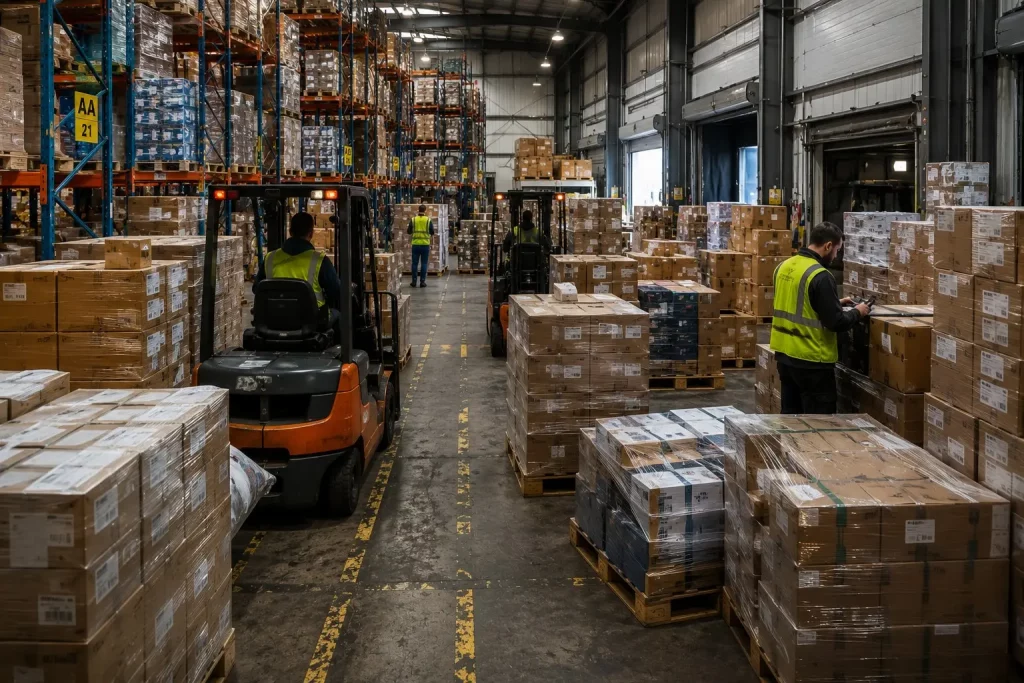
A warehouse can become inefficient before it appears completely full. This is one of the most important points to recognise during peak demand planning. Once stock density starts affecting movement, visibility and access, the warehouse may still be functioning, but it is no longer supporting the operation as it should.
The first impact is often congestion. Aisles become harder to navigate, forklifts have less room to manoeuvre, and temporary stock placements begin to interfere with normal routes. This affects more than convenience. The HSE guidance on workplace transport routes highlights the importance of suitable internal traffic routes and safe separation between vehicles and pedestrians, which becomes more difficult when overflow stock starts encroaching on movement space.
Picking efficiency can also decline. If stock is stored outside its usual location, teams may spend longer finding items, checking inventory, moving goods out of the way or correcting stock placement issues. During a busy period, those small delays can quickly multiply across hundreds or thousands of picks.
Dispatch flow is another common pressure point. When outbound staging areas are used for overflow stock, the space needed to organise, check and load orders becomes restricted. This can slow despatch preparation and increase the risk of errors, especially where different product lines, customer orders or delivery routes need to be kept clearly separated.
Goods-in can also become more difficult to control. If incoming deliveries cannot be received, checked and moved into storage efficiently, stock may remain in loading or holding areas for longer than planned. The HSE guidance on loading and unloading reinforces the need to manage these activities carefully, which is harder when loading areas are under pressure from excess stock.
Stock control may suffer as well. Overflow storage that is not properly planned can make inventory harder to locate, rotate and protect. Products may be placed in areas that are unsuitable for their handling requirements, security needs or dispatch priority. This can create problems with accuracy, stock condition and operational confidence at the point when the business needs the warehouse to be most reliable.
For commercially accountable teams, these operational effects matter because they can reduce throughput during the period when demand is strongest. The risk is not simply that the warehouse looks crowded. The risk is that order fulfilment slows, staff workflows become less efficient and customer service levels become harder to maintain.
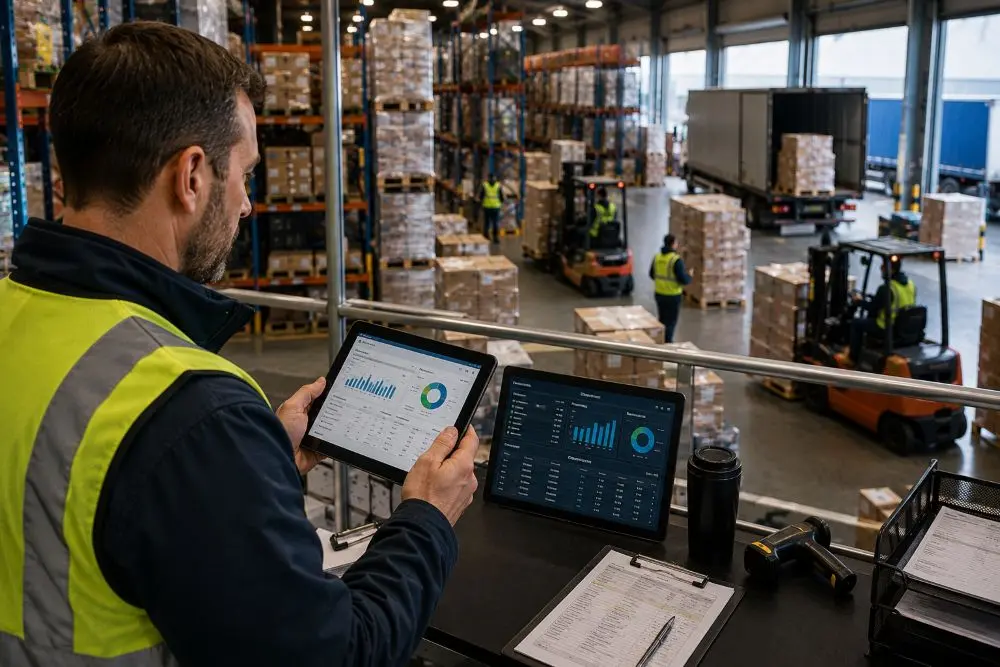
How can you spot overflow risk before it disrupts fulfilment?
Overflow risk usually becomes visible before the warehouse reaches failure point. The challenge is recognising the warning signs early enough to act while there is still time to plan a controlled solution.
One of the first signs is the use of areas that were not intended for storage. If loading bays, walkways, production-adjacent areas, dispatch zones or temporary corners are being used to hold stock, the operation may already be compensating for a capacity problem. These areas may appear to solve a short-term issue, but they can quickly interfere with movement, safety and workflow.
Another warning sign is increased handling. If teams are repeatedly moving the same goods to access other stock, clear space or prepare orders, the warehouse is no longer flowing cleanly. Extra handling adds time, increases labour pressure and can raise the risk of damage, especially during high-volume periods when staff and equipment are already stretched.
Reduced picking performance is also important. Slower pick rates, longer search times, more location queries or increased substitution and correction activity may indicate that the storage layout is no longer supporting fulfilment. In ecommerce or retail peak environments, these symptoms can have a direct impact on order turnaround.
Staging pressure should also be monitored. If goods-in, replenishment, packing or dispatch staging areas are regularly full, the warehouse may be losing the buffer space it needs to operate efficiently. Once staging space is compromised, teams often have fewer options for sequencing work in a controlled way.
Common early warning signs include:
- stock being placed outside normal storage zones
- temporary use of loading bays or dispatch areas for storage
- increased time spent locating or moving inventory
- more frequent double-handling of the same goods
- reduced picking efficiency during high-volume periods
- blocked or narrowed access routes
- pressure on goods-in, packing or outbound staging areas
- difficulty separating fast-moving, slow-moving or reserve stock
- increased concern around stock damage or handling conditions
These indicators matter because they show that the warehouse is becoming operationally constrained, not merely busy. At this stage, the business may still have enough time to assess short term warehouse storage for peak demand, consider stock categories, plan access routes and decide whether a temporary storage area can support fulfilment rather than add complexity.
This is also the point where the distinction between seasonal overflow and sustained growth becomes important. If the pressure is tied to a defined peak period, temporary capacity may be appropriate. If the warehouse is under constant pressure because the business has outgrown its footprint, the issue may sit closer to warehouse space problems caused by business growth.
Why using spare internal areas for stock can create hidden risks
When warehouse pressure increases, the quickest response is often to use whatever internal space appears available. Dispatch areas, temporary corners, widened aisle edges, production-adjacent space or external hardstanding may all start absorbing overflow stock during busy periods.
The problem is that these areas were rarely designed to function as structured storage locations. What begins as a temporary workaround can gradually interfere with movement, visibility and operational sequencing across the wider warehouse.
One of the biggest risks is restricted access. Overflow stock placed near traffic routes, loading doors or staging areas can narrow movement space for forklifts, pallet trucks and picking teams. The HSE warehousing and storage guidance reinforces the importance of maintaining safe movement and controlled workplace transport routes within active warehouse environments.
There is also a workflow risk. If stock is placed in areas that do not align with normal picking, replenishment or dispatch patterns, teams may spend more time moving around congestion or relocating products. During peak periods, those inefficiencies can reduce throughput precisely when the operation needs to move quickly and consistently.
Temporary overflow locations can also create stock management problems.
Inventory held outside normal storage zones may be:
- harder to track accurately
- more difficult to rotate properly
- separated from standard picking logic
- exposed to unsuitable handling conditions
- vulnerable to accidental damage or unnecessary movement
This becomes especially important where different stock categories require specific handling methods, dispatch priorities or storage conditions.
Operationally, the issue is not simply that overflow stock exists. The issue is whether the additional stock can be integrated into the operation without disrupting the systems that allow the warehouse to function efficiently.
This is why businesses approaching a seasonal peak often need to evaluate whether a dedicated overflow solution would provide greater operational control than continuing to absorb pressure inside the existing footprint.
What are the options for managing extra stock during busy periods?
There is no single approach to warehouse overflow management during peak demand. The right solution depends on stock profile, site constraints, fulfilment patterns, operational timelines and how long the additional pressure is expected to last. Some businesses begin by reconfiguring internal space.
This may involve:
- adjusting racking layouts
- consolidating slower-moving inventory
- reallocating storage zones
- increasing storage density in selected areas
This can work where the existing warehouse still has operational flexibility. However, there is usually a limit to how much additional stock can be absorbed before movement efficiency begins to decline. Other operations reduce the amount of stock held on-site.
This may involve:
- increasing delivery frequency
- shortening replenishment cycles
- staggering inbound deliveries
- adjusting supplier scheduling
These approaches can reduce pressure where supply-chain responsiveness allows it, although they may not be realistic during major retail or ecommerce peaks when inventory buffers are intentionally increased.
Off-site storage is another option. This can help businesses move reserve stock away from the main operation, particularly where overflow demand is temporary.
However, the practical impact depends on:
- transport distance
- retrieval speed
- stock visibility
- coordination requirements
- handling complexity
If stock must move constantly between locations, operational efficiency may still suffer.
In some cases, businesses may consider outsourced warehousing or third-party storage. That may suit operations where stock movement patterns are relatively simple or where fulfilment can be separated operationally. For other warehouses, especially those managing fast-moving inventory, split operations can create additional coordination pressure.
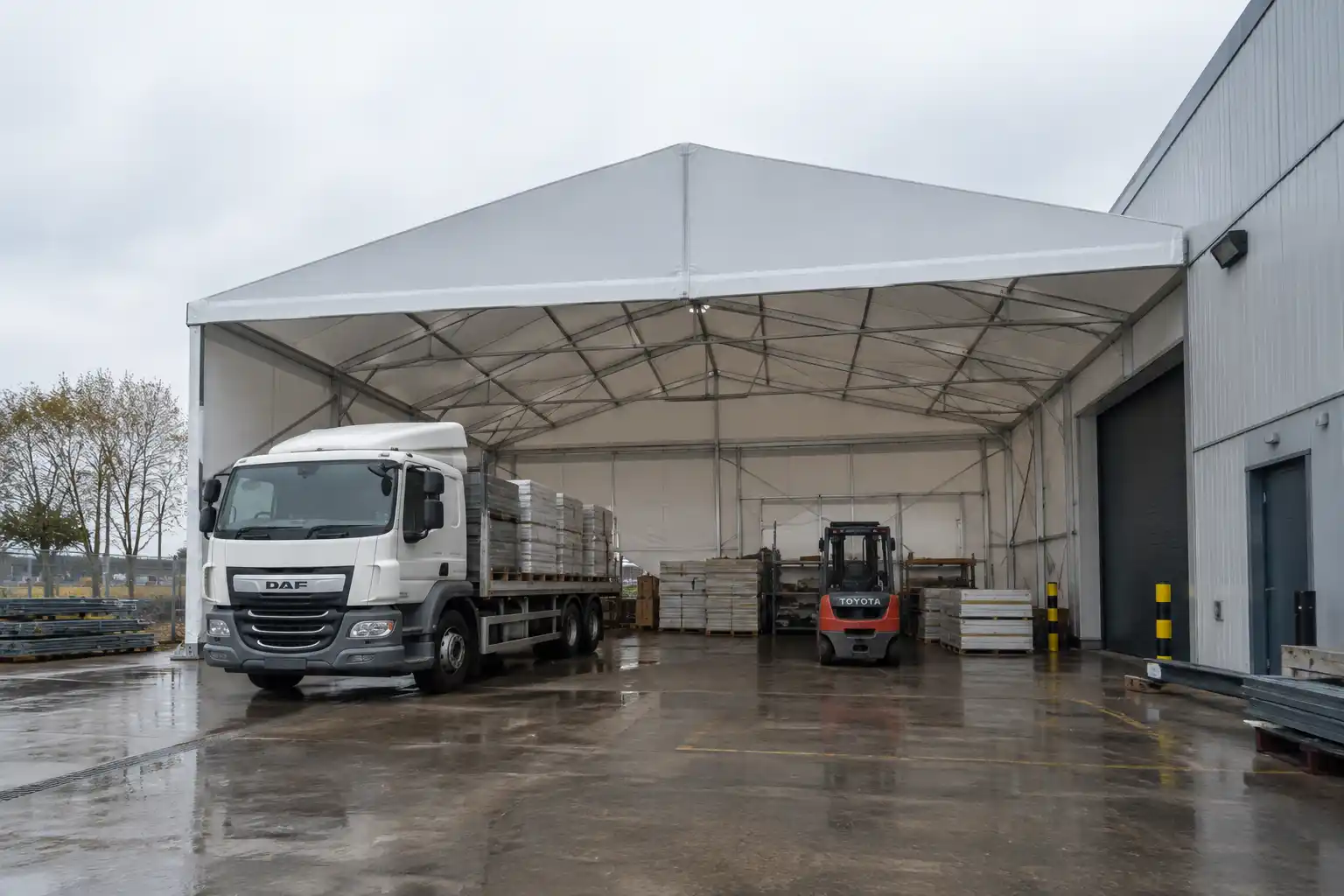
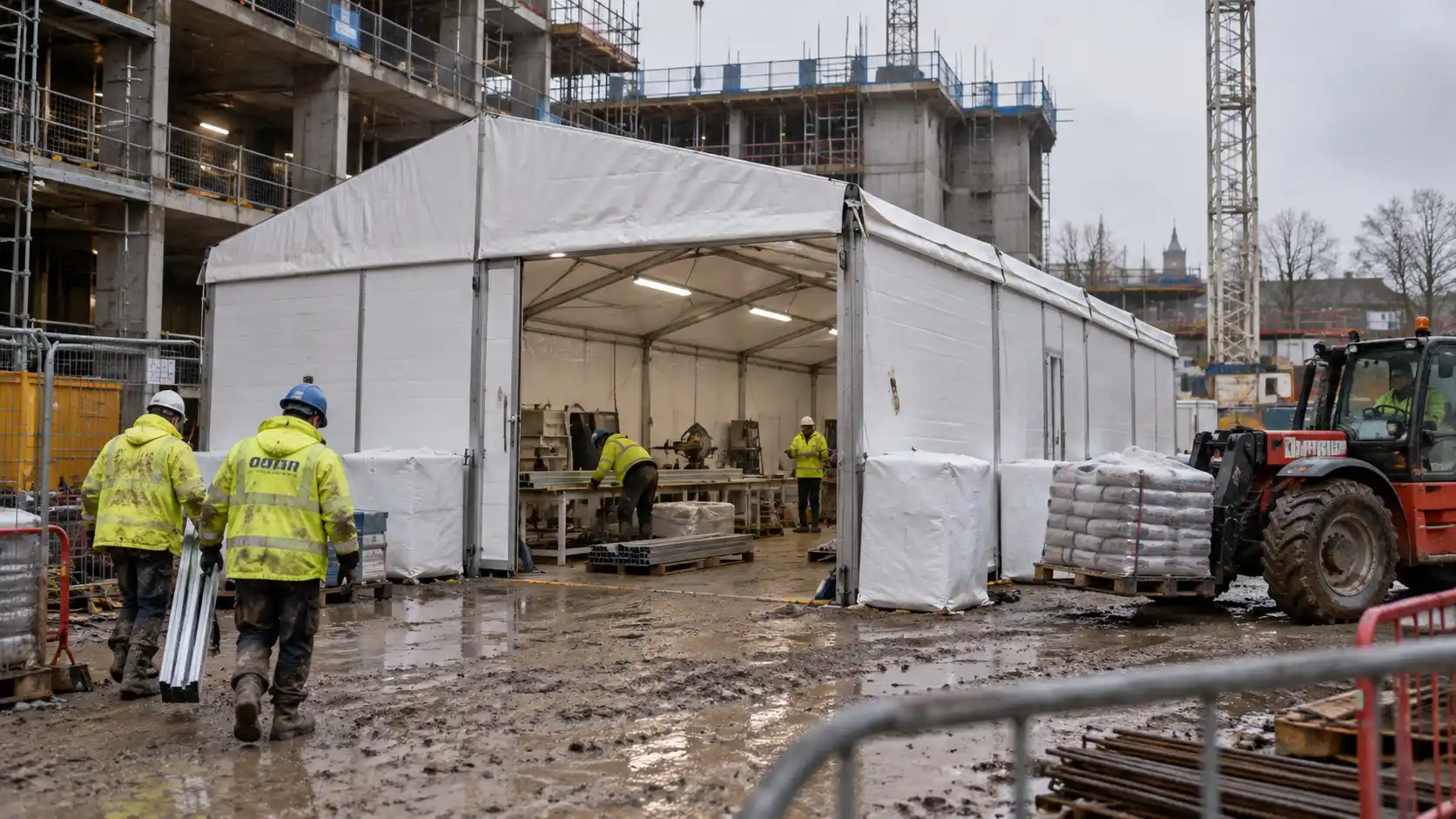
This is where temporary warehousing solutions become relevant. Instead of relocating operations entirely, a temporary structure can provide additional short-term warehouse expansion capacity close to the live operation itself. The benefit is not simply additional storage volume. The value comes from preserving movement flow, maintaining operational sequencing and reducing pressure on the existing warehouse footprint.
The most appropriate approach depends on:
- how quickly stock volume is increasing
- how integrated fulfilment operations need to remain
- whether overflow is seasonal or ongoing
- how much access and movement flexibility the site allows
- the operational impact of moving stock away from the core warehouse
Where the demand spike is approaching faster than expected, businesses may also need to consider adding warehouse capacity quickly without permanent construction.
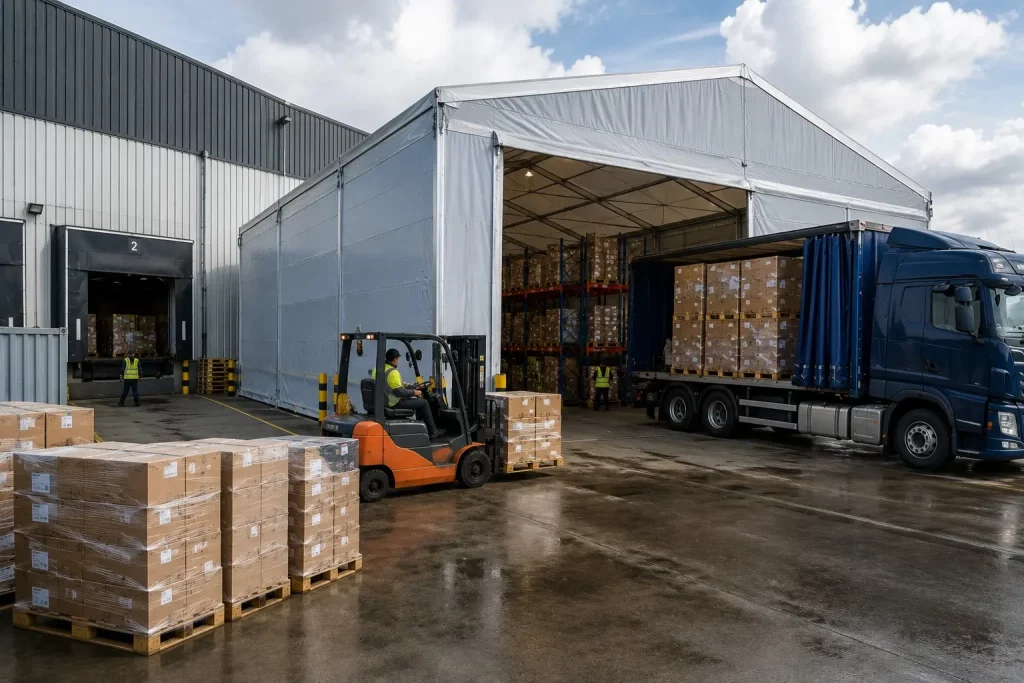
Can temporary warehousing help during seasonal peaks?
Yes, temporary warehousing can help during seasonal peaks when additional capacity is planned around the realities of warehouse operations rather than treated as spare covered space.
This distinction matters. A temporary warehouse for peak demand is most effective when it supports:
- stock movement
- fulfilment sequencing
- vehicle access
- handling methods
- inventory visibility
- operational flow
The role of temporary warehousing is not simply to hold excess stock. It is to reduce pressure on the primary warehouse so the wider operation can continue functioning efficiently during a period of increased activity.
For some businesses, the temporary structure may hold reserve inventory or slower-moving stock so that fast-moving lines remain easier to access within the main warehouse. In other environments, the temporary building may support overflow pallet storage, seasonal product ranges or incoming stock linked to a defined promotional or fulfilment cycle.
This approach can be particularly useful where:
- seasonal peaks are predictable
- the business does not require permanent expansion
- existing warehouse infrastructure remains viable outside peak periods
- relocation would create unnecessary disruption
- additional operational flexibility is needed for a defined timeframe
Temporary warehousing can also provide more operational continuity than relying on fragmented overflow arrangements spread across unsuitable internal areas or remote storage locations.
However, suitability depends heavily on planning.
The structure must align with:
- the type of stock being stored
- handling requirements
- loading arrangements
- forklift movement
- dispatch sequencing
- operational access
- site layout constraints
This is why temporary storage should be evaluated as part of the warehouse system rather than as an isolated structure decision.
Businesses assessing what makes a temporary warehouse suitable for storage operations often discover that usability, access and movement efficiency matter more than the headline footprint alone.
A properly integrated temporary warehousing solution can help businesses maintain throughput and stock control during predictable peaks without committing to permanent construction or relocating the operation entirely.
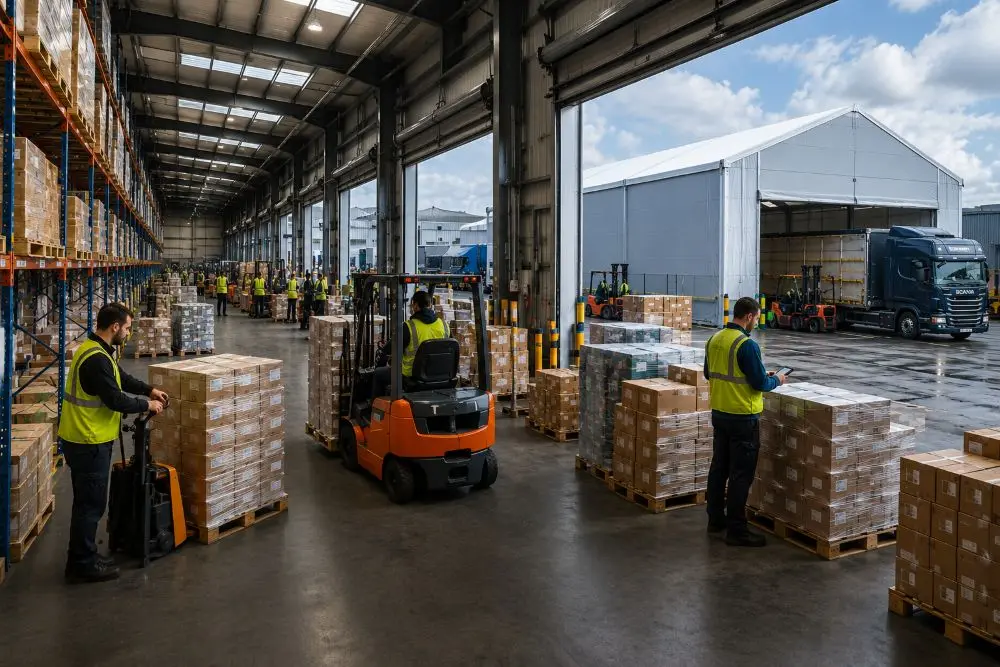
How should temporary storage be integrated into warehouse operations?
Temporary storage works best when it supports the existing warehouse logic rather than competing with it. The objective is to reduce pressure on the live operation while preserving clear movement patterns, stock visibility and fulfilment efficiency.
The first decision is usually determining what stock should move into the temporary space.
In many peak-demand environments, businesses use temporary warehouse storage for operational overflow linked to:
- reserve inventory
- seasonal product lines
- slower-moving stock
- bulk pallet storage
- inbound overflow
- specific product categories with predictable demand cycles
This allows the main warehouse to retain clearer access to fast-moving inventory and active fulfilment areas.
Movement between the primary warehouse and temporary storage also needs planning. If stock must constantly shuttle back and forth without structure, the operation may simply replace one form of inefficiency with another. The temporary space should therefore support a defined operational role rather than acting as an unstructured overflow area.
Important integration considerations include:
- how stock will be transferred between locations
- whether inventory systems can maintain visibility across both spaces
- how replenishment will be managed
- where picking responsibility sits
- how goods-in and dispatch sequencing will work
- whether forklift routes remain efficient and safe
- how staff movement will be controlled during busy periods
Operational sequencing is particularly important. During peak demand, warehouses often lose efficiency because too many activities are competing for the same footprint at the same time. Separating reserve or overflow stock into a structured temporary area can help preserve cleaner movement patterns within the core warehouse itself.
Physical proximity also matters. Temporary warehousing positioned close to the existing operation can reduce unnecessary transport and handling pressure compared with remote overflow storage arrangements.
The value of temporary warehousing therefore comes less from the building itself and more from how effectively it supports:
- operational flow
- stock accessibility
- fulfilment reliability
- movement efficiency
- warehouse control during high-volume periods
What layout, access, and stock movement factors need planning?
The effectiveness of temporary warehousing depends on whether the additional capacity can operate as part of the live warehouse environment. Extra space alone is not enough if vehicles cannot reach it efficiently, stock cannot move safely, or the layout creates additional handling pressure.
Access planning is usually one of the first considerations. The operation needs to assess:
- how delivery vehicles will approach the temporary structure
- whether forklift routes remain practical
- how goods will move between the primary warehouse and overflow space
- whether loading and unloading activity can take place without disrupting normal traffic flow
The HSE guidance on workplace transport routes reinforces the importance of suitable vehicle routes and safe movement within warehouse environments, particularly during periods of increased operational pressure.
Layout planning is equally important. A temporary structure should support the intended storage and handling method rather than forcing inefficient movement patterns.
Considerations may include:
- pallet configuration
- aisle spacing
- racking requirements
- picking access
- replenishment flow
- stock rotation requirements
- staging space
- separation between fast-moving and reserve stock
The type of stock being stored also affects suitability. Bulk pallet storage, reserve inventory and slower-moving stock may all have different access and handling requirements. A temporary storage arrangement that works well for one category may create inefficiencies for another.
Surface conditions and operational infrastructure also influence viability.
Businesses may need to assess:
- ground conditions
- drainage
- lighting
- power requirements
- security measures
- weather protection
- proximity to existing warehouse operations
These considerations are particularly important where the temporary structure is expected to support regular forklift movement or sustained warehouse activity over a busy trading period.
Operational usability should remain the priority throughout planning. The most effective seasonal warehouse storage arrangements are not necessarily the largest. They are the ones that allow the operation to maintain efficient stock movement and fulfilment flow under increased pressure.
When should temporary warehouse capacity be arranged before peak demand?
The best time to plan additional warehouse capacity is before overflow begins affecting operational flow.
In practice, this means reviewing forecasts early enough to identify when stock volume is likely to exceed comfortable operating capacity rather than waiting until the warehouse is already congested. Once overflow starts disrupting access, staging or fulfilment activity, the business usually has fewer practical options and less time to implement a controlled solution.
Planning early gives Operations Managers more flexibility to:
- assess site suitability
- evaluate movement patterns
- determine stock allocation
- prepare operational workflows
- coordinate installation timing
- maintain continuity during implementation
It also reduces the likelihood of reactive decision-making driven by immediate operational pressure.
The required lead time will vary depending on:
- the scale of additional capacity required
- site conditions
- access constraints
- operational complexity
- stock handling requirements
- the duration of the expected peak
Some operations may only require relatively modest overflow storage for a defined seasonal increase. Others may need a more integrated temporary warehousing arrangement supporting significant stock movement and fulfilment activity over several months.
The important point is that temporary warehousing is most effective when it forms part of structured peak-period planning rather than a last-minute response to congestion.
Businesses that delay the decision until the warehouse is already under severe pressure may find themselves managing:
- reduced picking efficiency
- restricted access
- increased handling complexity
- workflow disruption
- higher operational strain during the busiest period of the year
Early planning helps preserve operational control and allows the business to evaluate what type of peak demand storage solutions will support fulfilment performance without introducing unnecessary disruption.
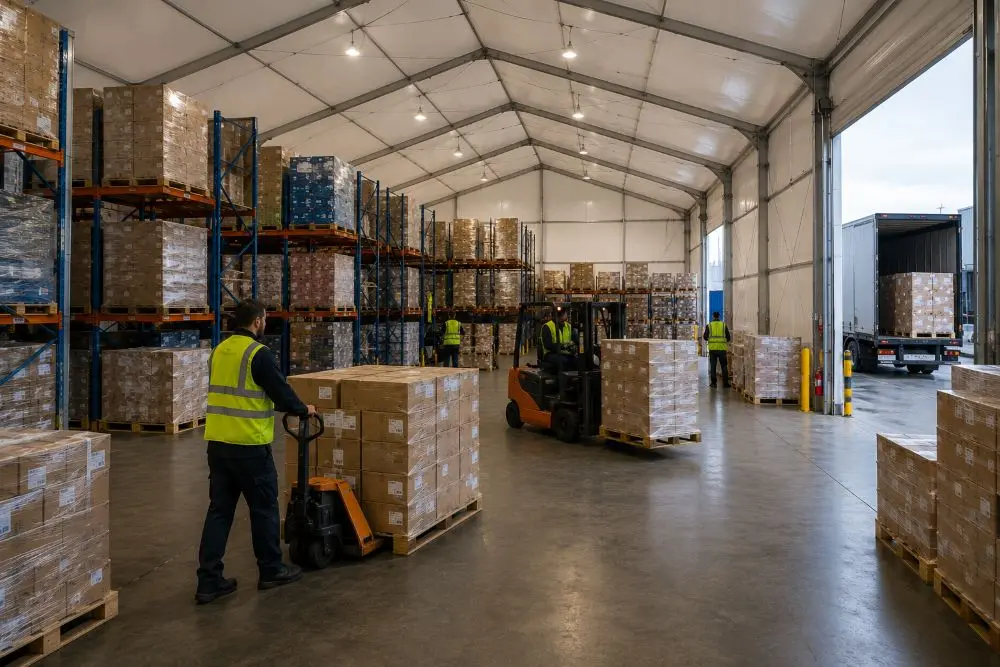
Building a more resilient peak-period storage plan
Peak demand overflow is easier to manage when it is treated as an operational planning issue rather than a last-minute space problem.
Warehouses rarely become inefficient because stock exists alone. Problems usually emerge when additional inventory starts interfering with movement, access, fulfilment sequencing and warehouse control. By the time aisles are congested, staging areas are overloaded and teams are repeatedly moving stock to maintain flow, operational flexibility has already started to narrow.
A more resilient approach focuses on identifying pressure early and planning additional capacity around the realities of warehouse operations.
That includes:
- understanding where overflow risk begins
- protecting movement routes
- maintaining stock visibility
- preserving picking and dispatch efficiency
- ensuring overflow storage supports the wider warehouse system
For many businesses, temporary warehousing can provide a practical way to manage seasonal warehouse storage pressure without committing to permanent expansion or disrupting the existing operation unnecessarily.
The most effective approach is usually the one that:
- matches the stock profile
- aligns with operational flow
- supports safe movement
- preserves fulfilment efficiency
- gives the warehouse enough flexibility to absorb temporary increases in demand without losing control of day-to-day operations
What matters most as peak demand approaches?
As peak trading periods get closer, the priority should be maintaining operational control before congestion begins affecting fulfilment performance.
Businesses often focus first on whether there is technically enough room to hold additional stock. In practice, the more important question is whether the warehouse can continue functioning efficiently once inventory levels, picking pressure and dispatch activity all increase together.
That is why overflow planning should focus on:
- movement efficiency
- stock accessibility
- loading and dispatch flow
- handling practicality
- operational sequencing
- safe access throughout the site
A temporary warehouse can support these objectives when it is planned as part of the operational workflow rather than treated as isolated overflow space.
Where demand forecasts already indicate pressure on the existing warehouse footprint, early planning gives the business more opportunity to assess suitable layouts, stock allocation strategies and operational integration before the peak period begins.
Next step
If your operation is already forecasting increased stock volume ahead of a seasonal peak, this is usually the stage where additional storage capacity should be assessed before warehouse flow becomes constrained.
The advantage of planning early is not simply gaining more space. It is having enough time to evaluate how temporary capacity can support stock movement, fulfilment sequencing, vehicle access and operational efficiency during the busiest period of the year.
Explore temporary warehousing and storage solutions to understand how additional capacity can be planned around real warehouse operations, site constraints and peak-demand fulfilment pressure.
If you’d like to find out more, please call us on 0333 358 4989 or email enquiries@lmstructures.co.uk
Written by LM Structures, a UK provider of temporary warehousing and storage solutions for commercial, industrial, logistics and operational environments.
Temporary warehouse for peak demand FAQs
Not always. Temporary warehousing is most suitable where additional capacity can be integrated safely and efficiently into the live operation. If the underlying issue is poor warehouse layout, inefficient stock control or process bottlenecks, those operational issues may also need addressing.
Unmanaged overflow can lead to blocked access routes, slower picking, reduced stock visibility, additional handling pressure and dispatch disruption. During high-demand periods, these issues can reduce throughput and increase operational strain when fulfilment performance matters most.
Planning should begin as soon as forecasts show that stock levels are likely to exceed comfortable operating capacity. Early assessment allows time for site evaluation, layout planning, operational integration and installation coordination before congestion begins affecting warehouse performance
Yes, temporary warehousing can support seasonal stock increases by providing additional short-term storage capacity during predictable demand peaks. It is most effective when planned around stock type, handling requirements, vehicle access and the operational relationship between the temporary structure and the main warehouse.
The most effective approach is to plan additional usable storage capacity before congestion starts affecting fulfilment activity. Temporary warehousing can help when it is integrated into stock movement, access routes, dispatch flow and operational sequencing rather than used as unmanaged overflow space.