How Long Can Temporary Buildings Be Used After an Emergency?
When a temporary building is installed after a fire, flood, storm or other disruption, the immediate pressure is usually continuity. Once operations are stabilised, the next question is how long that temporary solution can remain in place.
In Short
Temporary buildings can often be used for weeks, months or longer-term recovery periods, depending on their structure, use, site conditions and planning position. The key is to treat duration as a planning decision, not an assumption: longer use may require local authority input, regulatory consideration and a structure specified for sustained operation.
Recovery Planning at a Glance
- Temporary buildings are not automatically short-term solutions; many can support operations for extended recovery periods.
- Duration depends on the building type, intended use, site conditions, maintenance requirements and planning position.
- UK planning rules can affect how long a temporary building may remain in place, so local authority guidance should be checked early.
- Longer-term use should be planned around operational continuity, safety, access, utilities and changing business requirements.
- A well-specified temporary building can help bridge the gap between immediate emergency response and full reinstatement.
Table of contents – in this article
How long can temporary buildings be used after an emergency?
Temporary buildings can be used for different periods depending on the recovery scenario. In some cases, they may only be needed for a few weeks while a specific area is repaired or cleared. In others, they may support operations for several months, a year or longer while reinstatement, insurance processes, refurbishment or rebuild work continues.
The important point is that “temporary” does not mean “brief”. It means the building is not intended to be a permanent asset in the same way as a new fixed building, but it can still form part of a structured medium-term recovery plan. For businesses dealing with operational disruption, that distinction matters.
After an emergency, the recovery timeline is often uncertain. Fire damage may require investigation, strip-out, reinstatement and certification before a building can be fully used again. Flood damage may involve drying, decontamination, repair and monitoring. Storm damage may affect roofs, access routes, loading areas or structural elements. In each case, the temporary building duration should be aligned with the realistic recovery programme, not only the first few days of disruption.
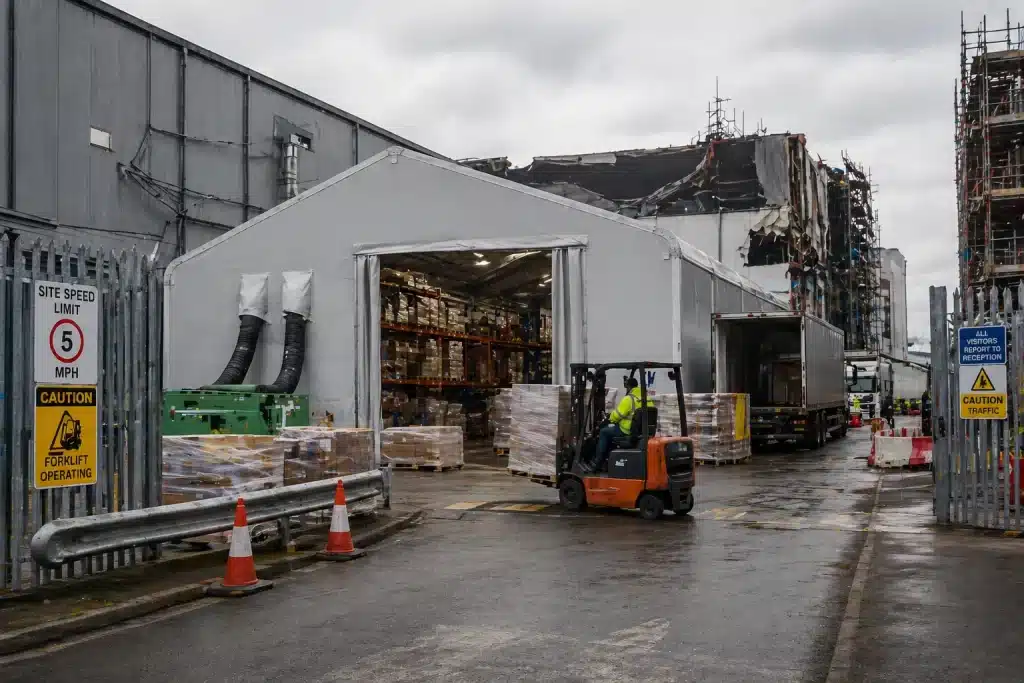
This is where business continuity temporary buildings can support a more controlled recovery process. Rather than simply providing a short-term shelter, the right temporary building can help maintain storage, production, dispatch, welfare, office or customer-facing functions while the main site is being restored.
Duration also needs to be considered commercially. If a business underestimates how long it will need temporary space, it may face further disruption later: moving stock twice, reconfiguring operations unnecessarily, or needing to source another solution under pressure. For operations managers, facilities teams and business owners, the more useful question is not only “How long can it stay?” but “How long do we need it to support the operation safely and effectively?”
Are temporary buildings only short-term solutions?
Temporary buildings are often associated with immediate response, but they are not limited to very short-term use. Many are used as medium-term or longer-term operational spaces where businesses need continuity without committing immediately to permanent construction.
The misconception usually comes from the word “temporary”. In practice, temporary buildings sit between short-term event structures and permanent construction. They can be more robust and operationally suitable than a lightweight event structure, while remaining more flexible than a permanent building project. That makes them particularly relevant after emergencies, where the final recovery path may not yet be clear.
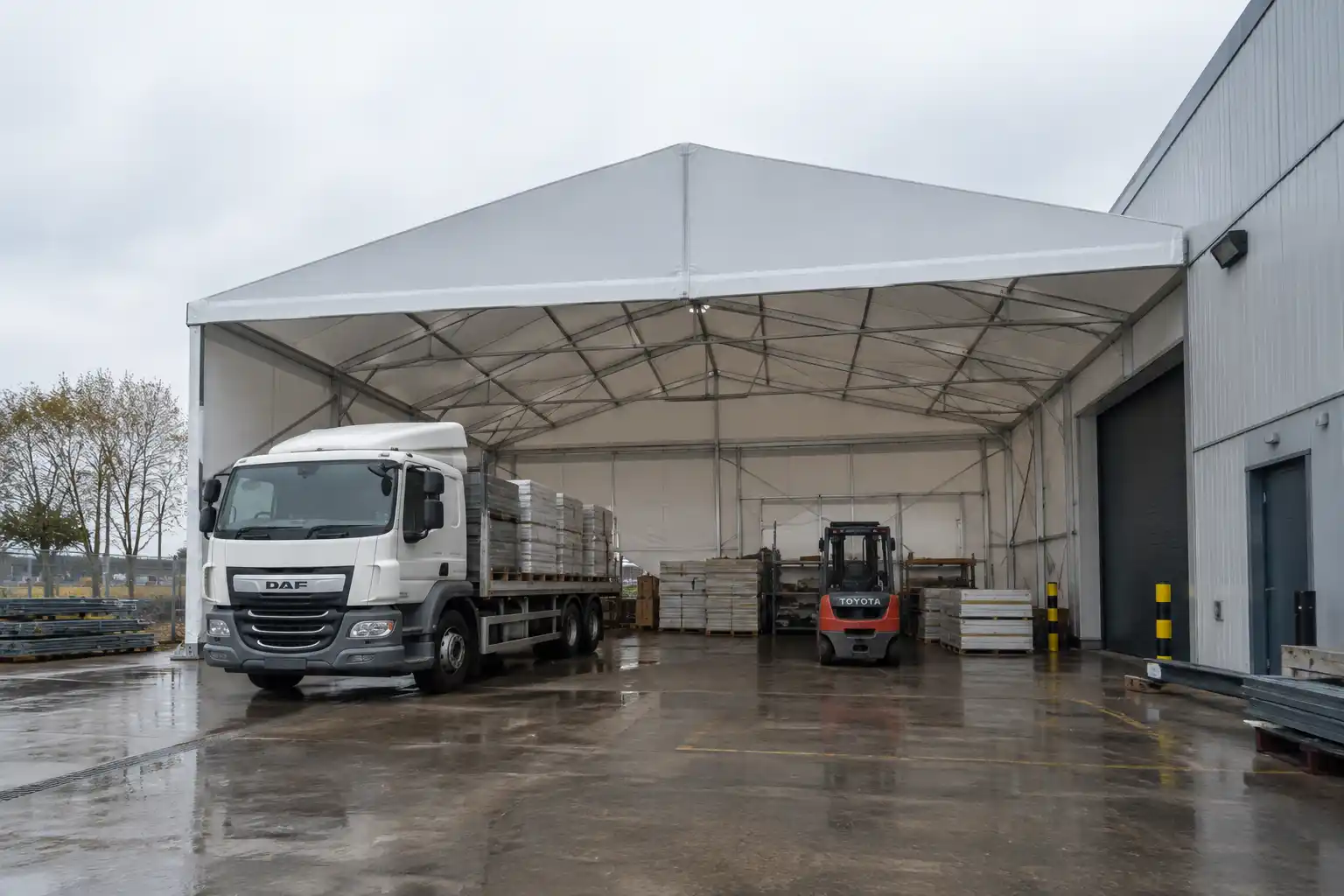
For example, a business may need temporary warehousing after fire damage, but the reinstatement programme may change once surveys, insurance discussions and contractor availability become clearer. A school or public sector site may need interim space while damaged facilities are assessed. A manufacturer may need covered production or storage capacity while part of the site remains inaccessible. In these scenarios, a short-term mindset can create long-term inefficiency.

The suitability of a temporary building for longer use depends on how it is specified. A structure intended for several months of operational use needs to be considered differently from a basic cover requirement for a few days. Factors such as access, internal layout, loading requirements, weather exposure, lighting, heating, ventilation, fire safety considerations and maintenance all influence whether the building can continue to perform over time.
This is also why earlier decisions around temporary building installation time matter. If the temporary building was chosen only to solve the first phase of disruption, it may not remain ideal as the recovery period extends. Where the emergency response is still being shaped, it is worth considering how the solution may need to evolve after installation. For context on the earlier response stage, see how quickly temporary buildings can be installed in an emergency.
What factors affect how long a temporary building can stay in place?
Several factors influence temporary building duration. No single timeframe applies to every emergency recovery project, because the right duration depends on the site, the structure, the intended use and the permissions required.
The first factor is the recovery timeline itself. If the main building can be repaired quickly, the temporary structure may only need to support a narrow operational function for a limited period. If reinstatement is likely to take months or longer, the temporary building must be planned as part of a sustained continuity arrangement.
The second factor is the type of structure. Different temporary building types for business use have different suitability considerations depending on what the business needs to protect or operate. Storage, production, welfare, office use and customer-facing use all place different demands on the building. When structure type is still uncertain, it can help to review what type of temporary building is suitable after fire, flood or storm damage.
The third factor is the site condition. Emergency sites are rarely straightforward. Access may be restricted, damaged areas may still be under assessment, utilities may need temporary routing, and vehicle movement may need to be separated from unsafe zones. These constraints can affect not only where a temporary building is placed, but how long that position remains workable.
Planning and regulatory considerations are also important. The Planning Portal notes that some temporary buildings may fall within permitted development criteria, but also advises contacting the local planning authority to understand the planning rules for temporary buildings. National planning legislation also includes temporary use provisions, including the use of land for up to 28 days in certain circumstances, but that should not be treated as a universal rule for every commercial recovery structure.
Building Regulations are a separate consideration from planning permission. Planning Portal guidance refers to temporary buildings with a planned time of use of two years or less and low energy demand within its Building Regulations exemptions guidance, but this does not remove the need to consider use type, fire safety, access, welfare or other site-specific requirements. The Modular and Portable Building Association (MPBA) also highlights that modular and portable buildings sit within a wider framework of regulations and standards, including Building Regulations, fire standards, accessibility, energy and health and safety.
Operationally, the duration also depends on whether the building continues to support the business effectively. A structure that works for emergency stockholding may need reconfiguration if operations expand, production resumes, customer access is required, or the recovery programme changes. Without this forward planning, a temporary solution can become a constraint rather than a continuity measure.
“That is why duration planning should begin early. Many of the temporary building decision risks during recovery come from underestimating how long the structure will be needed, what permissions may apply, and whether the solution will remain aligned with the recovery pathway.”
Do temporary buildings require planning permission over time?
Planning requirements for temporary buildings depend on how the structure is used, how long it remains in place, and the specific conditions of the site. There is no single rule that applies to every situation, which is why early clarity is important.
In some cases, short-term use may fall within permitted development rights. However, this is typically limited and context-specific. National legislation includes provisions such as the UK Government guidance on temporary use of land for a limited number of days in certain circumstances, but this should not be interpreted as a blanket allowance for all commercial temporary buildings. Longer use, particularly where the structure supports ongoing operations, often requires consultation with the local planning authority.
This is where duration becomes a planning consideration rather than simply an operational one. If a temporary building is expected to remain in place for an extended period, planning permission or prior approval may be required depending on factors such as:
- The type of building and its scale
- The intended use (e.g. storage, production, customer-facing space)
- The location and surrounding land use
- The impact on access, traffic and neighbouring properties
Planning Portal guidance on temporary buildings makes clear that temporary buildings should be discussed with the local authority to confirm what permissions apply in each case. This is particularly important once the use moves beyond very short-term recovery and becomes part of a structured operational setup.
From a commercial perspective, uncertainty around planning can create risk. If permissions are not properly considered, a business may need to modify, relocate or remove the structure unexpectedly, disrupting operations again. Addressing planning early helps ensure that the temporary building can remain in place for as long as it is needed.
Can temporary buildings be used for long-term operations?
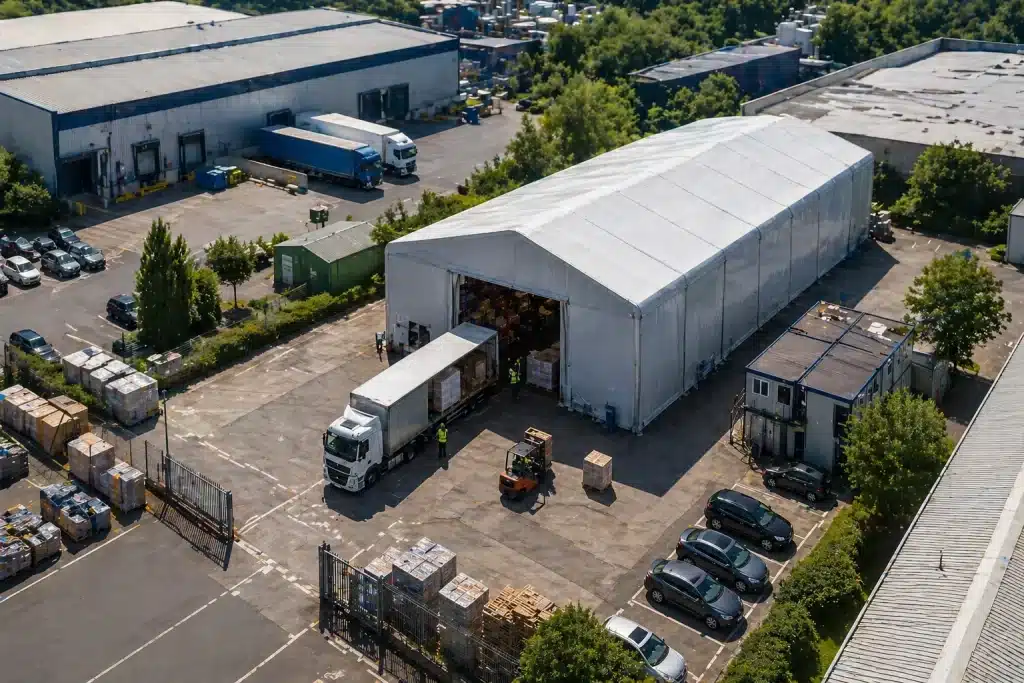
Temporary buildings can support longer-term operations where they are properly specified, installed and maintained for the intended use. In many recovery scenarios, they become a stable part of the operational environment while the permanent facility is repaired, redesigned or rebuilt.
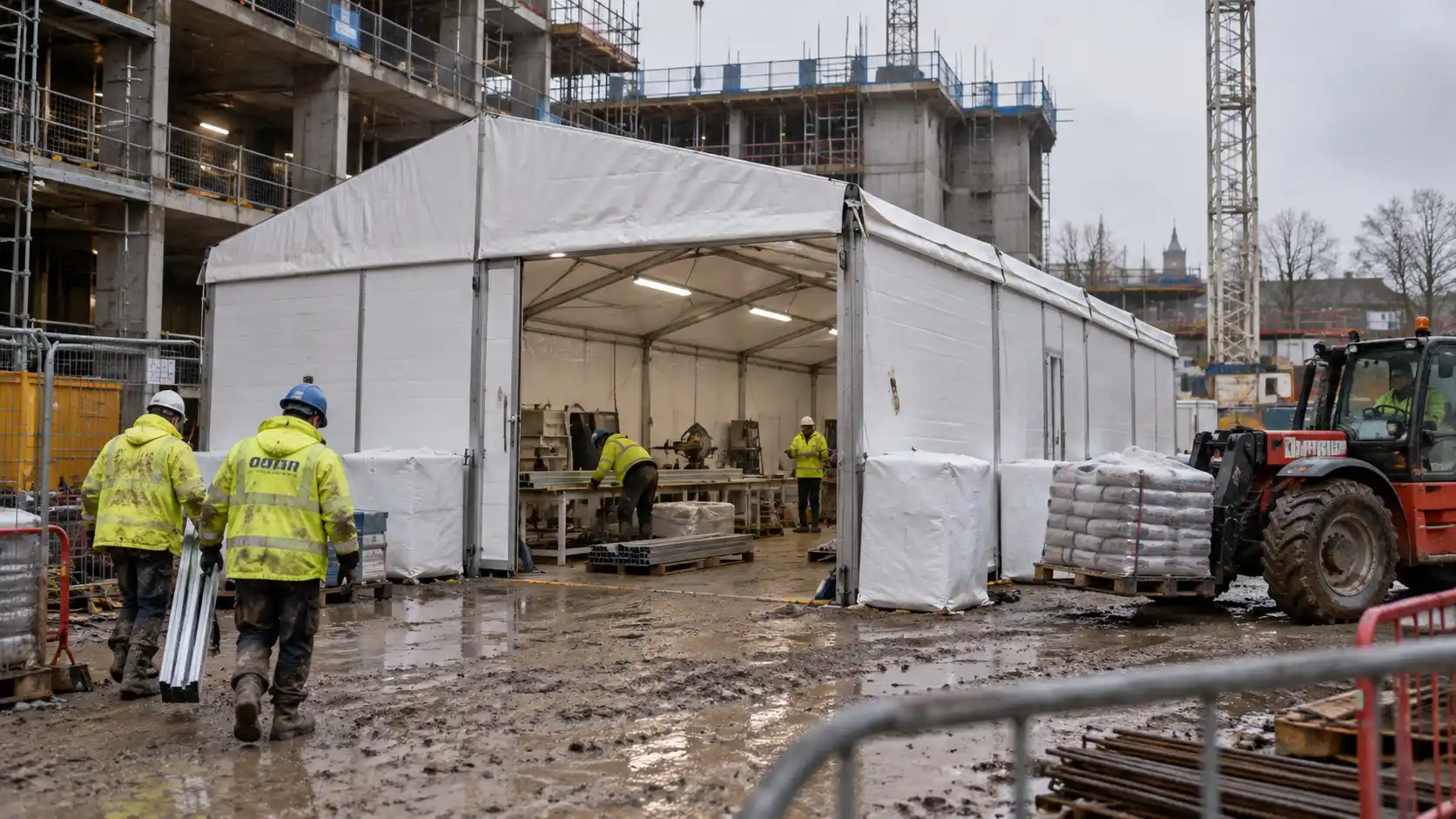
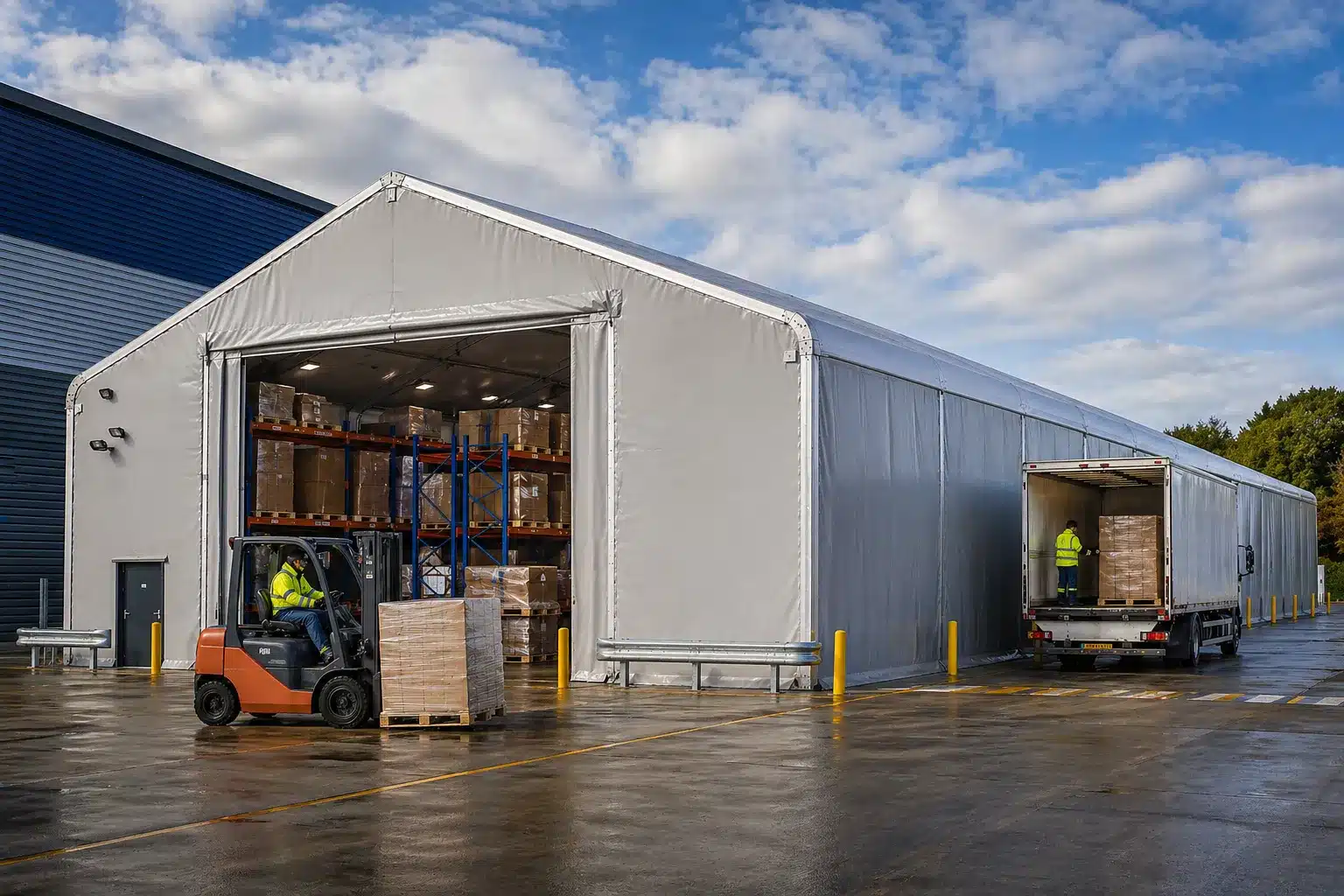
The key is not whether a building is labelled “temporary”, but whether it is suitable for the operational demands placed on it over time. For example, a temporary warehouse used for stockholding over several months must support loading, access, weather protection and internal organisation. A temporary production or welfare space must account for safety, layout and environmental conditions.
Where this is planned correctly, temporary buildings can provide continuity for:
- Storage and warehousing
- Production or light industrial processes
- Office and administrative functions
- Welfare and staff facilities
- Customer or service-facing environments
This extended use supports commercial stability. Without a suitable temporary structure, businesses may face ongoing disruption, reduced capacity, missed contractual commitments or inefficiencies in how operations are managed. By contrast, a well-planned temporary building can maintain throughput, protect stock, support staff and reduce the need for repeated operational changes.
However, long-term use still requires active management. The Health and Safety Executive guidance on workplace maintenance and safety reinforces the importance of ongoing inspection, maintenance and operational suitability throughout the duration of use. As recovery progresses, the role of the building may change, and it should be reviewed accordingly to ensure it continues to support the business rather than limit it.
How should you plan for the duration of a temporary building?
Planning for duration should begin as soon as the temporary building is being considered, not after it has been installed. The objective is to align the building’s role with the expected recovery timeline and the operational demands of the business.
The first step is to establish a realistic recovery programme. This may include investigation, insurance processes, design, procurement and construction for reinstatement. Where timelines are uncertain, it is better to plan for flexibility rather than assume a short duration.
The second step is to define how the building will be used over time. A temporary structure may initially support a single function, such as emergency storage, but may later need to accommodate additional activities as operations stabilise. Planning for this evolution helps avoid the need for disruptive changes later.
The third step is to consider planning and regulatory requirements early. Engaging with the local authority where necessary helps clarify whether the building can remain in place for the intended duration. This reduces the risk of unexpected constraints partway through the recovery process.
The fourth step is to ensure that the structure itself is appropriate for the intended duration. This includes considering:
- Structural robustness relative to exposure and use
- Internal layout and operational flow
- Access for vehicles, staff and deliveries
- Safety and welfare considerations
- Maintenance and inspection requirements
Finally, duration planning should be treated as part of a wider continuity strategy. Temporary buildings are not standalone solutions; they sit alongside operational planning, insurance processes, contractor programmes and long-term site strategy. When these elements are aligned, the temporary building can provide stability throughout the recovery period.
What matters most as you move from emergency response to recovery?
Once the immediate disruption has been stabilised, the focus shifts to maintaining control over the recovery process. At this stage, the question is no longer whether a temporary building can be installed, but whether it can support operations for as long as needed without creating further risk or inefficiency.
The most important step is to align the building’s duration with the reality of the recovery programme. Temporary buildings can support operations for extended periods, but only if planning, permissions and operational requirements are considered early. Treating the solution as short-term by default can lead to avoidable disruption later.
Clarity around duration helps reduce uncertainty. It allows businesses to make informed decisions about layout, capacity, staffing, logistics and investment. It also provides confidence that the temporary building will remain viable while the permanent solution is developed.
Next step
At this stage, if your operation is moving beyond the initial emergency response and you need to understand how long your temporary building can realistically support your business, it is worth reviewing your assumptions early.
Where recovery timelines are uncertain, capacity has been lost, or planning considerations may affect how long a structure can remain in place, a more structured approach to duration planning can prevent further disruption.
LM Structures supports businesses in assessing how temporary and semi-permanent buildings can be specified, positioned and managed to align with recovery programmes and operational requirements. This helps ensure that the solution remains viable for as long as it is needed, without creating additional constraints later in the process.
If you’d like to find out more, please call us on 0333 358 4989 or email enquiries@lmstructures.co.uk
How Long Can Temporary Buildings Be Used After an Emergency FAQs
In practice, some temporary buildings may remain in place for extended periods and function as semi-permanent solutions. However, this depends on planning permissions, operational requirements and how the structure is managed over time.
Key factors include recovery timelines, building type, operational use, site constraints and planning considerations. Maintenance and performance over time also influence whether the building remains suitable.
Planning requirements vary depending on the duration, use and location of the building. Short-term use may fall within certain permitted development conditions, but longer-term use often requires consultation with the local planning authority.
Yes, many temporary buildings are suitable for longer-term use when they are properly specified for the operational requirements. Their suitability depends on factors such as layout, access, environmental conditions and ongoing maintenance.
Temporary buildings can be used for periods ranging from a few weeks to several months or longer, depending on the structure, its use, site conditions and planning position. There is no fixed universal limit, so duration should always be assessed in context.