How to Restore Business Operations Quickly After Disaster
When fire, flood or storm damage disrupts your site, the pressure to restart operations can be immediate. The fastest way forward is not usually one isolated action, but a coordinated recovery plan that stabilises the situation, identifies what must keep running and brings suitable continuity space into use.
In Short
The fastest way to restore business operations after disaster is to coordinate safety assessment, clean-up, continuity planning and temporary operational space in parallel. Temporary buildings can support faster recovery by providing usable space while damaged facilities are assessed, repaired or reinstated.
Recovery Priorities at a Glance
- Start by confirming safe access, site condition and immediate operational risks.
- Identify which business functions must be restored first to reduce downtime.
- Run assessment, clean-up, supplier coordination and continuity planning together where possible.
- Consider temporary buildings where the business needs replacement space for storage, production, staff, customers or essential operations.
- Avoid decisions that appear fast but create later delays through poor site planning, unclear responsibilities or unsuitable space.
Table of contents – in this article
What is the fastest way to restore operations after fire, flood or storm damage?
The fastest route back to operation is a structured recovery strategy that brings the right workstreams together early. That means assessing the site, confirming safety, understanding business-critical functions, coordinating suppliers and identifying a workable continuity solution at the same time, rather than treating each step as a separate stage.
For many businesses, delay happens because recovery is approached sequentially. First the damage is assessed, then clean-up begins, then temporary arrangements are considered, then suppliers are contacted. In practice, that can slow the route back to operation because each decision waits for the previous one to finish.
A faster approach is to identify what can safely happen in parallel. While damaged areas are being assessed, operational teams can map which functions need to restart first. While clean-up is being planned, facilities or estates teams can explore temporary space options. While insurance discussions are ongoing, decision-makers can clarify what level of continuity is needed to protect customers, contracts, staff and revenue.
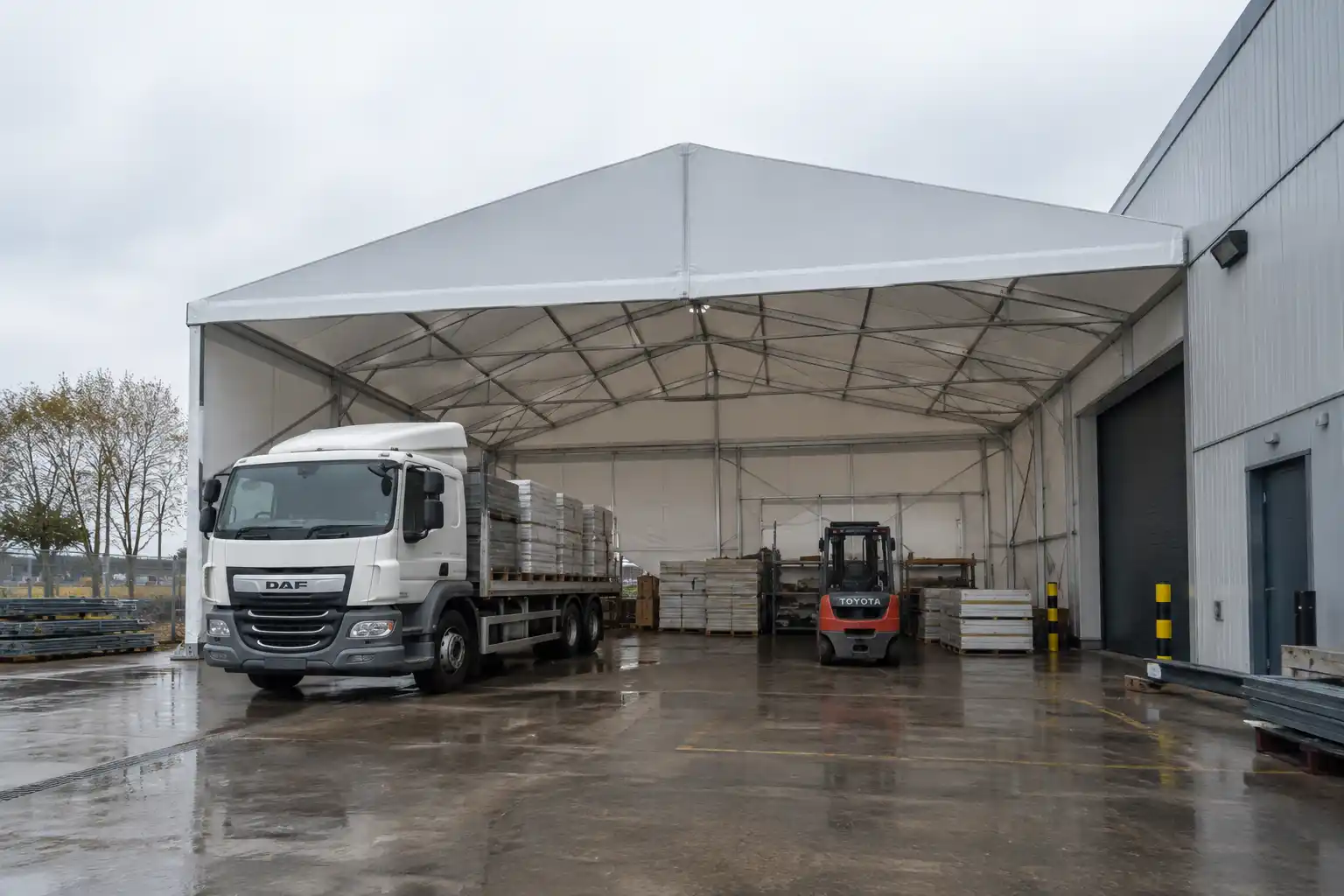
This is where Business Continuity Structures can become a practical part of the recovery strategy. They do not remove the need for safe access, professional assessment or repair planning, but they can provide an alternative operational environment while the original building is unavailable, restricted or unsuitable, as explored in what to do after a commercial fire and what to do after a warehouse flood and what to do after storm damage makes your building unsafe.
The key point is that speed must be viable. A solution that looks quick but ignores access, safety, utilities, ground conditions or operational workflow may create further delays. The fastest effective recovery is usually the one that balances urgency with controlled decision-making.
What should you prioritise immediately after disruption?
The first priority after fire, flood or storm damage is to stabilise the situation and establish what is safe, accessible and operationally possible. Before any temporary solution is selected, the business needs enough clarity to understand what has been lost, what can continue and what needs to be replaced.
This does not mean waiting until every detail is known. In a live disruption, decision-makers often have to work with incomplete information. The important distinction is between acting quickly and acting blindly. Early decisions should be based on the best available information, then refined as the site picture becomes clearer.
Immediate priorities usually include confirming safe access, protecting people, securing affected areas, understanding utility status, identifying business-critical functions and communicating clearly with internal teams. HSE guidance on workplace emergency procedures reinforces the importance of clear roles, communication and coordinated emergency planning.
For flood-related disruption, the Environment Agency’s business flood plan checklists also highlight the value of prepared actions, clear responsibilities and accessible recovery information. Even when a business is already in recovery mode, those principles remain useful: the clearer the responsibilities, the easier it is to move quickly without creating confusion.
From a commercial perspective, this first stage matters because downtime compounds. Lost production, unavailable storage, missed deliveries, cancelled bookings, customer disruption or staff inefficiency can all increase pressure on the business. The aim is not simply to reopen everything at once, but to identify the functions that will have the greatest impact on continuity if restored first.
For an industrial or warehousing operation, that may mean restoring goods-in, dispatch, stockholding or production support. For a customer-facing business, it may mean protecting trading capacity or maintaining a usable service environment. For an office, education, healthcare or public-facing setting, it may mean restoring essential working space, access routes or service delivery areas.
The right first steps create the conditions for faster recovery later. Poorly controlled early action can do the opposite.

Why coordination is faster than isolated action
Speed improves when recovery workstreams are coordinated rather than treated as separate tasks. In a disruption scenario, multiple decisions affect one another: site safety influences access, access influences temporary building feasibility, temporary building location affects logistics, and operational priorities shape the size, layout and specification of the continuity space.
If those decisions are made in isolation, the recovery plan can become fragmented. One team may be arranging clean-up while another is considering alternative space, another is speaking to insurers, and another is trying to manage customers or staff. Without a shared view of priorities, the business can lose time aligning decisions later.
A coordinated approach brings those moving parts together earlier. It helps decision-makers understand what needs to happen first, what can happen in parallel and what must be confirmed before committing to a solution.
This is particularly important where temporary buildings are being considered. The question is not simply whether a structure can be supplied quickly. The more important question is whether the site, access, operational requirement and intended duration support a practical temporary building solution.
Coordination should therefore include:
- what function the temporary space must support
- how quickly that function needs to be restored
- where the structure could be positioned
- whether the site is accessible and suitable
- what services, routes or segregation may be required
- who needs to approve or coordinate the recovery decision
Business continuity guidance often focuses on maintaining essential services within acceptable timeframes. BSI’s overview of ISO 22301 business continuity management reflects this principle by framing continuity around the ability to continue products and services during disruption. For LM Structures’ audience, that translates into a practical question: what space is needed to keep the most important operations moving while the damaged site is being dealt with?
The fastest recovery plans are rarely the most reactive. They are usually the plans where responsibility is clear, information flows quickly and temporary solutions are aligned with real operational need.
How do temporary buildings enable faster recovery?
Temporary buildings can shorten the route back to operation by providing usable space while the original facility is being assessed, repaired or reinstated. Rather than waiting for permanent works to complete, the business can restore key functions in parallel by relocating them into a controlled, purpose-defined environment.
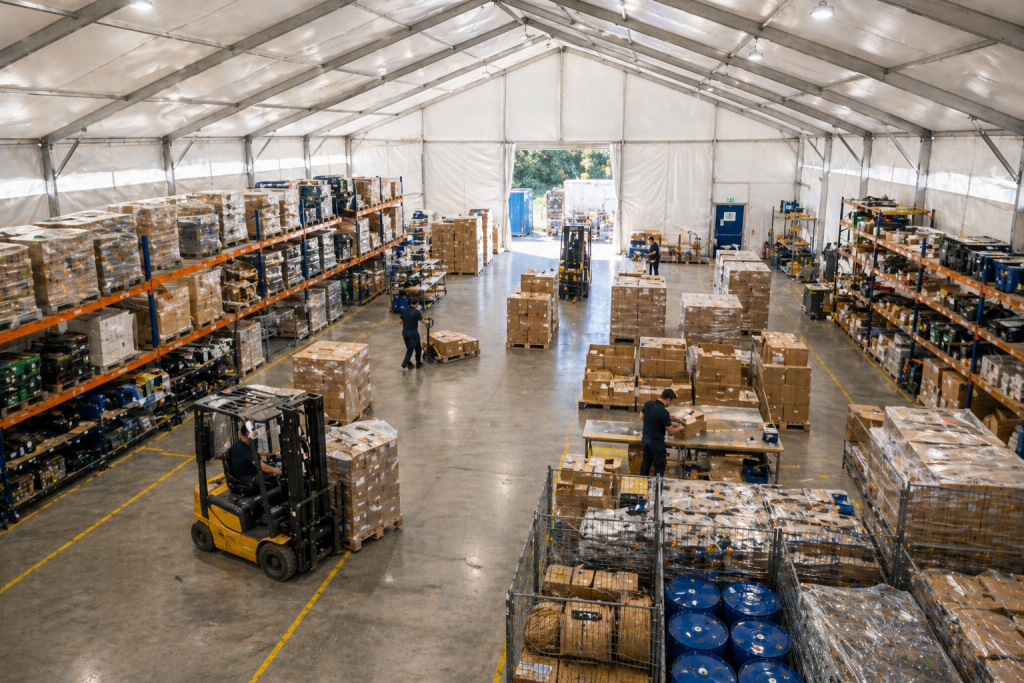
This is most effective where there is a clear understanding of what needs to be restored. For example, a warehouse operation may prioritise storage and dispatch, while a manufacturing site may need covered production support or protected workflow space. In a customer-facing environment, the priority may be maintaining trading capacity or service delivery.
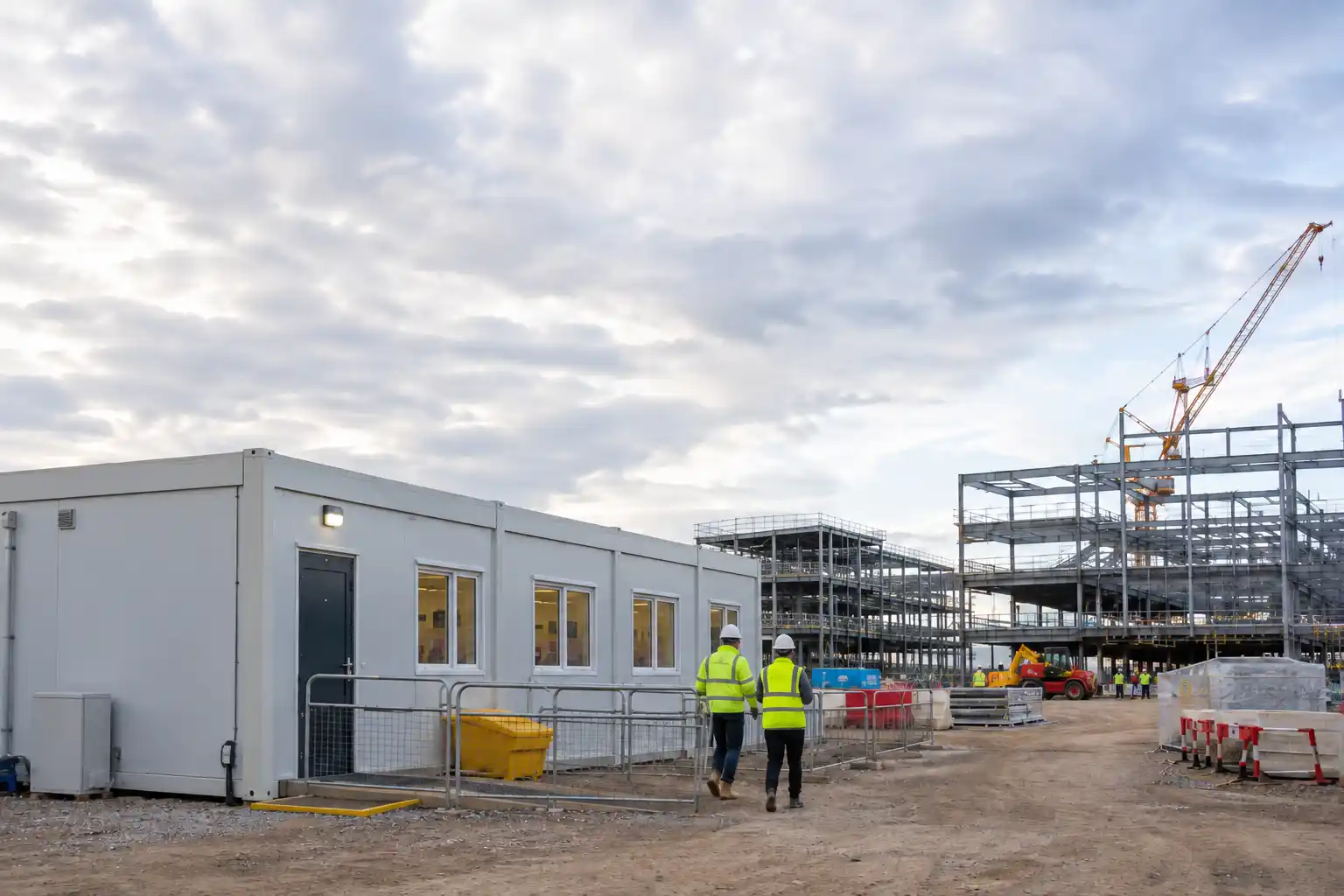
In these scenarios, temporary buildings act as a bridge between disruption and reinstatement. They do not replace the need for site assessment, clean-up or repair, but they allow critical operations to resume in a different part of the site or on an alternative footprint.
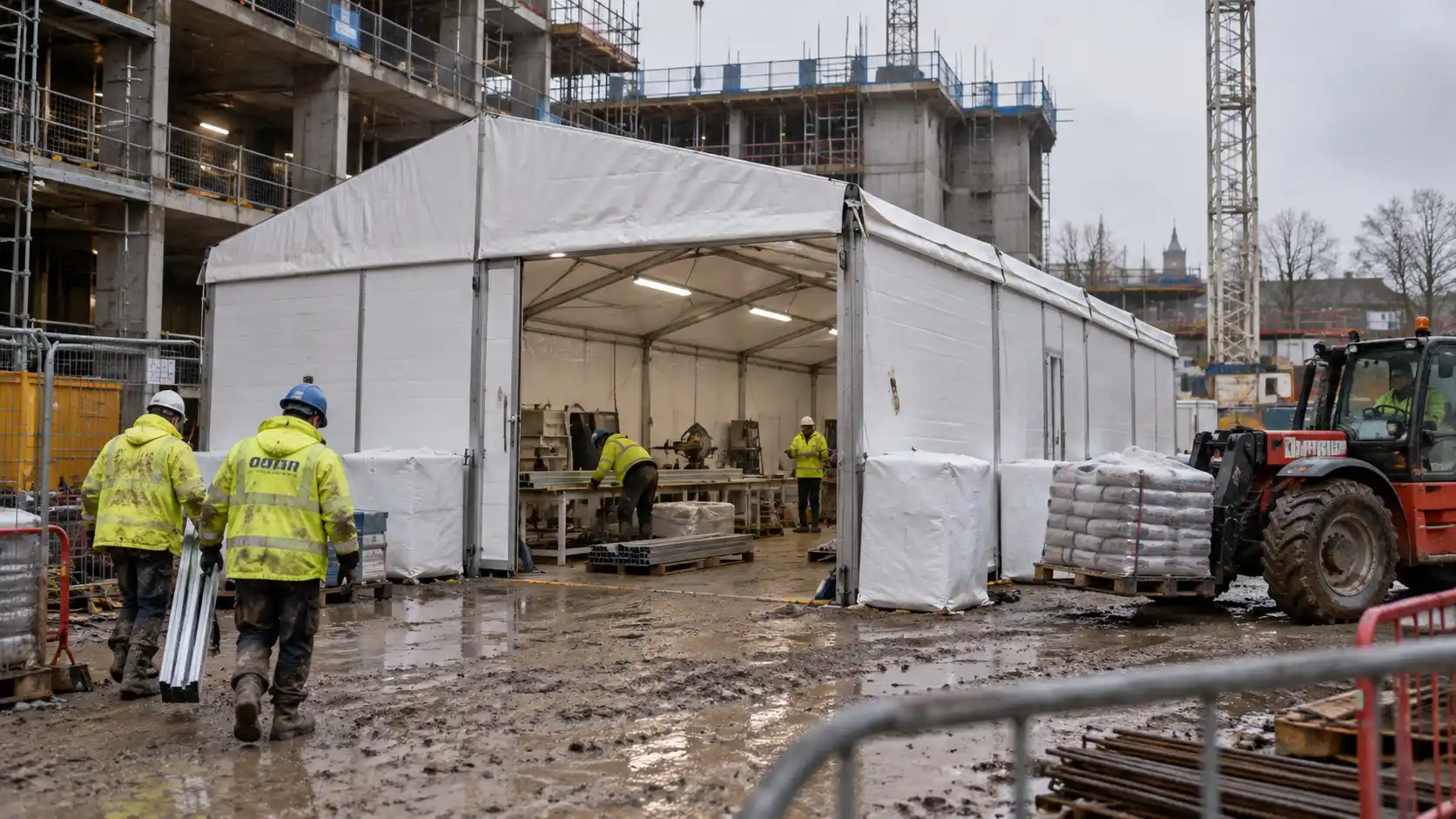
The practical value comes from flexibility. Temporary buildings can be configured to match operational requirements, whether that is clear-span storage, segregated working areas, weather protection, or controlled access. They can also be positioned to work around damaged areas, restricted zones or ongoing recovery activity, which helps avoid unnecessary delays caused by waiting for full site clearance.
Timing is influenced by site conditions, access, ground suitability and coordination with other recovery workstreams. As explored in How Quickly Can Temporary Buildings Be Installed in an Emergency?, the installation programme is only one part of the timeline. The earlier the requirement is defined and aligned with temporary building site requirements, the more effectively temporary space can support recovery.
From a commercial perspective, restoring even partial operational capacity can reduce the impact of downtime. It may allow the business to maintain customer relationships, protect contracts, manage stock flow or continue essential services while longer-term solutions are developed.
What mistakes can slow down recovery?
Delays in recovery are often caused not by lack of action, but by decisions that are made too quickly without sufficient coordination. In a high-pressure situation, it is understandable to prioritise speed, but certain missteps can extend the overall timeline.
One common issue is treating recovery as a sequence of isolated tasks. Waiting for full damage assessment before considering continuity options, or delaying supplier engagement until clean-up is complete, can create unnecessary gaps between stages. A more effective approach is to progress key workstreams in parallel wherever it is safe and practical to do so.
Another risk is selecting solutions based on perceived speed rather than operational fit. A temporary space that does not align with workflow, access requirements or site constraints may need to be reconfigured or relocated, which can delay recovery further. Early clarity around operational priorities helps avoid this.
Lack of coordination between stakeholders can also slow progress. Recovery often involves facilities teams, operations, insurers, loss adjusters, contractors and suppliers. Without a shared understanding of priorities and responsibilities, decisions can become fragmented and time-consuming to align.
There is also a tendency to focus only on the immediate response without considering how the solution will function over the coming weeks or months. A short-term fix that cannot support sustained operations may lead to repeated disruption as the business adjusts its approach.
From a commercial standpoint, these delays can increase exposure to lost revenue, missed deliveries, reduced service capacity or inefficiencies in staffing and logistics. The objective is not simply to act quickly, but to act in a way that supports continuous, stable operation as early as possible.
How do you create a fast, effective recovery strategy?
A structured recovery strategy brings together the different elements required to restore operations and ensures they are aligned from the outset. Rather than reacting step by step, the business defines a clear direction and coordinates actions to support it.
The first stage is stabilisation. This includes confirming safety, securing the site, understanding access limitations and identifying immediate operational risks. At this point, the business should also define which functions are critical to continuity and what minimum level of operation is required.
The second stage is coordinated assessment and planning. While site surveys and damage assessments are ongoing, operational teams can map workflows, identify space requirements and explore continuity options. This is where temporary buildings can be considered as part of the solution, alongside any alternative arrangements that may support recovery.
The third stage is solution alignment. Decisions around temporary space should be based on operational need, site constraints, duration and access. The aim is to ensure that the chosen approach supports both immediate recovery and short- to medium-term continuity, rather than creating further disruption.
The final stage is controlled implementation. This involves coordinating installation, clean-up, repair works and operational restart so that each element supports the others. Clear communication and defined responsibilities are essential to maintain momentum and avoid delays.
This approach reflects the broader principle found in What Should You Do Immediately After a Warehouse Fire to Keep Operations Running?, where early clarity and structured action help maintain control under pressure. It also aligns with guidance on How to Recover Operations Quickly After Flood Damage to Your Site and What Are Your Options After Storm Damage Makes Your Building Unsafe?, which reinforce the importance of coordinated decision-making across different disruption scenarios.
Temporary buildings should be seen within this wider strategy. They are most effective when integrated into a coordinated plan that balances speed, safety and operational practicality.

What should you focus on now to maintain control?
At this stage of recovery, maintaining control is less about doing everything at once and more about ensuring that the right actions are happening in parallel and are aligned to a clear objective.
The priority is to define what “operational” means for your business in the short term. That may not be full capacity. It may be the ability to dispatch goods, serve customers, maintain production output at a reduced level or keep essential services running. Once that baseline is defined, decisions around space, layout, access and timing become clearer.
Control also depends on coordination. Site constraints, safety requirements, operational needs and supplier activity must be aligned so that each decision supports the next. Where this alignment is missing, recovery can stall even when significant effort is being made.
Temporary buildings often play a role at this point because they provide a controllable environment within an otherwise uncertain site. They allow operations to restart in a defined space while other areas are still being assessed or repaired.
The aim is not to eliminate uncertainty completely, but to reduce its impact on operations. A structured, coordinated approach allows the business to move forward with confidence, even while parts of the recovery are still evolving.
Next step
At this stage, the decision to explore temporary operational space should be based on whether your current site can support the functions you need to restart.
If your operation is currently restricted by damaged areas, limited access or unavailable facilities, bringing in a temporary building can help re-establish critical capacity while recovery work continues. Acting early can reduce downtime and avoid the need to pause operations while waiting for permanent reinstatement.
Where timelines are uncertain, or where partial operation is preferable to full shutdown, reviewing Business Continuity Structures as part of your recovery strategy provides a practical next step. This allows you to assess how temporary space could be integrated with your site conditions, operational requirements and recovery programme.
The focus should be on identifying a solution that supports your business now and remains workable as recovery progresses. LM Structures works alongside operational teams to define these requirements and deliver space that aligns with real site constraints and continuity priorities.
For more information call 0333 358 4989 or email enquiries@lmstructures.co.uk
How to Restore Business Operations Quickly After Disaster FAQs
Downtime is reduced by restoring critical functions as early as possible, even at partial capacity. Coordinating recovery workstreams and introducing temporary operational space where needed can help maintain activity while full reinstatement is planned.
Recovery can be slowed by fragmented decision-making, poor coordination between teams, or choosing solutions that do not fit operational needs. Treating recovery as a sequence rather than a coordinated process is a common cause of delay.
The first priority is stabilisation: confirming safety, securing the site and identifying critical operations. Once this is clear, decisions can be made about which functions to restore first and what space or resources are required to support them.
The fastest approach is a coordinated recovery strategy that runs assessment, clean-up, planning and continuity solutions in parallel. Focusing on a single action rarely delivers speed on its own. Aligning workstreams early helps reduce delays and supports faster operational restart.