Can Temporary Buildings Be Installed on a Damaged Site?
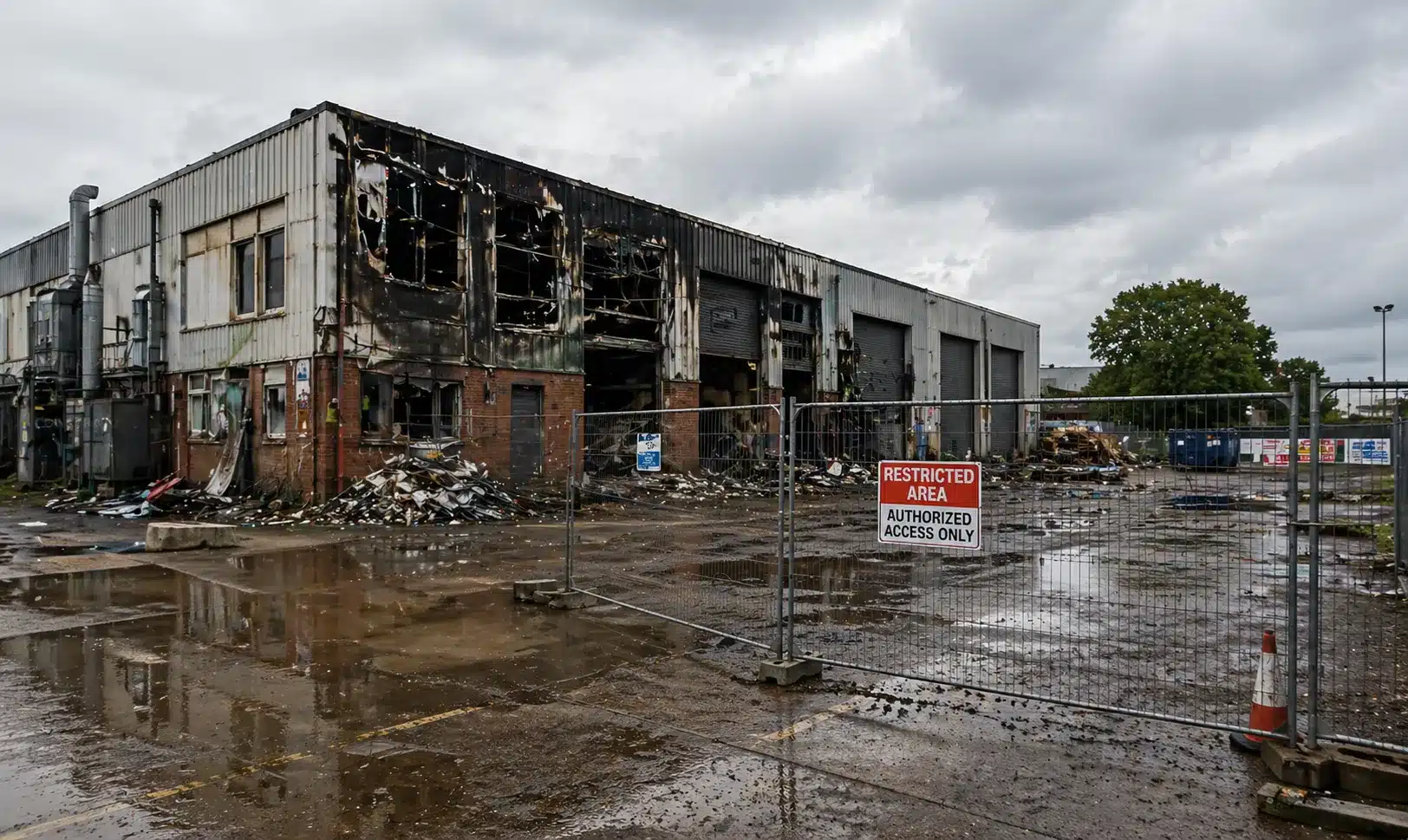
When a site has been affected by fire, flood, storm damage or another serious disruption, the pressure to restore operational capacity can be immediate, particularly in scenarios such as fire damage where early decisions shape how disruption is controlled, as outlined in what to do after a commercial fire and what to do after a warehouse flood. But if the site is still restricted, partially cleared or under investigation, the practical question is whether a temporary building can be installed safely before full recovery work is complete.
In Short
Temporary buildings can often be installed on a damaged or restricted site, but only where minimum site requirements can be met. Ground conditions, access routes, safety controls and ongoing recovery activity all need to be reviewed before installation can proceed.
Recovery Priorities at a Glance
- Temporary building installation may be possible before a site is fully reinstated, provided safe access, usable ground and suitable working areas can be established.
- The main limiting factors are usually ground stability, debris, restricted access, live operations and interaction with clean-up or repair activity.
- A damaged site does not always need to be fully cleared, but the proposed installation area, delivery route and working zones must be suitable.
- Installation can sometimes happen in parallel with recovery work, provided responsibilities, sequencing and safety controls are clearly managed.
- Early site review helps identify whether adaptation, phasing or alternative layouts could restore capacity sooner without creating avoidable risk.
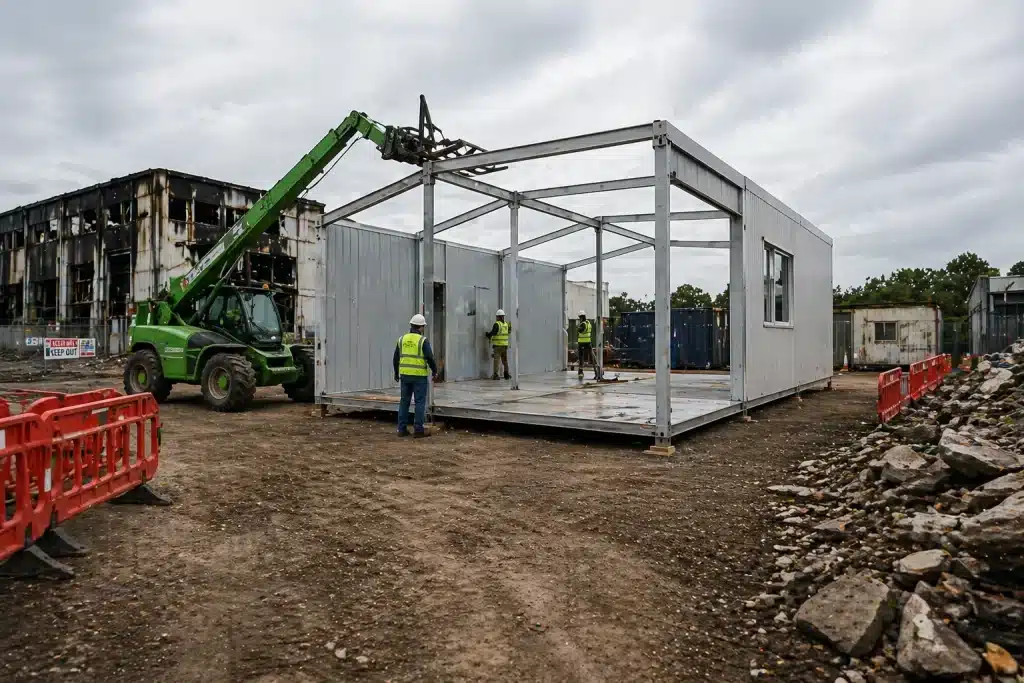
Table of Contents – In this article:
Can temporary buildings be installed on a damaged or restricted site?
Temporary buildings can often be installed on damaged, restricted or partially operational sites, but feasibility depends on the condition of the specific area being used. The site does not always need to be fully reinstated before installation can begin, but there must be enough control over ground conditions, access, safety and working space to plan the installation properly.
For facilities managers, operations managers and site teams, this distinction matters. Waiting for complete clearance may delay recovery longer than necessary. Moving too early, without understanding the site limitations, may create safety, access or programme issues that slow recovery further.
The practical starting point is not simply whether the site has suffered damage. It is whether a defined area of the site can be made suitable for delivery, installation and ongoing use. That may be a cleared yard, a section of hardstanding, a car park, a service area, or another part of the site that can be separated from the main damaged zone.
This is where business continuity structures can support operational recovery. They are often considered when a business needs usable space before permanent repairs, reinstatement or wider redevelopment have been completed. The temporary building becomes part of the continuity plan, not a replacement for the full recovery programme.
A condition-based approach is essential. A restricted site may still be viable if the installation area can be accessed safely, if the ground can support the proposed structure and installation activity, and if any surrounding recovery work can be coordinated. Conversely, a site that looks open may still be unsuitable if the ground is unstable, vehicle routes are blocked, or safety restrictions prevent controlled access.
This is why early feasibility review is so valuable. It helps establish whether installation can proceed now, whether some preparation is needed first, or whether a phased approach would be more realistic. It also helps commercially accountable decision-makers understand the likely trade-off between acting quickly and waiting for a more straightforward site condition.
From a business continuity perspective, that trade-off can affect more than convenience. Delayed capacity may mean reduced throughput, lost service capability, contract pressure, customer disruption or inefficient temporary workarounds. The aim is not to rush the process, but to avoid unnecessary delay where a workable, safe and properly planned route is available.
What site conditions are required for temporary building installation?
The most important temporary building site requirements usually relate to ground, access, clearance and safe working space. These conditions do not need to be perfect, but they do need to be understood before a realistic installation plan can be agreed.
Ground condition is often the first consideration. The proposed installation area must be capable of supporting the structure and any installation equipment required. After flooding, excavation, impact damage or heavy vehicle movement, ground may need closer review before it can be relied on. Industry guidance on ground conditions for construction plant highlights the importance of assessing ground before plant is set up or operated, which is particularly relevant on sites where conditions may have changed after disruption.
Access is usually the second major factor. Delivery vehicles, installation teams and equipment need routes that are wide enough, stable enough and sufficiently clear. HSE guidance on traffic management states that site routes should be suitable for the people and vehicles using them, and sufficient in number and size. On a restricted site, that may mean reviewing gates, turning areas, overhead obstructions, pedestrian routes, loading zones and interaction with other site traffic.
Clearance is also important, but this does not necessarily mean clearing the whole site. In many cases, the more relevant question is whether the proposed footprint, access route and working zone can be made safe and usable. Debris, damaged materials, unstable structures, contaminated areas or standing water may all affect where a temporary building can be installed.
Safe separation from other activity should be considered as well. If clean-up, reinstatement, investigation or partial operations are continuing nearby, the installation area may need to be managed as a distinct working zone. HSE guidance on workplace transport also reinforces the importance of separating vehicles and pedestrians where necessary, which becomes especially relevant when several workstreams are operating at once.
For a damaged or restricted site, minimum viable conditions may include:
- A usable installation footprint
- Safe access for vehicles, plant and operatives
- Ground that can be reviewed and prepared where needed
- Clear boundaries between installation activity and other site work
- A practical plan for delivery, sequencing and ongoing uses
These requirements should be treated as decision points rather than obstacles. If one condition is not currently met, it may still be possible to improve it through preparation, layout adjustment or phased installation. For example, a smaller initial structure, different orientation, adjusted access route or later expansion may allow some capacity to be restored while other areas of the site continue to recover.
From a business continuity perspective, the focus is on restoring critical functions as early as possible, which aligns with UK Government guidance on business continuity planning.
This is where operational and commercial judgement need to work together. A technically possible installation may still be disruptive if it compromises live operations. Equally, a constrained installation may still be worthwhile if it restores critical capacity, reduces downtime or prevents pressure spreading across the wider business.
Constraints that can prevent or delay installation
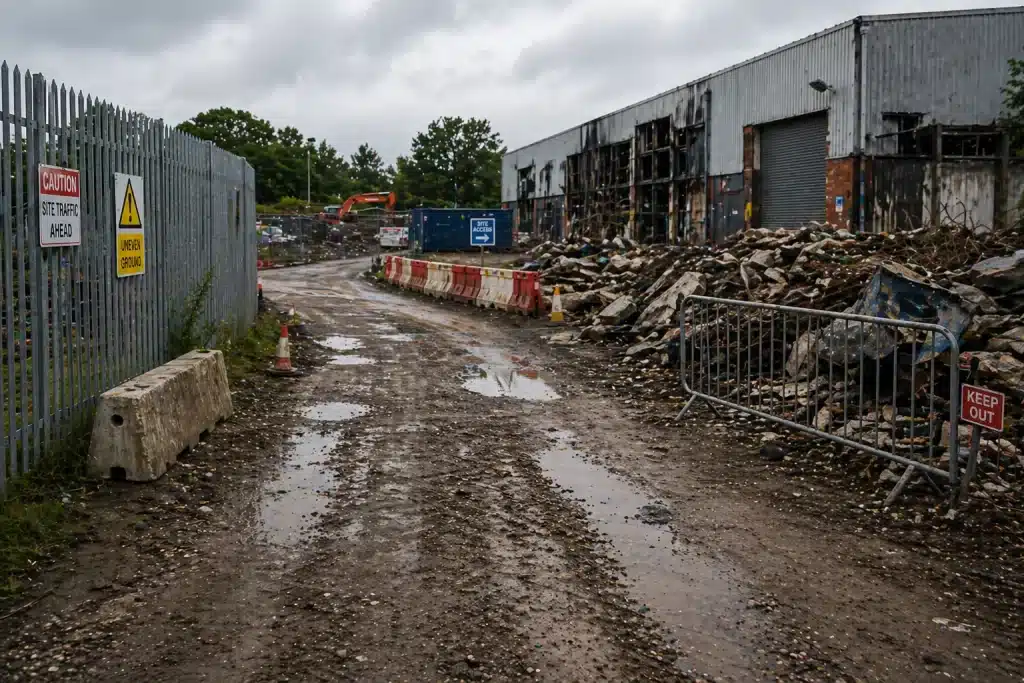
The most common constraints on a damaged or restricted site are unstable ground, blocked access, unresolved safety restrictions, insufficient working space and poor coordination with ongoing recovery work. These issues do not always prevent installation, but they can affect how soon work can begin and what type of temporary building solution is realistic.
Ground instability is one of the clearest limiting factors. Flooding, washout, excavation, fire damage, debris removal or heavy recovery traffic can all change how a site behaves. Where there is uncertainty, the ground may need further review, preparation or an alternative location before installation can be planned with confidence.
Access restrictions can be just as significant. Temporary buildings often require delivery vehicles, handling equipment and installation teams to reach the proposed location in a controlled way. If gates are blocked, routes are too narrow, surfaces are damaged, or other contractors are using the same space, the programme may need to be adapted.
Safety restrictions can also determine what is possible. If parts of the site are unsafe, contaminated, structurally compromised or subject to investigation, installation teams may need to work around exclusion zones or wait until access is permitted. As outlined in Health and Safety Executive guidance on temporary works, installation activity must be planned and managed, which is particularly relevant where temporary access, protection or support may be involved during recovery activity.
Operational interference is another frequent issue. A site may be partially open, but still congested. Staff, deliveries, clean-up contractors, insurers, surveyors and repair teams may all need access. Without careful sequencing, the temporary building installation can compete with other essential work rather than supporting recovery.
Programme uncertainty should also be expected. On a restricted site, timelines may depend on clearance, access approval, ground preparation, safety coordination and the availability of a suitable installation window. This is why installation expectations should be based on actual site conditions, not on standard assumptions. For wider programme planning, readers may also need to consider how quickly temporary buildings can be installed in an emergency once site conditions and access are understood.
The commercial consequence of these constraints is usually linked to lost time. If restrictions are not identified early, the business may lose days or weeks to avoidable re-planning. That can prolong disruption, reduce operational output, place pressure on customer commitments, or increase reliance on short-term workarounds that are not suitable for sustained use.
The better approach is to treat constraints as part of the planning process. Some will be fixed, some will be temporary, and some may be manageable through design, sequencing or site preparation. A restricted site does not automatically rule out temporary building installation, but it does require a more disciplined feasibility process.
Can installation happen while site recovery is still ongoing?
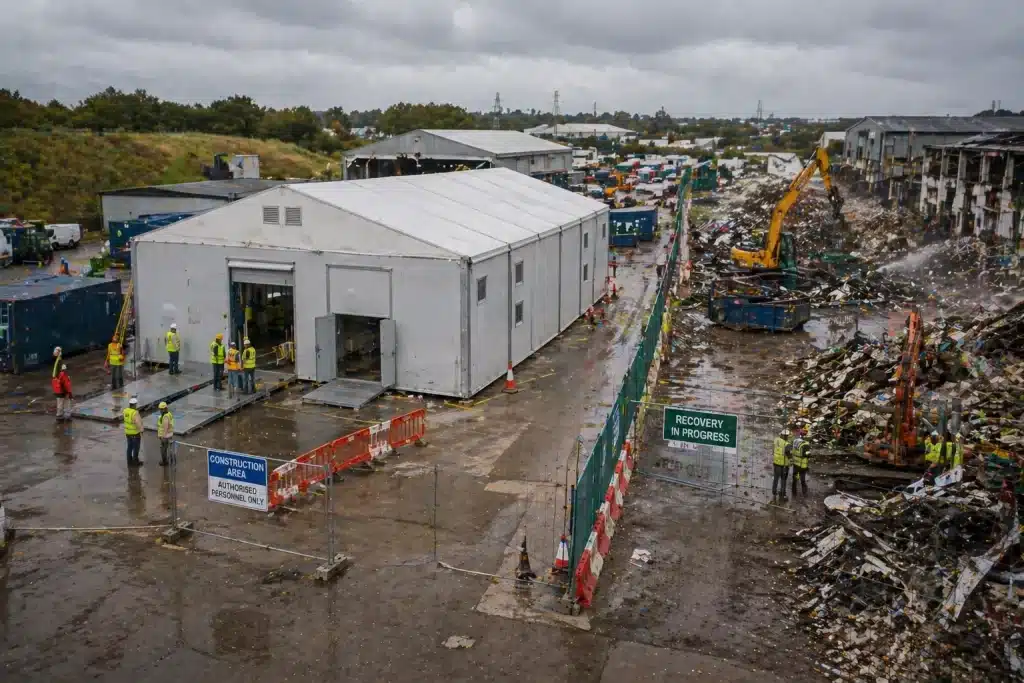
In many cases, temporary building installation can proceed while recovery work is still underway, provided the site is organised in a way that allows different activities to run safely alongside each other. This is not about accelerating installation at the expense of safety or coordination – it is about avoiding unnecessary sequencing where workstreams can be separated and managed.
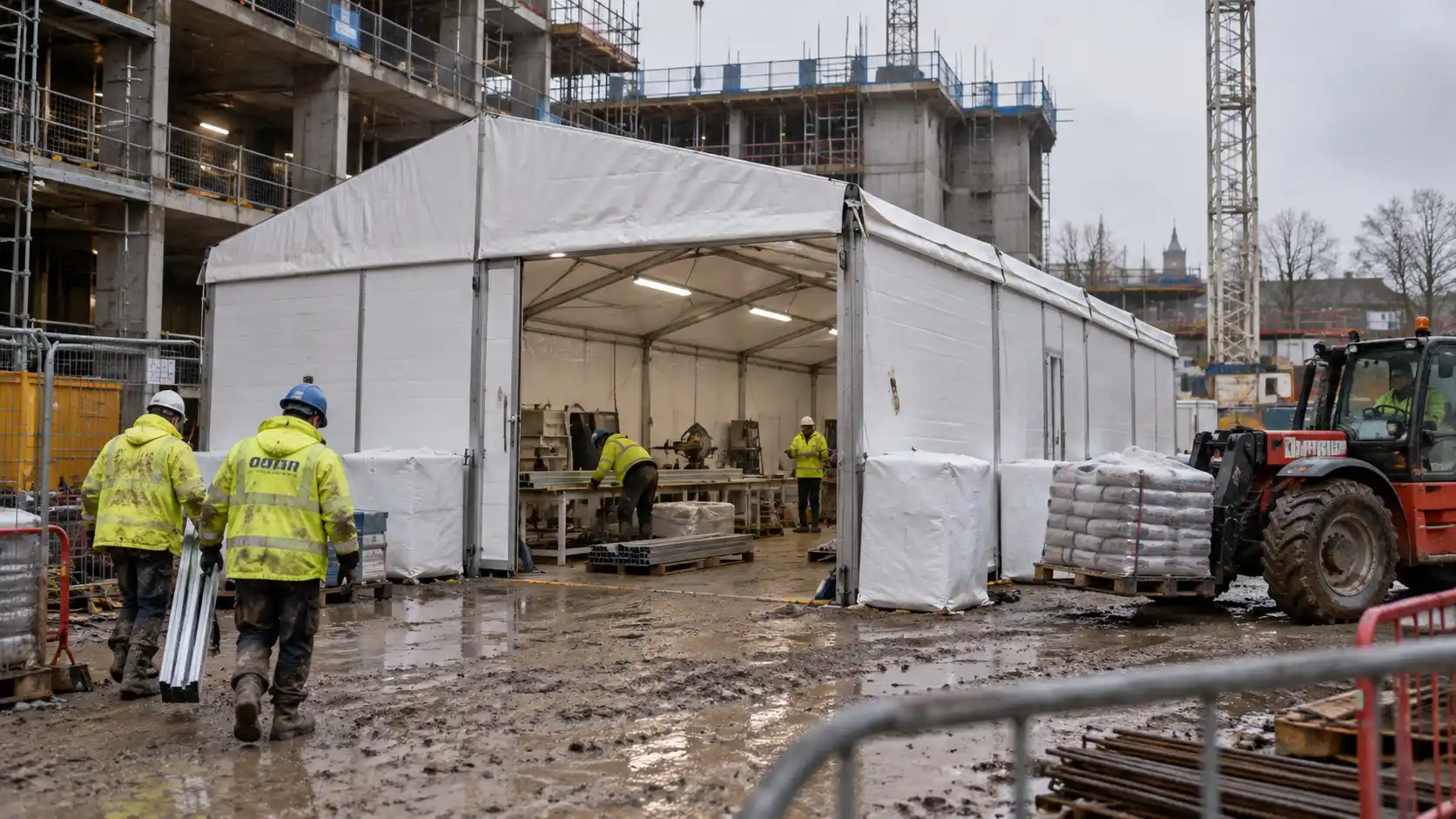
A common assumption is that clean-up, investigation and reinstatement must be completed before any new structure can be introduced. In practice, that is not always necessary. If a defined area of the site can be isolated, prepared and accessed safely, installation can often begin while other parts of the site remain restricted. This requires careful coordination. Delivery routes, installation zones and exclusion areas must be clearly understood. Where multiple contractors or teams are working on site, responsibilities and sequencing need to be agreed in advance. The aim is to prevent overlap that could create risk, delays or rework.
From a business continuity perspective, this parallel approach can significantly reduce downtime. Rather than waiting for full reinstatement, the business can begin restoring capacity in stages. Even partial operational recovery can relieve pressure on staffing, supply chains and customer commitments.
There are practical limitations. Installation cannot proceed in areas that are unsafe, unstable or subject to ongoing investigation. However, where suitable space exists, and where safety and access can be managed, parallel installation is often a viable route to regaining control more quickly.
For a clearer view of how installation activity interacts with live environments, it is useful to understand what to expect when installing a temporary building on a live site, particularly in terms of sequencing, coordination and operational impact.
Preparing a damaged site for temporary building installation
Preparation is often the factor that determines whether installation can proceed now or needs to be delayed. In many cases, this is where business continuity structures become part of a practical recovery strategy, allowing capacity to be restored while permanent repairs are still ongoing.
The starting point is identifying a viable footprint. This does not need to be the original building location. It may be a nearby yard, a service area, a car park or another section of the site that can be cleared and controlled more quickly. Flexibility at this stage can unlock earlier installation opportunities.
Ground preparation may be required, particularly where the surface has been affected by water, debris removal or heavy use. This does not necessarily mean full reconstruction, but it may involve levelling, stabilisation or temporary surface improvements to support installation activity and ongoing use.
Access preparation is equally important. Routes may need to be cleared, widened or temporarily adjusted to allow delivery vehicles and equipment to reach the installation area safely. Where access is shared with other site users, timing and sequencing become critical to avoid conflict.
Clearance should be focused on the areas that matter most – the building footprint, the delivery route and the working zone. Attempting to clear the entire site before installation may delay recovery unnecessarily. A more targeted approach often allows progress to begin sooner.
Coordination with other site activity is also part of preparation. Recovery work, inspections, contractor access and ongoing operations all need to be considered. Establishing defined working zones and agreed sequencing helps ensure that installation supports recovery rather than interfering with it.
These preparation steps are not purely operational. They have a direct commercial impact. The sooner a site can support installation, the sooner capacity can begin to return. That can reduce the duration of disruption, limit the need for temporary workarounds and help stabilise operations more quickly.
What are realistic expectations when installing on a restricted site?
Installing a temporary building on a damaged or restricted site rarely follows a standard pattern. Expectations need to be set around flexibility, sequencing and adaptation rather than a single, fixed programme.
In some cases, installation may be phased. A smaller or partial structure may be introduced first, with expansion or adjustment later as more of the site becomes available. This allows capacity to be restored in stages rather than waiting for a full solution to be delivered at once.
In some situations, selecting the right structure type becomes just as important as the site itself, particularly where space, access or ground conditions are constrained. Understanding what type of temporary building is suitable after fire, flood or storm damage can help clarify what is realistically achievable.
Layout may also need to change. The most convenient location may not be immediately available, so alternative areas of the site may be used instead. Orientation, access points and circulation routes may be adapted to fit within existing constraints.
Programme timelines should be based on real site conditions, not standard assumptions. Access restrictions, ground preparation, coordination with other work and safety requirements can all influence when installation can begin and how quickly it can progress.
There may also be limits to what can be achieved on a restricted site. Some areas may remain unavailable for longer periods, and certain configurations may not be practical until recovery has progressed further. Recognising these limits early helps avoid unrealistic expectations and unnecessary re-planning.
Despite these constraints, temporary buildings remain a flexible option. They allow businesses to respond to disruption in a controlled way, restoring usable space without committing immediately to permanent construction. Where the site allows it, even partial implementation can provide meaningful operational relief.
What should you focus on now to maintain control?
At this stage, the priority is not achieving a perfect solution, but establishing whether a workable path to restored capacity exists within the current site constraints.
That means focusing on the fundamentals:
- Is there a viable area that can be prepared for installation?
- Can safe access be established for delivery and construction activity?
- Are ground conditions understood well enough to support a temporary structure?
- Can installation be coordinated alongside ongoing recovery work?
Answering these questions early helps shift the situation from uncertainty to structured decision-making. It allows you to identify what is possible now, what requires preparation, and what may need to wait.
In many cases, the difference between delay and progress is not the overall condition of the site, but the ability to define and prepare a controlled area for installation. Once that is established, temporary buildings can begin to support recovery rather than waiting for it to be completed.
Next step: assessing feasibility on your site
At this stage, if your operation is working within a damaged or restricted site and capacity needs to be restored, the next step is to assess whether a defined area can be made suitable for temporary building installation.
This is typically the point where a structured, site-specific review becomes valuable. By understanding ground conditions, access routes, constraints and ongoing activity, it becomes possible to determine whether installation can proceed now, what preparation is required, and how it can be sequenced alongside recovery.
Where capacity has been lost or operational pressure is increasing, early assessment can reduce the risk of unnecessary delay. It allows decisions to be based on actual site conditions rather than assumptions about what may or may not be possible.
LM Structures supports this process by working with site teams to evaluate feasibility under real-world constraints and identify practical ways to restore usable space through temporary or semi-permanent solutions.
For more information you can speak to a member of our team on 0333 358 4989 or email enquiries@lmstructures.co.uk
Temporary Building Site Requirements FAQs
Common causes include unstable ground, blocked or inadequate access routes, safety restrictions, lack of clear working space and poor coordination with other recovery activities.
Yes, provided installation can be coordinated with ongoing work and carried out in a controlled area. Clear separation of activities and agreed sequencing are essential to avoid conflict or disruption.
The key requirements are stable ground, safe access for vehicles and equipment, sufficient clearance for installation and operation, and the ability to manage safety alongside other site activity.
No. In many situations, only the installation footprint, access route and working area need to be cleared and made safe. Targeted preparation can allow installation to begin before full site reinstatement is complete.
They can, but only where the ground condition is understood and suitable for the proposed structure and installation activity. In some cases, preparation or stabilisation may be required before installation can proceed safely.