What Happens During Temporary Building Installation?
If you are installing a temporary building on a live site, the process usually involves pre-installation planning, delivery coordination, site setup, structure assembly, checks, handover and operational integration. Disruption can often be managed by agreeing access routes, work zones, timing windows and communication responsibilities before installation begins.
In Short
A temporary building installation on a live site is a planned sequence of preparation, delivery, assembly and handover. The main priority is to coordinate installation activity around existing operations so that staff, vehicles, workflows and safety controls are properly managed. Once installed and checked, the building can be brought into use in line with the agreed handover process and operational requirements.
Recovery Priorities at a Glance
For operations, facilities and site teams, the most important installation priorities are:
- Confirming site readiness before materials and installation teams arrive
- Agreeing safe access routes for vehicles, staff and ongoing operations
- Understanding which parts of the site may be restricted during installation
- Coordinating installation activity with production, deliveries, recovery works or customer-facing activity
- Confirming when the temporary building will be handed over and ready for operational use
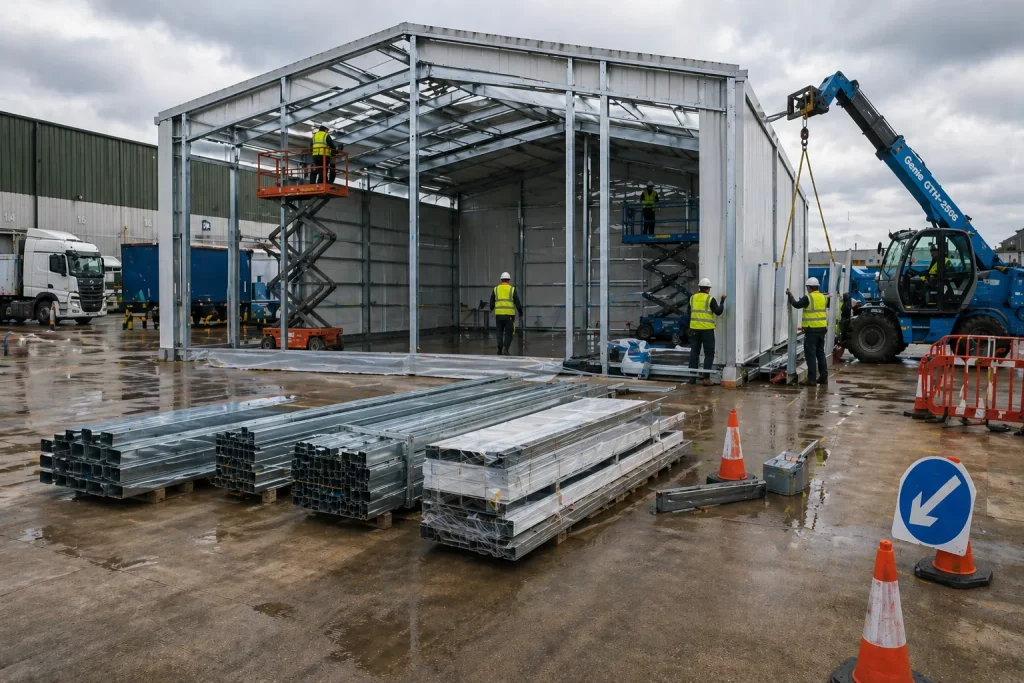
Table of contents – In this article:
- What happens during a temporary building installation on a live site?
- How should you prepare your site before installation begins?
- Will installation disrupt your operations?
- How is installation managed in a live operational environment?
- What are the key stages of temporary building installation?
- When is the building ready for use after installation?
- What matters most as you move from installation to operation?
- Next step
- What Happens During Temporary Building Installation: FAQs
What happens during a temporary building installation on a live site?
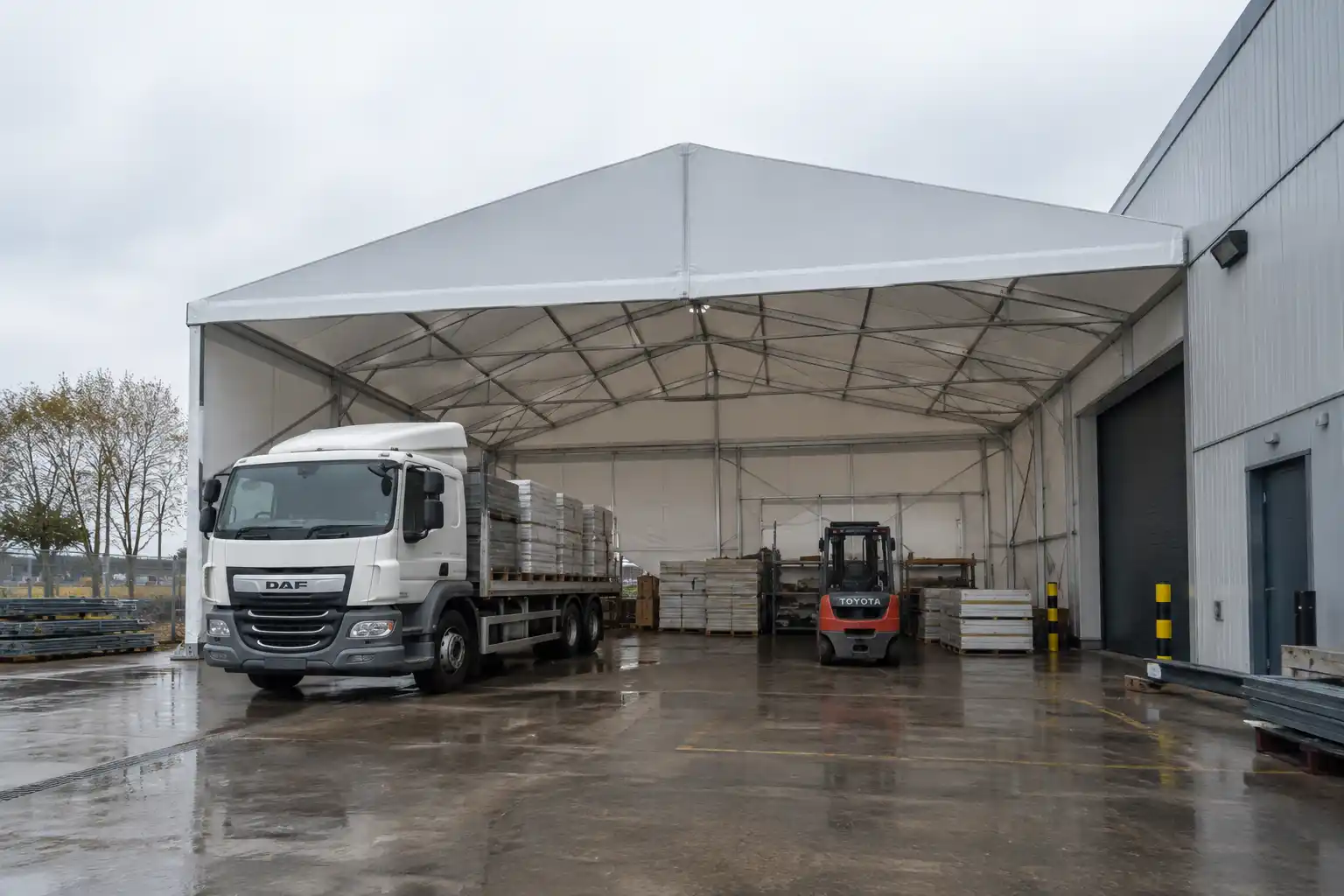
Temporary building installation on a live site is not simply a delivery arriving and a structure being put up. It is a coordinated process that has to account for access, safety, operational movement, working areas, delivery logistics and the wider pressures already affecting the site.
For a live operational environment, the process usually begins before installation teams arrive. The site layout, available space, delivery routes, ground conditions, working hours, neighbouring activities and operational priorities all need to be understood. This helps establish what can happen, where it can happen and what must be protected while the installation is underway.
The installation itself will typically include delivery of materials, setting out the work area, preparing the structure location, assembling the building, completing necessary checks and handing the structure over for use. The exact sequence will depend on the building type, specification, site conditions and the level of activity continuing around it.
This is why early coordination matters. If a temporary building is being installed as part of a wider continuity plan, the installation needs to support recovery rather than add avoidable disruption, particularly in scenarios such as fire damage where continuity planning and operational control need to be established early, as outlined in what to do after a commercial fire and what to do after a warehouse flood and what to do after storm damage makes your building unsafe. LM Structures’ work with Business Continuity Structures is centred on this kind of controlled implementation, where temporary space has to be delivered in a way that reflects real operational constraints.
On a live site, clarity is often as important as speed. Operations teams need to know which areas will be affected, when delivery vehicles may arrive, how staff movement will be managed and who is responsible for communication at each stage. Without that visibility, even a suitable building solution can create uncertainty during installation.
Health and safety planning is also central. The Health and Safety Executive advises that construction sites should be organised so that vehicles and pedestrians can move around safely, with routes that are suitable in position, number and size. That principle is especially relevant when installation activity takes place alongside normal operations.
How should you prepare your site before installation begins?
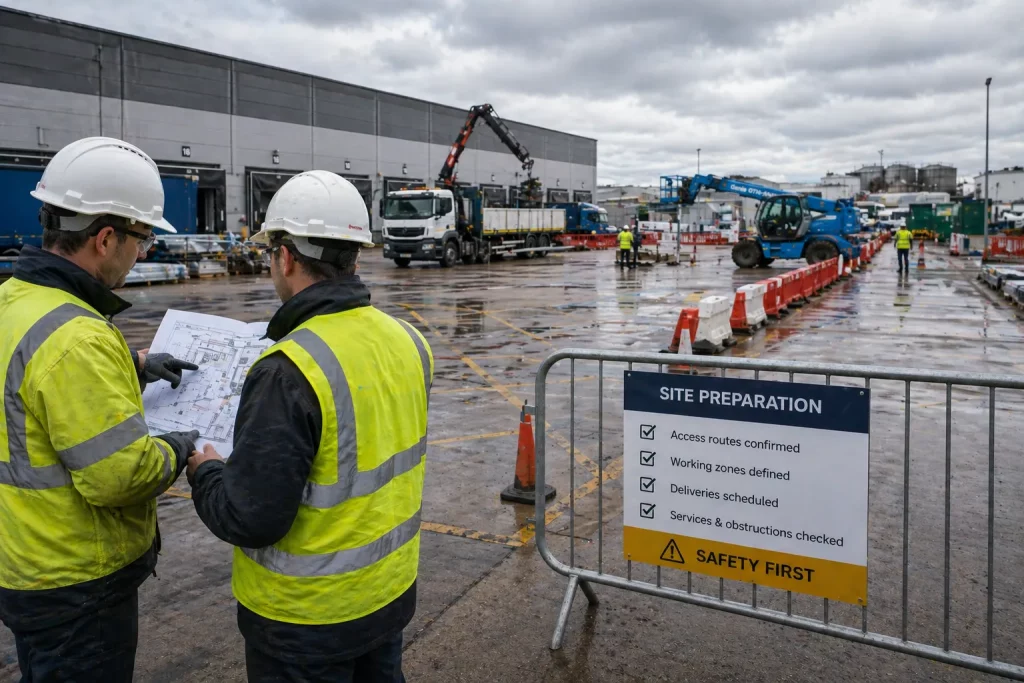
Preparation should focus on making the site ready for controlled installation, not simply clearing a space. The aim is to reduce uncertainty before teams, vehicles and materials arrive on site.
The first priority is to confirm where the temporary building will be positioned and whether the surrounding area can support safe installation. This may involve checking available space, access routes, turning areas, working zones, overhead restrictions, nearby buildings, existing services and any parts of the site that must remain operational.
The second priority is coordination. Site managers, facilities teams, operations leads and any other contractors or recovery teams should understand what is happening and when. If clean-up activity, production, deliveries, staff movement or customer access will continue during installation, these activities need to be factored into the programme.
Preparation should also identify any constraints that could delay work. Restricted access, unclear site boundaries, unsuitable delivery routes, occupied working areas or unresolved safety arrangements can all create avoidable friction. Where the site is damaged, congested or restricted, it may be useful to review guidance on whether you can install temporary buildings on a damaged or restricted site before finalising the installation plan.
For commercially accountable decision-makers, this preparation is not just administrative. Poor readiness can create downtime, inefficient movement, delayed recovery or additional coordination pressure. If a site team is already managing disruption, uncertainty at the installation stage can affect productivity, supply chain commitments or customer-facing service levels.
Preparation should also include practical communication. Staff may need to know which areas to avoid, when deliveries are expected, whether normal routes will change and who to speak to if operational issues arise. These details help reduce confusion and allow the installation to sit more comfortably alongside day-to-day activity.
Where construction-related duties apply, the Health and Safety Executive explains that commercial clients must make suitable arrangements for managing projects and enabling health and safety risks to be managed in a proportionate way. For this article’s context, that reinforces the need for appropriate planning, coordination and clarity before installation begins.
Will installation disrupt your operations?
Temporary building installation may create some disruption, but the level of impact depends on the site, the specification, the access available and how well the process is planned. On a live site, the goal is not to pretend there will be no disruption. The goal is to identify where disruption may occur and manage it before it affects critical operations.
The most common areas of disruption are vehicle movement, pedestrian routes, temporary loss of access to certain areas, delivery windows, noise, working zones and interaction with other site activity. For example, a delivery route may need to be kept clear during certain periods, or staff may need to use an alternative route while materials are moved into position.
Disruption can be reduced when the installation plan reflects how the site actually works. A warehouse, production site, school, venue or commercial premises will each have different priorities. Some sites may need to protect goods movement. Others may need to preserve customer access, staff welfare routes, public areas or time-sensitive operations.
The commercial implications should be considered early. Even short periods of poor coordination can affect productivity, deliveries, customer service or recovery progress. The issue is rarely the installation activity alone; it is how that activity interacts with the wider operation and the broader temporary building decision risks facing the business during recovery.
This is why programme expectations should be realistic. Installation timelines can vary depending on building size, specification, site readiness, access, weather exposure, ground conditions and any restrictions on working hours. Where timing is critical, it may be helpful to compare this with guidance on how quickly temporary buildings can be installed in an emergency, while recognising that every live site has its own constraints.
Safety controls also shape disruption. Work zones may need to be segregated, vehicle routes managed and access temporarily adjusted. HSE guidance on construction health and safety highlights the importance of planning, organising, controlling, monitoring and reviewing health and safety throughout a project, which supports a controlled approach rather than an improvised one.
How is installation managed in a live operational environment?
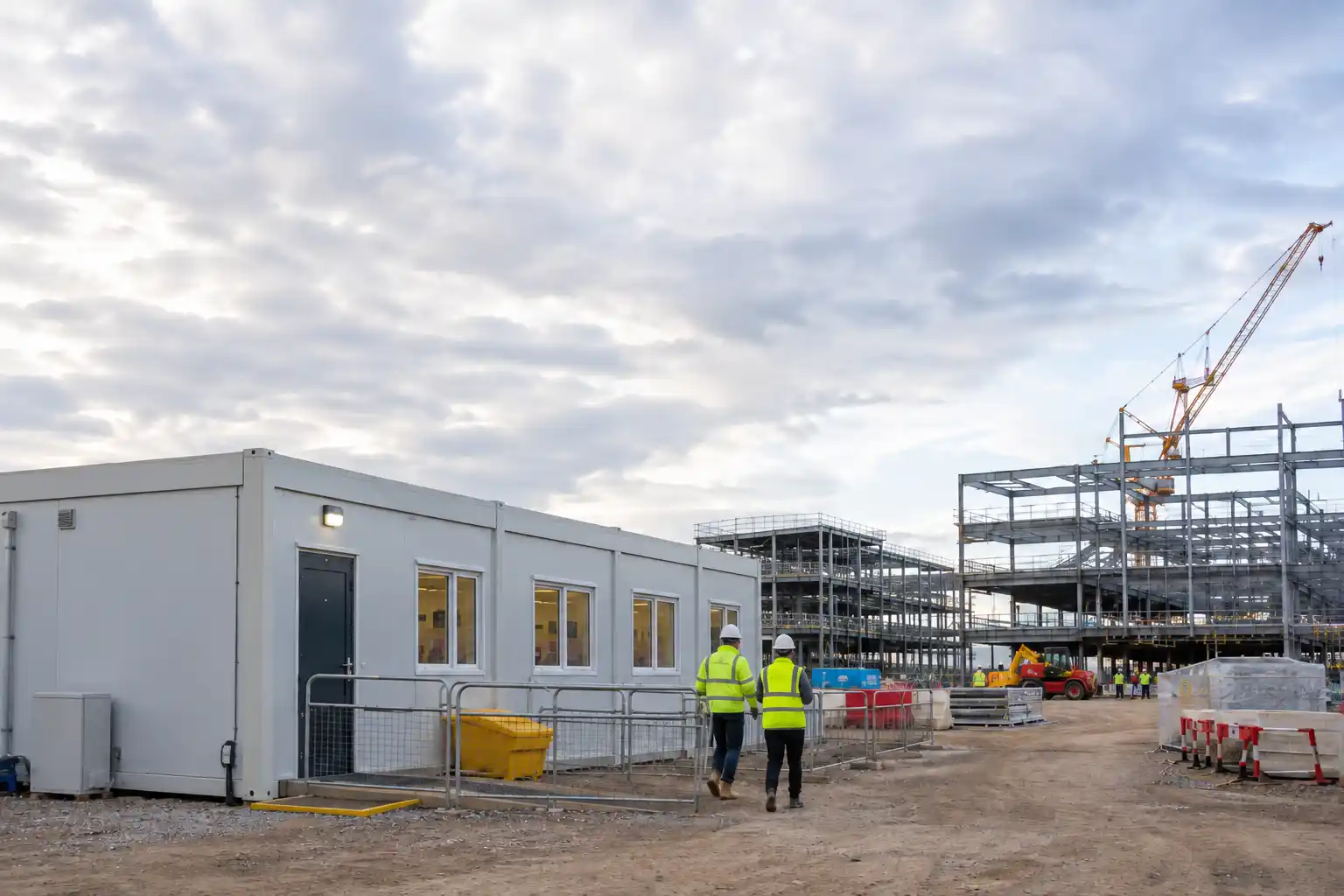
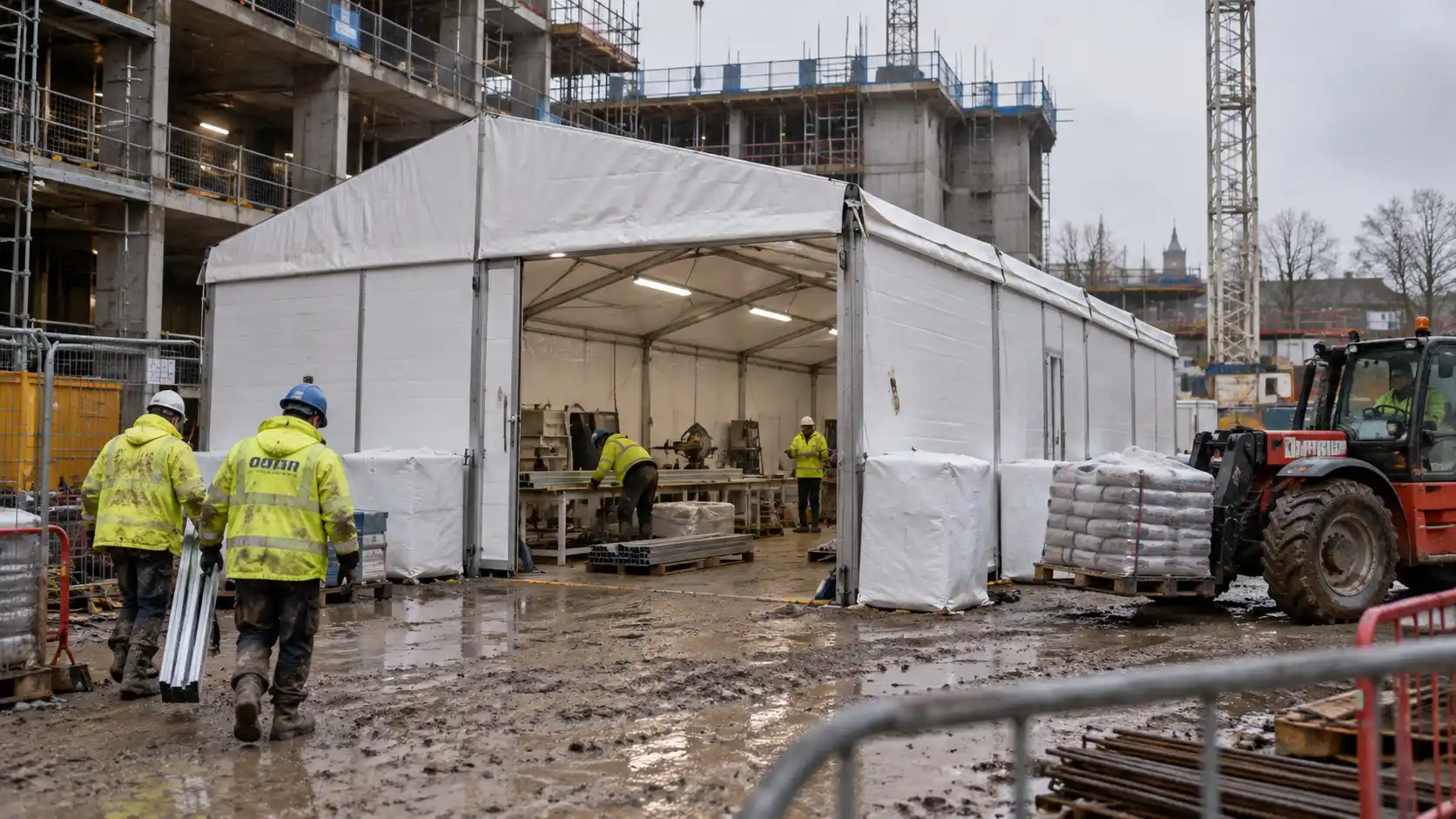
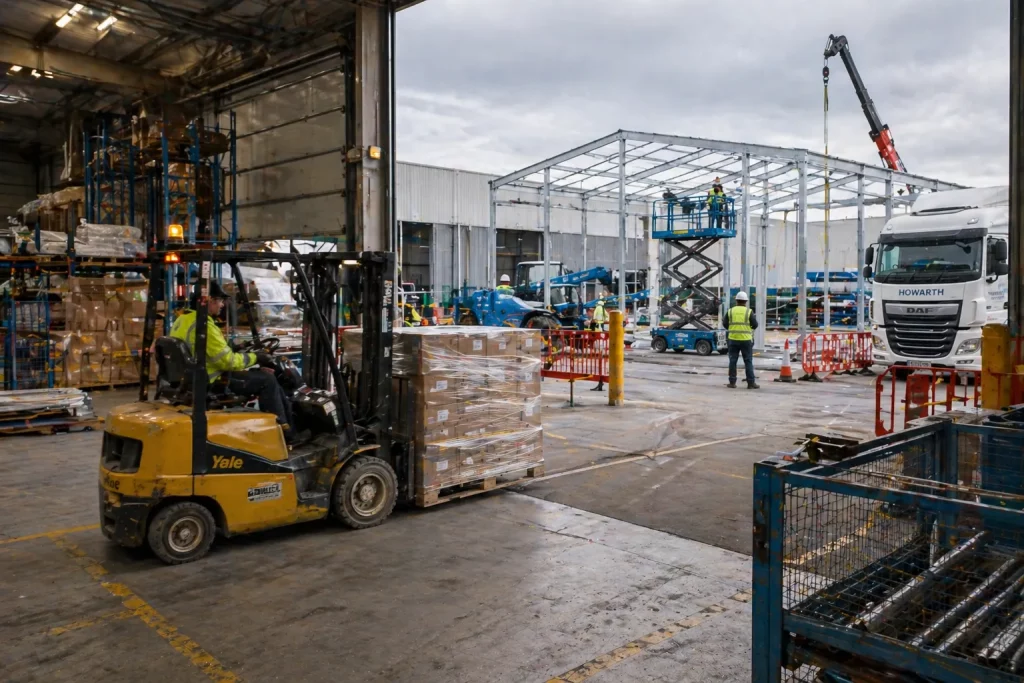
Installing a temporary building on a live site requires coordination between multiple activities rather than a single, isolated programme. The installation team must work alongside existing operations, which may include production, deliveries, recovery works, staff movement or customer access.
In practice, this means the installation is planned around defined working zones, agreed access routes and controlled timing windows. Areas where work is taking place are typically separated from operational areas to reduce interaction risk, while delivery movements are scheduled to avoid peak operational pressure where possible.
Clear communication is central to this process. Site teams need to understand what is happening at each stage, when specific activities will take place and how this affects access or movement. This avoids reactive decision-making on the day and helps maintain control across both installation and ongoing operations.
Coordination also extends to other contractors or stakeholders on site. Where clean-up, reinstatement, maintenance or parallel projects are taking place, sequencing becomes important. Installation may need to be phased around these activities to prevent congestion, conflicting movements or delays.
From a commercial perspective, this level of coordination protects operational continuity. Without it, even short periods of misalignment can create inefficiencies, disrupt workflows or slow recovery. Managed installation reduces that risk by aligning the building programme with how the site actually operates, rather than working against it.
What are the key stages of temporary building installation?
While the exact sequence depends on the building type and site conditions, most temporary building installations follow a structured set of stages:
Delivery and site setup
Materials are delivered to site in planned phases. Access routes, unloading areas and temporary storage locations must already be agreed to prevent congestion or unsafe movement. The installation area is then set out in line with the agreed layout.
Preparation of the installation area
The building footprint is prepared, which may include ground checks, levelling or positioning of base systems depending on the specification. This stage ensures the structure can be installed safely and performs as expected.
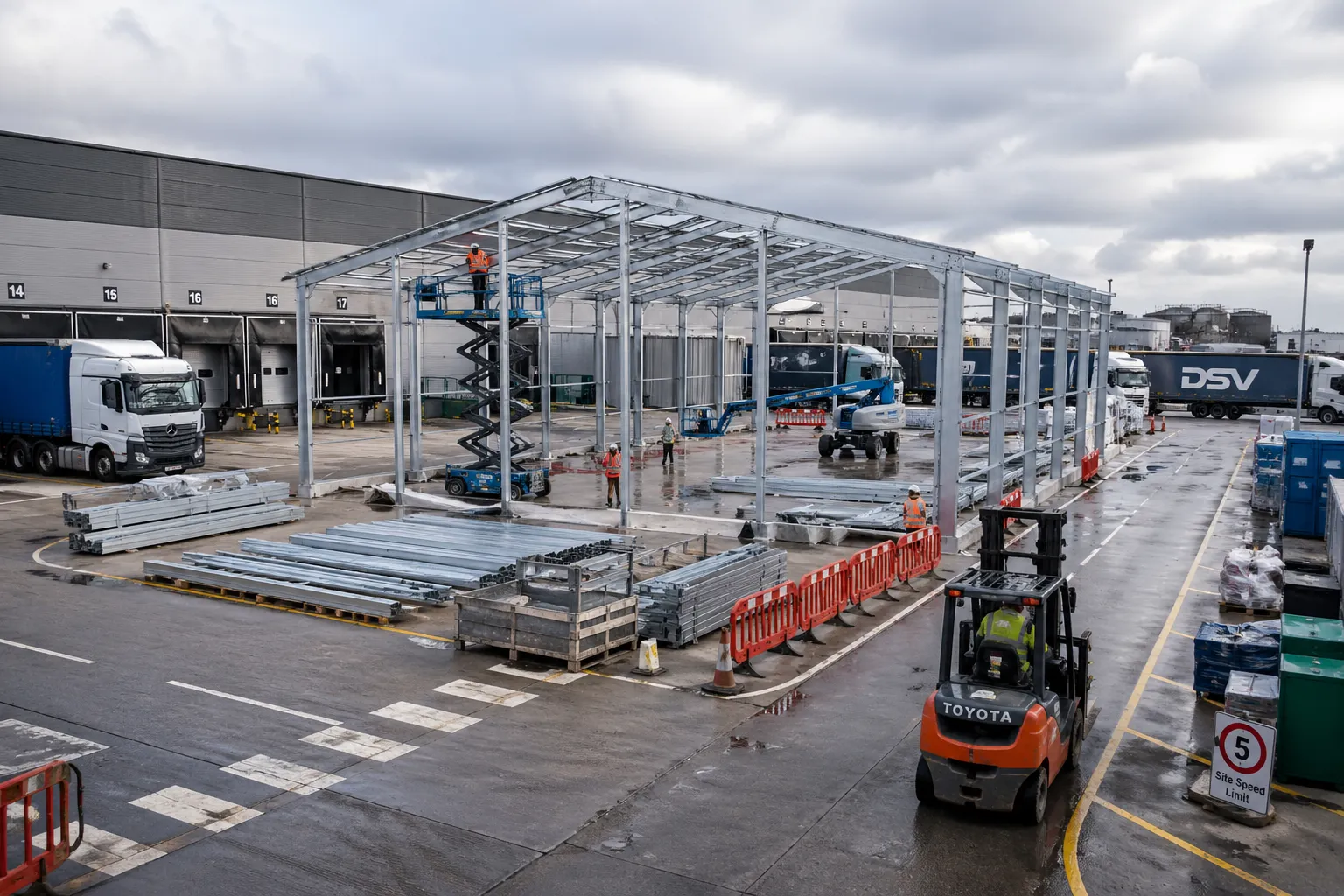
Structure assembly
The main structural frame is assembled, followed by cladding, roofing and any required internal or external features. This phase is usually the most visible part of the installation but is only one element of the overall process.
Integration of access and surrounding areas
Entrances, access routes and surrounding space are adjusted to ensure the building can function within the live site environment. This may involve aligning with existing circulation routes or creating new controlled pathways.
Checks and handover preparation
Before the building is brought into use, checks are carried out to confirm that the structure is installed as intended and ready for operational use. This is where the transition from installation activity to operational space begins.
Each stage needs to be considered in the context of the live site. Delivery timing, working hours, sequencing and access must all align with operational priorities. Where this is not managed, delays or inefficiencies can emerge that affect both installation and business activity.
When is the building ready for use after installation?
A temporary building is typically ready for use once installation is complete, checks have been carried out and the structure has been formally handed over for operational use. However, “ready for use” should be understood in the context of the site, not just the structure itself.
On a live site, readiness also depends on how well the building has been integrated into the existing operation. This includes confirming that access routes are clear, staff understand how the space will be used, any temporary arrangements have been removed or adjusted, and the building aligns with day-to-day workflows.
In some cases, there may be a short transition period between physical completion and full operational use. This allows site teams to move equipment, adjust processes or phase activity into the new space without disrupting ongoing operations.
From a continuity perspective, the value of the installation is realised at this point. The building becomes part of the operational environment, helping restore capacity, maintain service delivery or support recovery. If this transition is not planned, there is a risk that the building is technically complete but not immediately usable in practice.
What matters most as you move from installation to operation?
As installation completes, the focus should shift from construction activity to operational control. The key question is no longer how the building is installed, but how effectively it supports the site moving forward.
Maintaining clarity at this stage is important. Site teams should understand how the building fits into existing workflows, whether any temporary access arrangements remain in place and how movement around the site will continue to be managed. This helps avoid a secondary period of disruption after installation has finished.
From a commercial standpoint, this is where the benefits of early planning become clear. A well-coordinated installation allows operations to stabilise quickly, reducing the risk of extended downtime, inefficient processes or delays to recovery or expansion.
Where installation has been approached as part of a structured continuity plan, the building should integrate with minimal friction. Where coordination has been limited, there may be a need for further adjustment before the space can be used effectively.
Next step
At this stage, if your operation is continuing alongside installation, or preparing to, you need clarity on how the process will be managed within your specific site constraints.
Where access is restricted, activity is ongoing or timelines are sensitive, early coordination can make the difference between a controlled installation and one that creates avoidable disruption. This is particularly relevant when installation forms part of a wider continuity or recovery plan.
LM Structures works with operational teams to plan and deliver temporary buildings in live environments, aligning installation with site activity, access requirements and safety considerations. If you are approaching installation and need to understand how it will be managed on your site, the next step is to review your layout, constraints and programme so a structured installation approach can be defined before work begins.
You can speak to us on 0333 358 4989 or email enquiries@lmstructures.co.uk
What Happens During Temporary Building Installation: FAQs
The building is ready after installation is complete, checks are finished and handover has taken place. Full usability also depends on how well the building is integrated into the site’s operational setup.
Preparation includes confirming the building location, ensuring safe access, coordinating with other site activity and communicating with staff. Site readiness helps reduce delays and avoid unnecessary disruption.
Installation time depends on building size, specification, site conditions and access. Timelines vary, so it is important to align expectations with site constraints rather than relying on fixed durations.
Some disruption is likely, particularly around access routes, deliveries and working areas. However, with planning and coordination, disruption can usually be managed and limited to defined areas or time periods.
Installation typically includes site preparation, delivery of materials, structure assembly, checks and handover. On a live site, these stages are coordinated around existing operations to manage access, safety and workflow impact.