What Are the Risks of Choosing a Temporary Building Quickly?
When your business needs temporary space urgently, it can feel safer to make a fast decision than to pause and review the risks. But a temporary building decision made under pressure can affect operations, cost control, site safety and recovery planning.
In Short
The biggest risks when choosing a temporary building quickly are selecting an unsuitable structure, overlooking site constraints, under- or over-specifying the building, and failing to align the decision with operational, insurance or continuity requirements. A structured decision process helps reduce avoidable mistakes without slowing the response unnecessarily.
Temporary Building Decision Risks at a Glance
- The fastest available option may not be the best fit for your operational requirements.
- Site access, ground conditions, utilities and damaged areas can all affect what is practical.
- Under-specifying can leave the building unable to support the operation properly.
- Over-specifying can add unnecessary cost, complexity or installation burden.
- A poor decision can lead to rework, delay, workflow disruption or further cost exposure.
- The safest approach is to make a fast but structured decision based on operational priorities, constraints and likely duration.
What are the biggest risks when choosing a temporary building under pressure?
The biggest risk is assuming that availability alone makes a temporary building suitable. In an urgent situation, it is understandable to focus on what can be supplied quickly, especially when operations have been interrupted or space has been lost. However, a temporary structure still needs to match the site, the use case, the required duration and the operational pressures behind the decision.
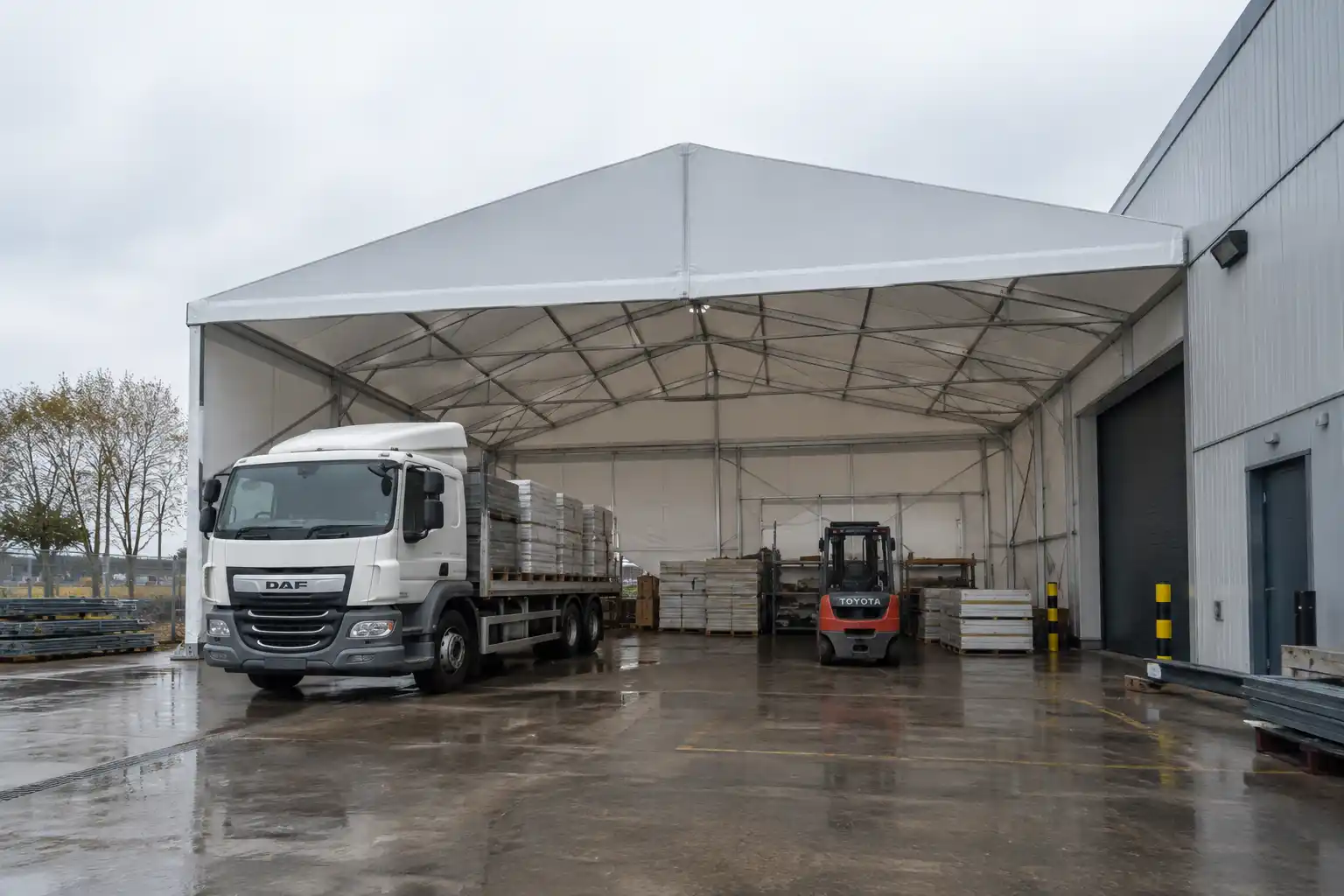
A building that is available quickly but poorly matched to the requirement may create new problems. In many cases, this starts with selecting the wrong temporary building type for business use before the operational requirement has been fully assessed.
There is also a risk of making the decision too narrowly. A temporary building is not just a physical structure; it becomes part of the operating environment. That means the decision should take account of access, ground conditions, storage needs, staff movement, loading requirements, customer or supplier interaction, and any constraints created by the disruption itself.
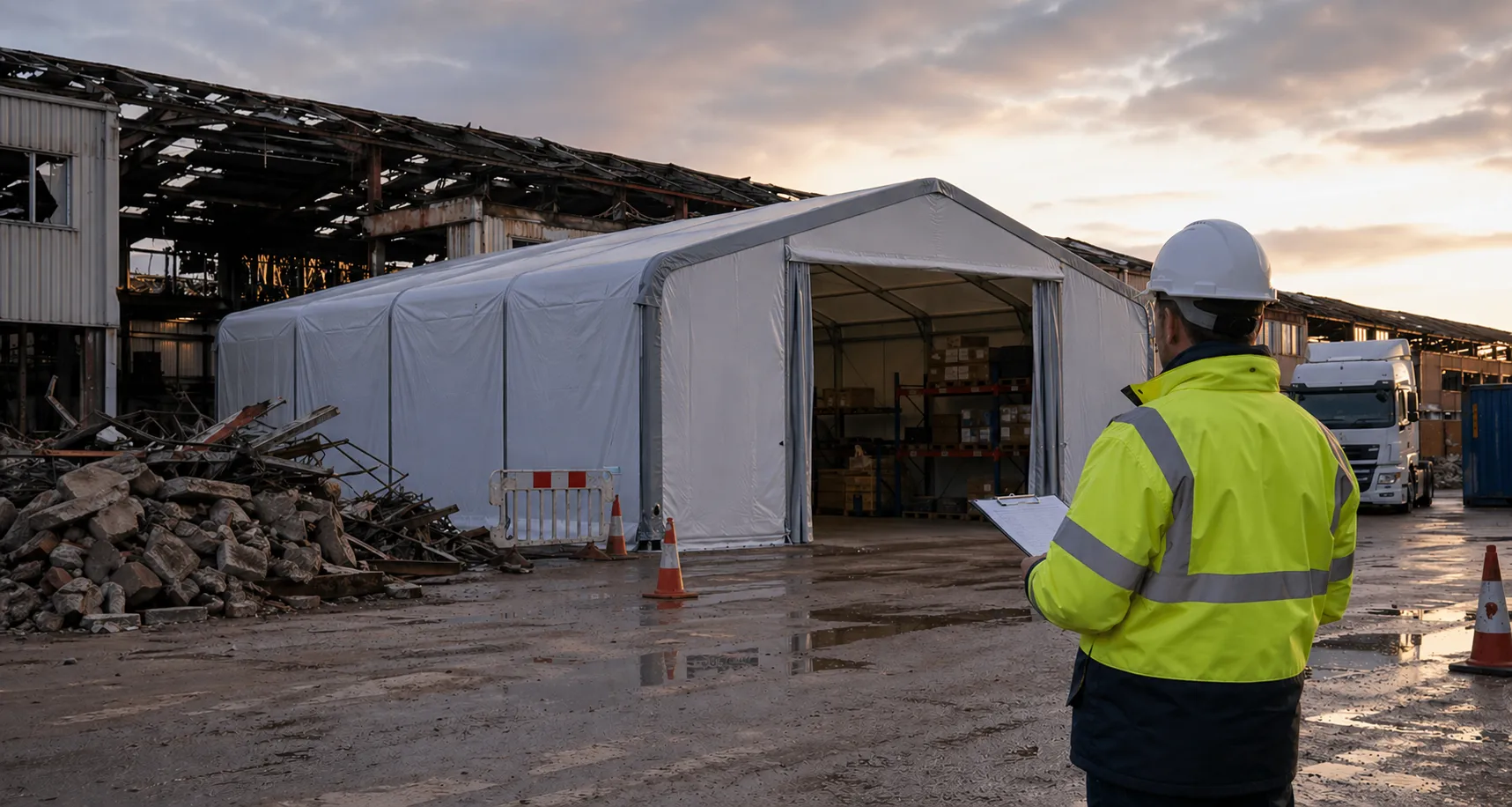
For many businesses, the decision also sits alongside insurance, cost control and continuity planning. Where a fire, flood, storm or other incident has affected operations, the temporary building may need to support a wider recovery plan, particularly in scenarios such as fire damage where operational continuity decisions need to be made quickly, as explored in what to do after a commercial fire and what to do after a warehouse flood and what to do after storm damage makes your building unsafe. This is where a structured approach to Business Continuity Structures helps ensure the solution is selected for practical operational fit, not just immediate availability.
Why do businesses make poor decisions during emergency situations?
Poor decisions often happen because the pressure to act is real. When operations are disrupted, decision-makers may be dealing with lost capacity, staff uncertainty, supplier pressure, customer expectations and financial exposure at the same time. Under those conditions, it is easy to prioritise movement over assessment.
The most common pattern is choosing the first option that appears to solve the visible problem. If a warehouse area has been lost, the immediate need may seem to be “more covered space”. If a production or service area has been damaged, the immediate need may seem to be “a replacement building”. But the real requirement is usually more specific: the right amount of space, in the right location, with the right access, for the right operational purpose and duration.
Pressure can also narrow internal decision-making. A procurement team may focus on speed and cost. An operations manager may focus on workflow. A facilities manager may focus on site feasibility. A director may focus on continuity and commercial risk. If those priorities are not aligned, the chosen solution may satisfy one concern while creating problems elsewhere.
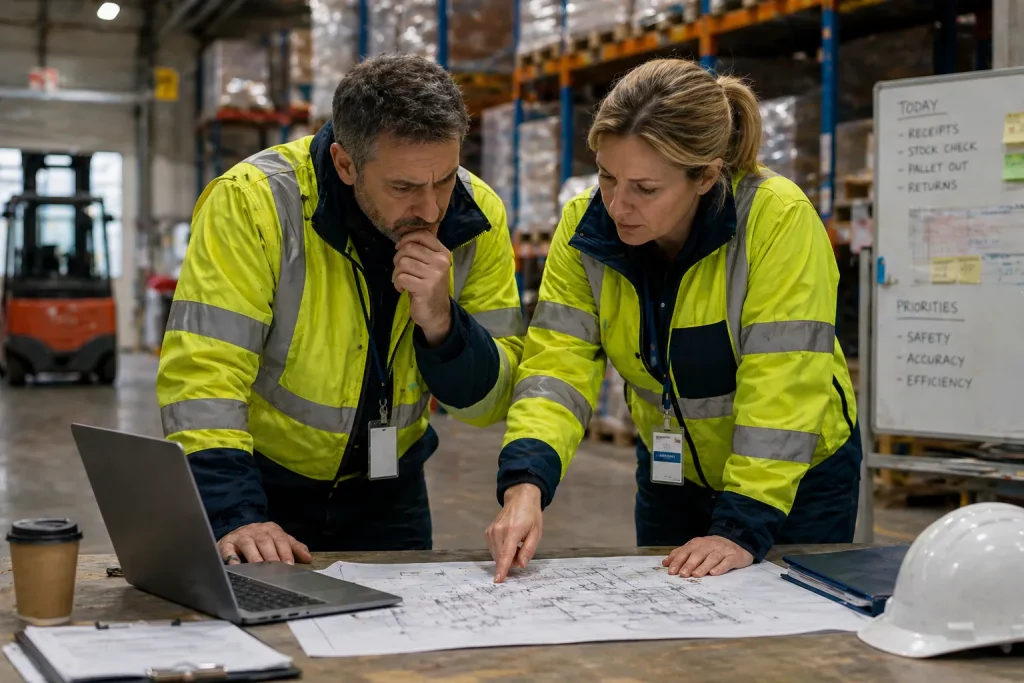
This is why emergency temporary building decisions benefit from a short but disciplined review, particularly where the organisation already has a broader business continuity management framework in place. The process does not need to be slow, but it does need to be deliberate. Even a focused review of operational need, site constraints, specification and likely duration can reduce the risk of choosing a solution that later proves unsuitable.
What happens if you choose the wrong temporary building?
Choosing the wrong temporary building can create operational disruption at the point when the business is trying to regain control. A structure that is too small, poorly positioned or unsuitable for the activity may limit throughput, slow movement around the site or make it harder for teams to work efficiently.
The consequences are not always immediate. A building may appear suitable during installation, but problems can emerge once daily operations resume. Access routes may be awkward. Storage layouts may not support picking, packing or dispatch. Staff may need to move further between work areas. Deliveries may become harder to manage. These issues can add friction across the working day.
There can also be commercial consequences. If the temporary building does not support the operation properly, downtime may continue for longer than expected. Customer commitments may become harder to meet. Contract or supply chain pressure may increase. Additional cost may arise if the building needs to be adapted, supplemented or replaced.
The wrong decision can also create stakeholder friction. Insurers, loss adjusters, landlords, site teams, health and safety stakeholders or senior management may all have an interest in how the temporary solution is selected and used. If the decision has not been clearly thought through, it may become harder to justify later.
What are the most common mistakes when selecting a temporary structure?
One of the most common mistakes is choosing based on availability alone. In a pressured situation, it can feel efficient to secure the first structure that can be delivered, but this often leads to compromises on layout, access, or usability that become apparent only once operations resume.
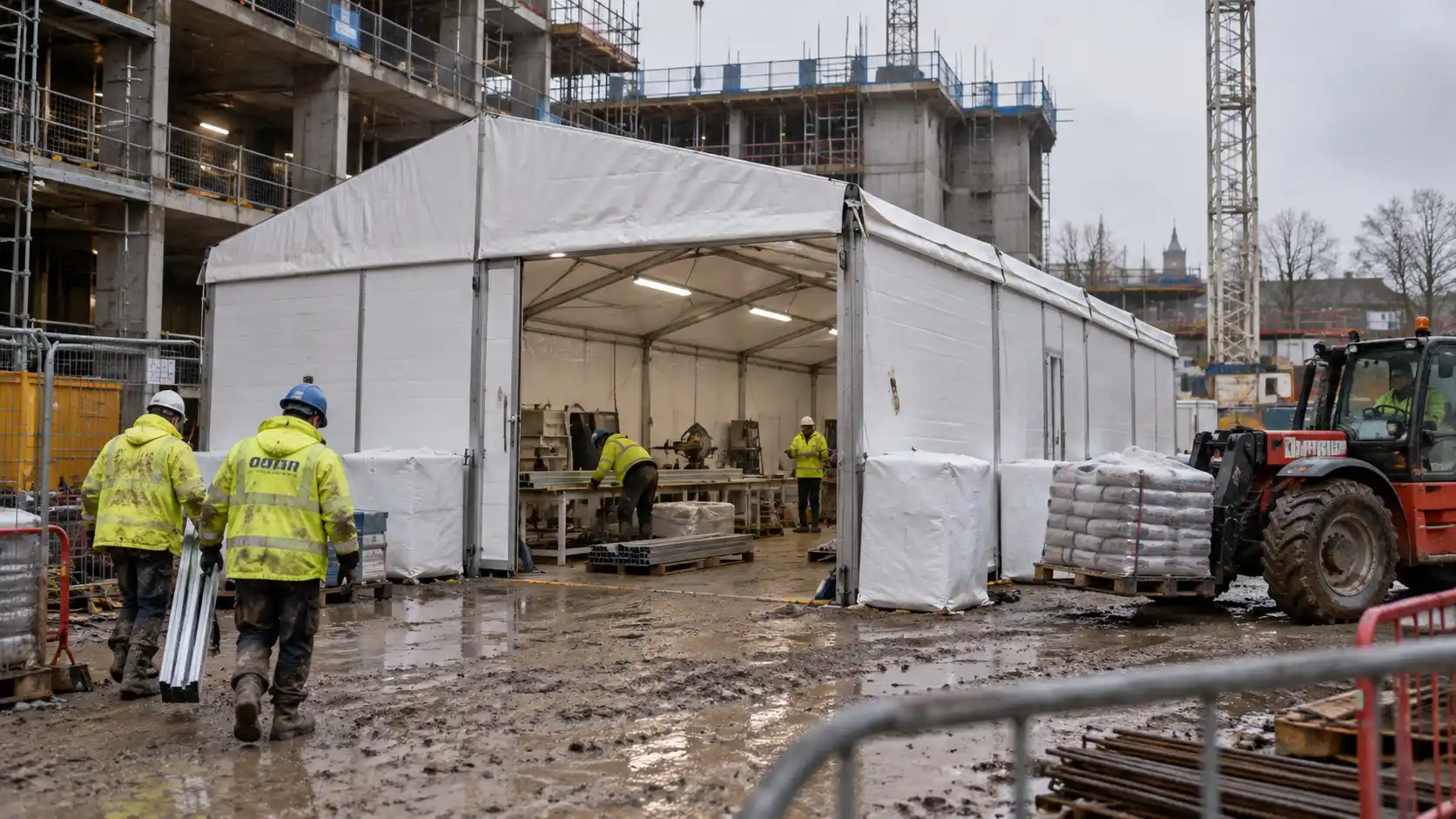
Another frequent issue is overlooking site constraints. Ground conditions, access routes, existing damage, utilities and space limitations all influence what can be installed and how it will function.
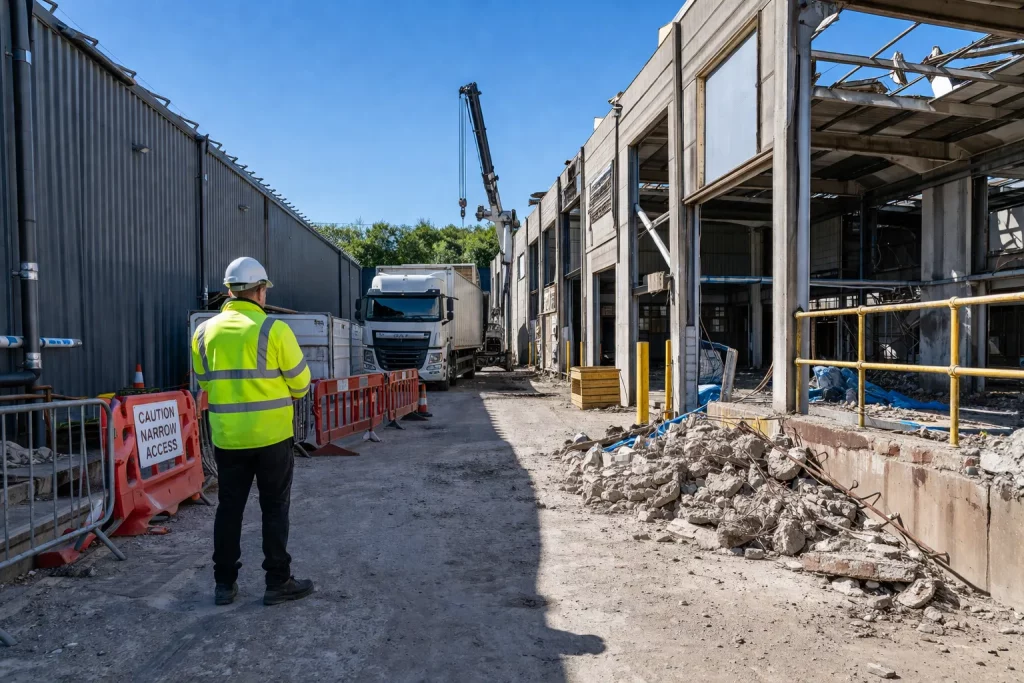
Where these factors are not properly assessed, installation can be delayed or the building may not perform as intended. This is particularly relevant in disrupted environments, where understanding whether you can install temporary buildings on a damaged or restricted site can significantly affect the decision.
Specification errors are also common. Under-specifying can result in a building that cannot support the required activity, whether due to insufficient span, clearance, loading access or internal configuration. Over-specifying, by contrast, can introduce unnecessary cost, complexity or installation requirements that do not reflect the actual need. Both outcomes reduce efficiency and can increase overall project cost.
A further mistake is failing to consider duration. Temporary buildings are often required for longer than initially expected, particularly where recovery timelines are uncertain. Choosing a structure that is only suitable for short-term use may lead to further disruption if it needs to be upgraded or replaced.
Finally, decisions are sometimes made without fully considering how the building will integrate into daily operations. Even where the structure itself is sound, poor alignment with workflows, staff movement or supply chain activity can limit its effectiveness and slow recovery.
How can you reduce risk when choosing a temporary building quickly?
Reducing risk does not require a slow decision, but it does require a structured one. Even in urgent scenarios, taking a short, focused approach to evaluation can significantly improve outcomes.
The first step is to clarify the operational requirement. Rather than defining the need in general terms such as “space” or “cover”, it is important to understand exactly what the building needs to support. This includes the type of activity, movement patterns, storage or processing requirements, and any interaction with vehicles, staff or customers.
Next, site constraints should be assessed early, alongside broader HSE guidance on managing operational risk in the workplace. Access, ground conditions, available footprint, utilities and any damage or restrictions will influence what is feasible. This avoids selecting a structure that cannot be installed or used effectively once on site.
Specification should then be aligned with the real requirement. This involves balancing capability with practicality – ensuring the building can support operations without introducing unnecessary cost or complexity. Where the situation is unclear, it may be more effective to choose a flexible solution that can adapt as requirements evolve.
It is also important to consider realistic timelines. Understanding how quickly temporary buildings can be installed in an emergency helps align expectations around delivery, installation and operational readiness, reducing the risk of mismatch between urgency and feasibility.
Finally, decisions should be documented and aligned internally. Even under pressure, confirming key assumptions and priorities across stakeholders helps ensure the chosen solution reflects the wider operational and commercial context.
What should you prioritise when making a fast decision?
When time is limited, not all factors carry equal weight. The priority should be selecting a temporary building that supports operational continuity in a practical, workable way.
Operational fit should come first. The building must allow the business to function, even if not perfectly. This includes ensuring sufficient space, appropriate access and workable internal layout. A structure that technically meets size requirements but disrupts workflows may create more problems than it solves.
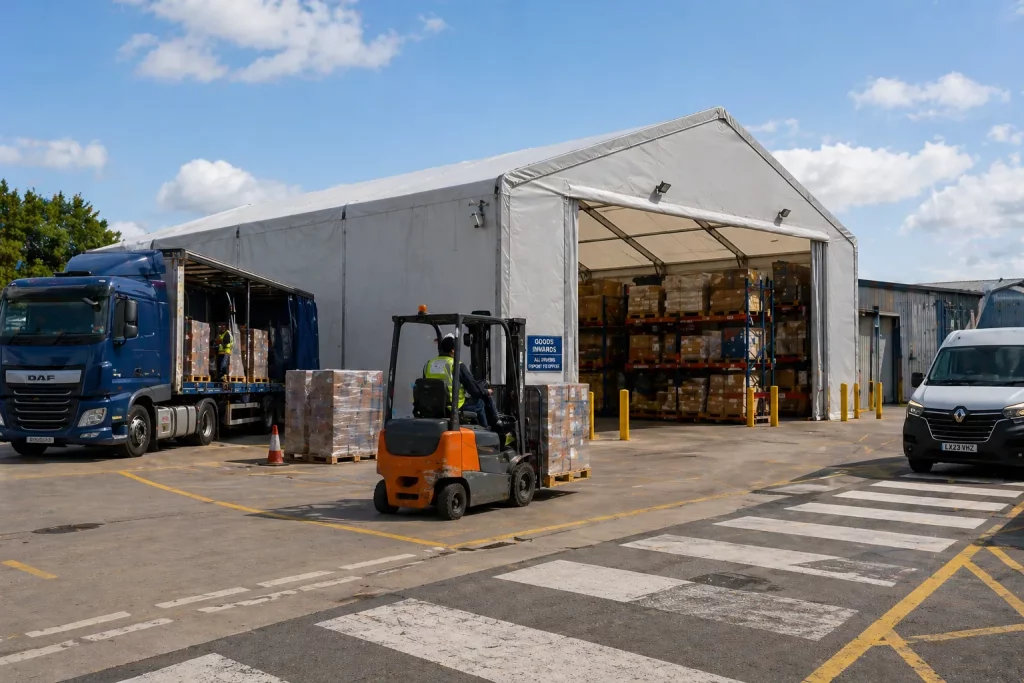
Site feasibility is equally important. A solution that cannot be installed cleanly or safely, or that conflicts with existing constraints, will introduce delay and additional cost. Early clarity on site conditions helps avoid this.
Duration should also be considered, even if uncertain. Choosing a building that can remain in place if recovery takes longer than expected reduces the risk of further disruption later.
Commercial awareness should run alongside these decisions. The aim is not to minimise cost at all stages, but to avoid unnecessary cost exposure caused by rework, inefficiency or extended downtime. A slightly more considered decision upfront can reduce these risks.
Finally, alignment with the wider recovery or continuity plan is essential. Where relevant, the temporary building should support business continuity objectives and, where applicable, align with insurer or stakeholder expectations without assuming guaranteed approval.
What matters most as you move forward?
At this stage, the priority is not to eliminate risk entirely, but to control it. Temporary building decisions made under pressure will always involve some uncertainty, particularly where site conditions, timelines or operational requirements are still evolving.
What matters most is maintaining a structured approach. By focusing on operational fit, site constraints, specification, duration and stakeholder alignment, you can reduce the likelihood of avoidable mistakes. This does not slow the response – it makes it more effective.
A well-considered temporary building should support recovery, not complicate it. The difference often comes down to whether the decision was made purely for speed, or whether it balanced urgency with practical evaluation.
Next step
If your operation is currently under pressure to restore space quickly, or you are assessing temporary building options in a disrupted environment, this is the point to pause briefly and sense-check your approach.
At this stage, engaging a provider experienced in Business Continuity Structures can help ensure the solution you choose reflects your operational requirements, site conditions and likely duration – not just immediate availability. This reduces the risk of rework, extended disruption or unnecessary cost exposure.
LM Structures supports businesses in making controlled, practical decisions under pressure, helping you move from urgency to a stable, workable solution that supports continuity rather than creating further constraints.
For more information you can call us on 0333 358 4989 or email enquiries@lmstructures.co.uk
Temporary Building Decision Risks – FAQs
The priority should be operational fit, followed by site feasibility and realistic duration. Cost and speed matter, but should be balanced against the need for a solution that supports stable, ongoing operations.
Risk can be reduced by clarifying the operational requirement, assessing site constraints early, aligning specification with real needs and ensuring internal stakeholders are aligned. Even a short structured review can improve decision quality.
A poorly matched temporary building can disrupt workflows, reduce operational efficiency and extend downtime. It may also require modification or replacement, increasing both cost and complexity.
Common mistakes include choosing based solely on availability, ignoring site limitations, under- or over-specifying the building, and failing to consider how it will integrate into daily operations. These are often avoidable with a structured decision process.
The main risks include selecting a building that does not match operational needs, overlooking site constraints, and misaligning specification with the intended use. These issues can lead to inefficiency, additional cost or further disruption.