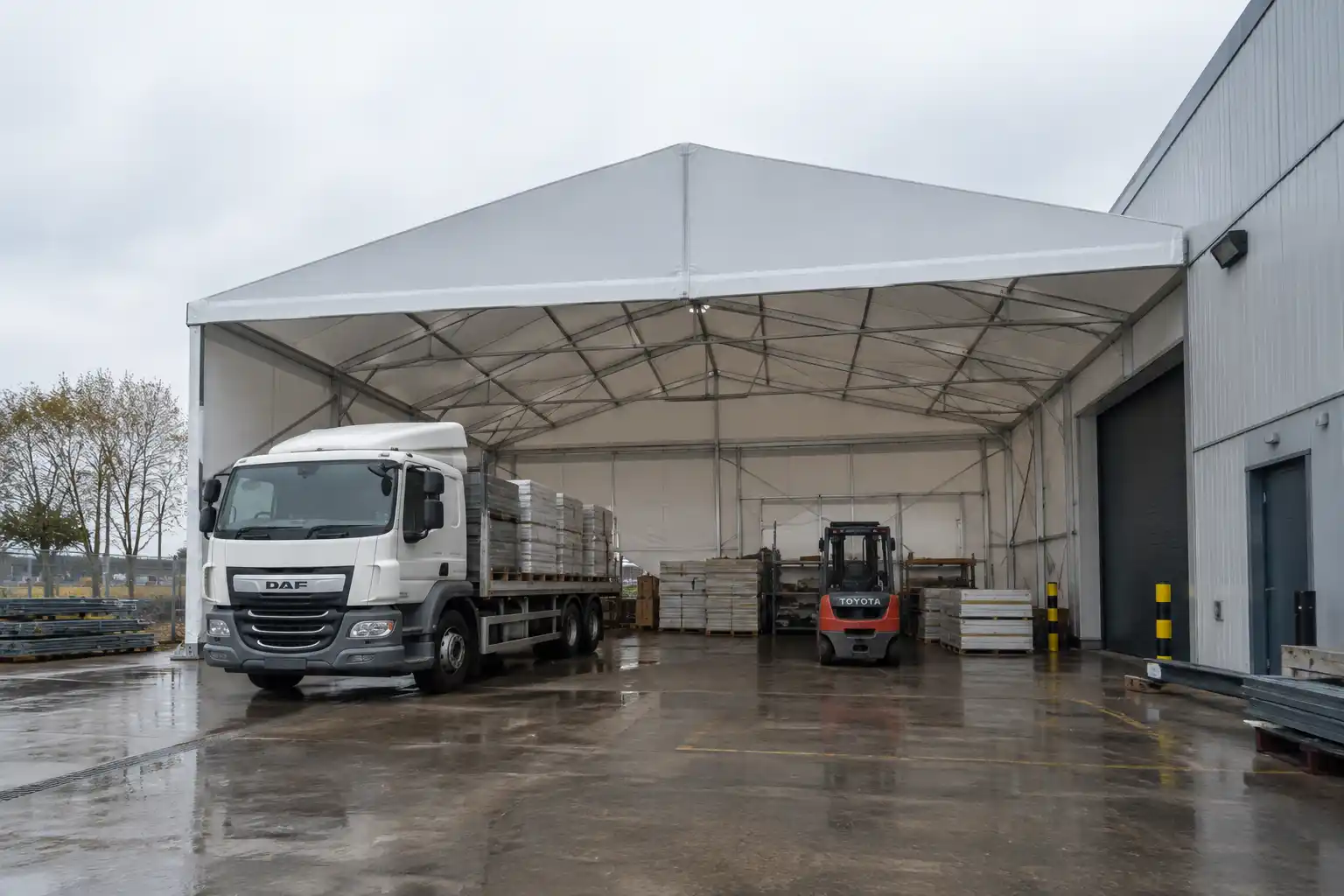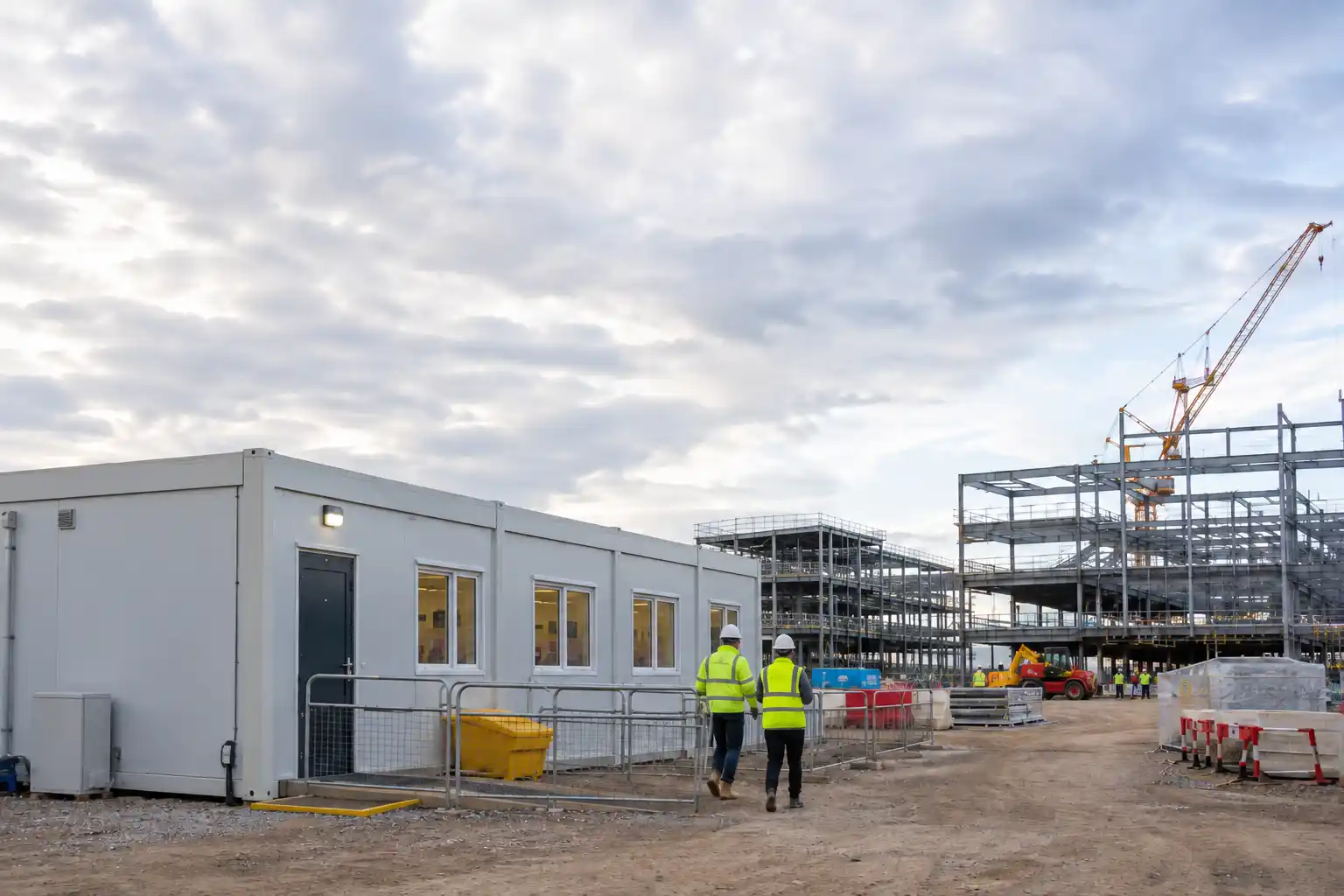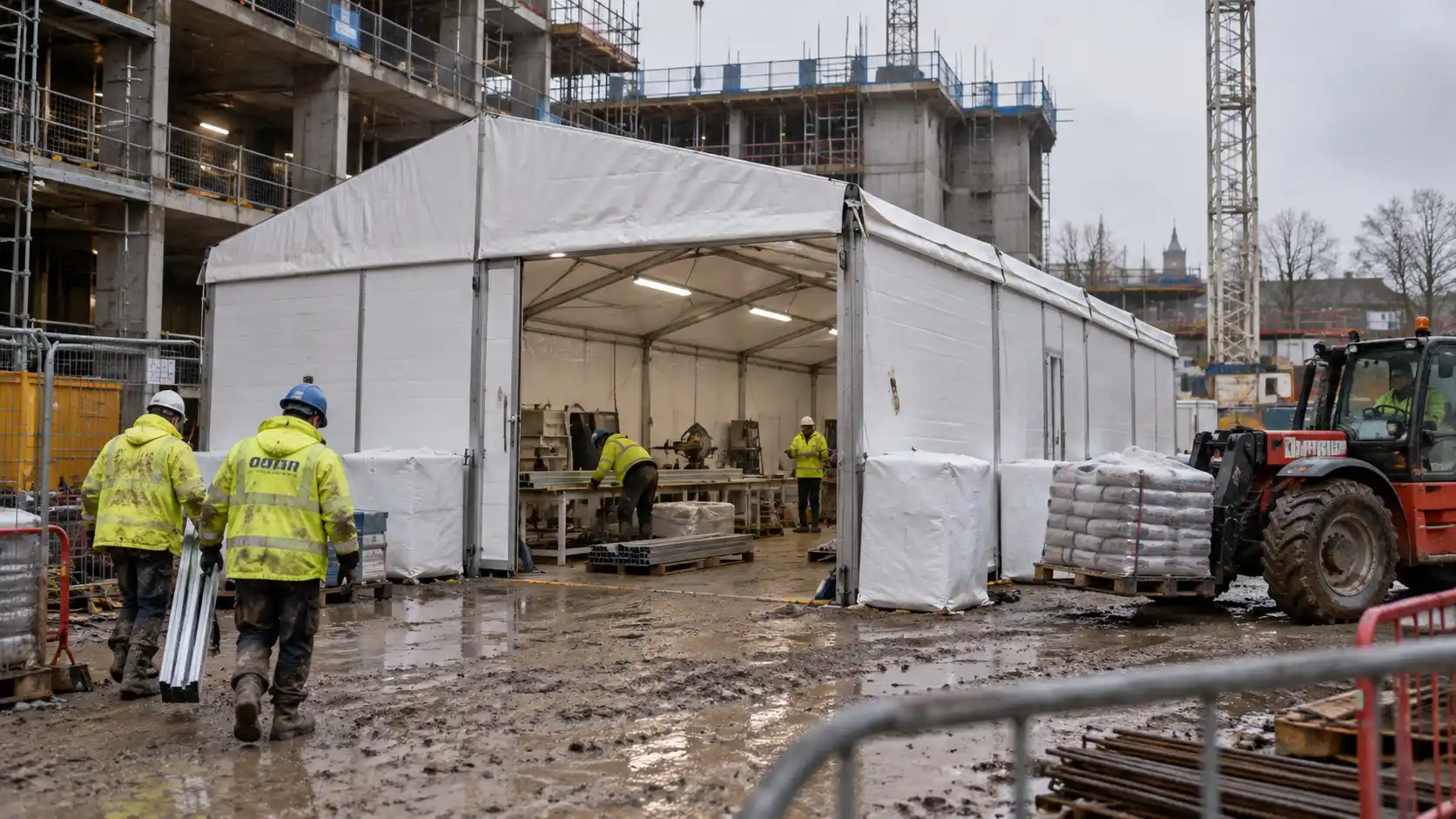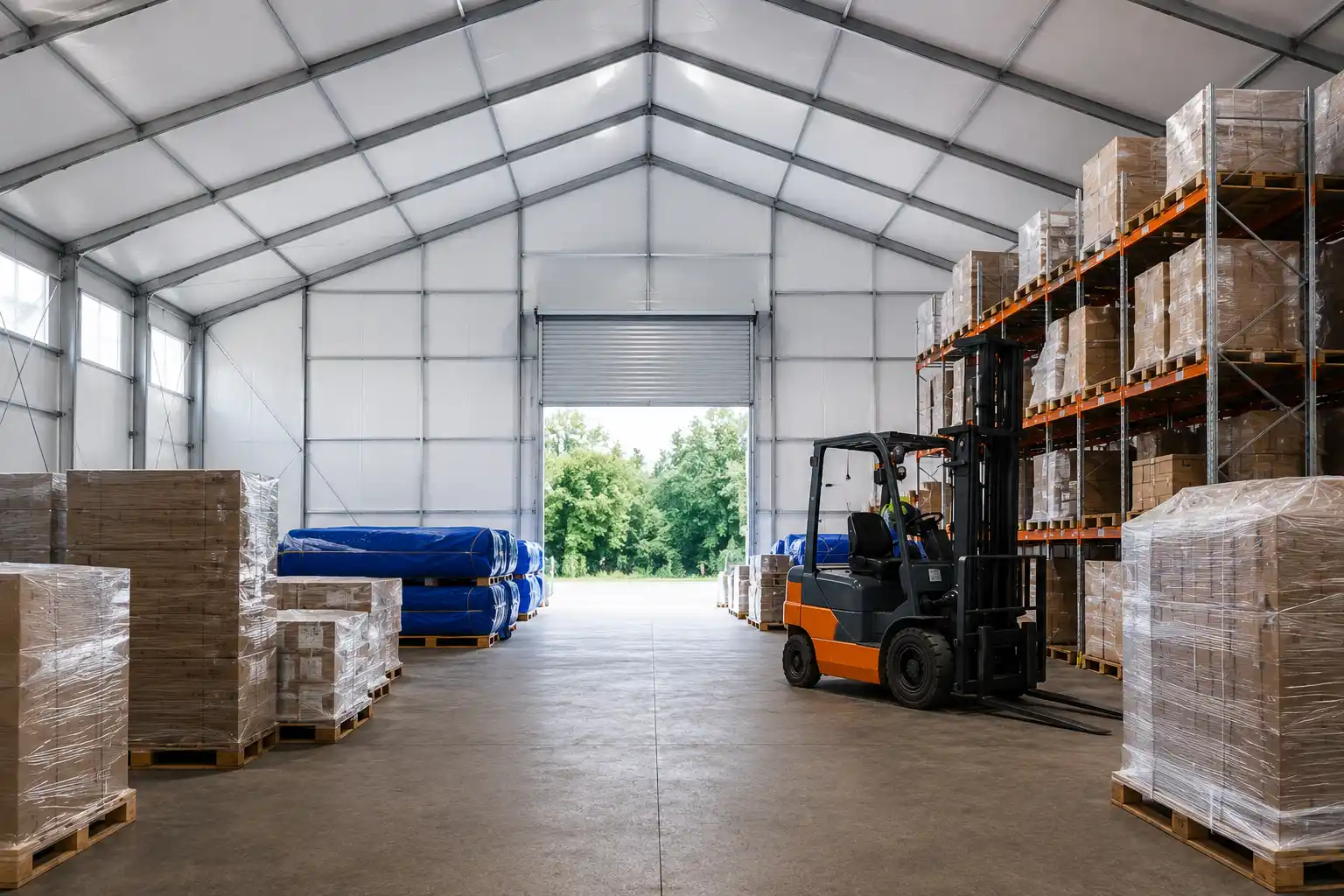
How Can Temporary Warehousing Support Business Continuity?
When warehouse storage is disrupted, the immediate concern is not simply where stock can be placed. The bigger question is whether the business can still protect, access, move and manage inventory well enough to keep operations functioning.
In Short
Temporary warehousing can support business continuity by restoring usable storage capability when existing warehouse space is disrupted, unsafe or unavailable. It gives businesses a practical way to protect stock, maintain access and support fulfilment, logistics or production while repair, reinstatement or longer-term recovery decisions are made.
For Operations Directors, Facilities Managers and business owners, this is a continuity decision as much as a storage decision. If stock cannot be stored safely, accessed efficiently or moved through the operation, disruption can spread quickly into customer service, production schedules, inbound deliveries and contractual commitments.
Temporary warehousing is not just about replacing lost floor space. Used well, it can provide a controlled operational buffer: a place where stock remains protected, teams can continue working, and the business has time to assess the wider recovery route without allowing storage disruption to stop the whole operation.
Operational Continuity Priorities at a Glance
When storage capability is disrupted, the immediate priority is to stabilise the parts of the operation that depend on stock being available, protected and movable. A temporary warehouse for business continuity should therefore be planned around operational use, not simply physical capacity.
Key continuity priorities usually include:
- confirming which stock, materials or equipment must remain accessible
- protecting inventory from further damage, deterioration or loss
- maintaining safe movement routes for people, vehicles and goods
- supporting inbound deliveries, outbound dispatch or production supply
- reducing avoidable downtime while recovery plans are developed
- coordinating temporary storage with insurers, loss adjusters, facilities teams or operational stakeholders where relevant
This is why temporary warehousing and storage solutions need to be assessed in relation to the wider operating environment. The right temporary storage approach should support continuity of movement, visibility and access, rather than creating a separate storage problem elsewhere on site.
Table of Contents – in this article
Why storage capability is critical to business continuity
Storage is often treated as a supporting function until it becomes unavailable. In practice, warehouse capability is frequently central to how a business fulfils orders, supplies production, protects assets and keeps goods moving through the organisation.
For a logistics, manufacturing, retail or distribution-led business, storage is rarely passive. Stock may need to be received, checked, segregated, rotated, picked, packed, dispatched or moved into production at the right point in the workflow. If that storage capability is interrupted, the issue is not only that goods need a new location. The issue is that a critical operating system has been weakened.
This is where storage continuity becomes part of business continuity. UK Government business continuity guidance frames continuity planning around the ability to continue critical activities during disruption, and warehousing often supports several of those activities at once: stock control, supply chain flow, customer fulfilment and operational recovery. The UK Government business continuity guidance reinforces the importance of planning for disruption in a structured way rather than treating continuity as an improvised response.
For an Operations Director, the practical concern is usually whether the business can continue to function at an acceptable level while the primary warehouse, storage area or stockholding space is compromised. That may mean maintaining dispatch capability, keeping raw materials close to production, protecting finished goods, or preventing stock from being moved into unsuitable or inefficient locations.
A temporary warehouse for business continuity can support this by restoring a controlled storage environment close to the point of need. That does not remove the need for careful planning, site assessment or wider recovery coordination, but it can give the business an operationally useful way to preserve storage function while the disruption is being resolved.
The commercial consequences are closely linked to the operational ones. If stock cannot be accessed or moved, orders may be delayed, production may slow, deliveries may be missed and teams may spend more time working around the problem than resolving it. The value of continuity-focused temporary warehousing lies in reducing that operational drag before it becomes a wider business issue.
What happens when warehouse storage is disrupted?
When warehouse storage is disrupted, the first visible problem may be physical: damaged racking, restricted access, unsafe areas, water ingress, fire damage, contamination risk, power failure or a section of the building being declared unusable. However, the deeper operational issue is what happens next to the flow of goods.
Stock that was previously organised, protected and accessible may suddenly need to be relocated, split across different areas or held in temporary positions that were not designed for storage. That can quickly affect stock visibility, picking accuracy, stock rotation and the ability of teams to move safely and efficiently around the site.
In some cases, the disruption may not remove the whole warehouse from use. A business may still have partial access but lose a critical zone, loading area, high-value stock section or route between storage and production. Even partial disruption can create a bottleneck if it affects the part of the operation that everything else depends on.
Common consequences include:
- goods being moved into less suitable storage areas
- increased handling and rehandling
- slower picking, loading or dispatch
- restricted access for forklifts, vehicles or operational teams
- reduced visibility of stock location or condition
- greater risk of damage, loss or deterioration
- pressure on fulfilment, production or customer service teams
Health and safety also becomes more important, not less. Temporary arrangements need to account for safe loading, unloading, vehicle movement, pedestrian routes and stock handling. HSE guidance on warehousing and storage highlights the importance of managing workplace transport, storage practices and loading activities safely, which is directly relevant when storage arrangements have to change under pressure. The HSE warehousing and storage guidance is a useful external reference point for understanding why storage continuity must be planned around safe operational use, not just capacity.
This is where poorly planned responses can create secondary disruption. A quick decision to move stock into the nearest available space may feel practical in the moment, but if that space restricts access, increases handling time or creates unsafe movement routes, it can slow the operation further.
Temporary storage after disruption should therefore be judged by whether it supports the business’s operational rhythm. Can goods still be received? Can critical stock be separated and accessed? Can dispatch continue? Can production teams obtain the materials they need? Can vehicles reach the right areas safely?
These questions matter because continuity depends on the function of the storage environment, not simply its existence.

How does storage disruption affect wider operations?
Warehouse disruption often spreads because storage is connected to several parts of the business at once. When inventory is difficult to access, the impact can move quickly from the warehouse floor into customer service, production planning, procurement, finance and senior operational decision-making.
For fulfilment-led businesses, disrupted storage can delay order picking, packing and dispatch. Even if stock is technically available, it may not be in the right location, condition or sequence to support normal fulfilment. That can lead to slower turnaround times, increased manual intervention and greater pressure on teams already working in a disrupted environment.
For manufacturing or production environments, the effect can be even more direct. If raw materials, components or packaging cannot be stored close to production or supplied in the correct order, production schedules may need to be adjusted. A storage issue can therefore become a production continuity issue, particularly where stock movement is time-sensitive or space is already constrained.
For distribution or logistics operations, the risk is often flow. Disruption to storage can affect inbound goods, outbound dispatch, cross-docking, vehicle scheduling and staging areas. If temporary arrangements do not support these movements, the business may retain stock but lose efficiency, visibility and control.
The commercial exposure follows the operational pattern. Delayed fulfilment can affect customer commitments. Production disruption can affect output. Poor stock accessibility can increase labour time and handling costs. Fragmented storage can make it harder to prioritise critical inventory. None of these consequences needs to be overstated, but they help explain why storage continuity is a strategic operational issue rather than a facilities inconvenience.
Insurance and risk stakeholders may also be involved, especially where disruption follows damage, an insured event or a business interruption scenario. The ABI explains that business interruption insurance is designed to cover loss of income following insured damage, subject to the policy terms and circumstances. The ABI guidance on business interruption insurance is a useful reminder that insurance considerations may sit alongside operational recovery, but the article should not treat insurance as a substitute for practical continuity planning.
In practice, the business often needs both: clear operational action to protect storage continuity, and appropriate coordination with internal stakeholders, insurers, landlords, facilities teams or recovery partners where relevant. Temporary warehousing can support that operational side by providing a usable, planned storage environment while the wider situation is assessed.
The key is integration. A temporary warehouse that sits outside the operational flow may provide space but still fail to support continuity.
A temporary warehouse that is planned around access, movement, stock priority, loading requirements and site constraints is more likely to help the business maintain control while permanent recovery decisions continue.
What are the immediate priorities when storage capability is lost?
The first priority is usually stabilisation rather than optimisation. When warehouse capability is disrupted, businesses need to establish what stock remains safe, what can still be accessed and which operational activities are most exposed if storage functionality is reduced further.
In many cases, the pressure comes from uncertainty. Teams may not yet know whether disruption will last days, weeks or longer. That means the initial response needs to support continuity while preserving flexibility for the wider recovery plan.
The immediate priorities typically include:
- protecting inventory from further damage or contamination
- identifying critical stock required for fulfilment or production
- maintaining safe access routes for staff and vehicles
- preserving operational flow wherever possible
- reducing avoidable downtime
- preventing short-term storage decisions from creating longer-term inefficiencies
Stock accessibility is particularly important. Inventory that cannot be located, reached or moved efficiently may still exist physically, but operationally it becomes far less useful. This is one reason businesses often underestimate the effect of warehouse disruption until teams begin working around fragmented or improvised storage arrangements.
Businesses may also need to assess whether existing storage areas remain operationally safe. Structural concerns, environmental contamination, restricted loading access or damaged infrastructure can all affect whether the current space can continue functioning in a controlled way.
At this stage, temporary warehousing becomes relevant because it can help restore practical storage capability before the permanent recovery route is fully defined. The value is not simply additional covered space. The value lies in supporting continuity of access, movement and operational control while the wider situation stabilises.
Can temporary warehousing support business continuity?
Yes – when planned around operational use rather than just storage volume, temporary warehousing can play an important role in maintaining business continuity during disruption.
The key point is that continuity depends on maintaining usable operational capability. A business may still hold inventory, but if stock cannot be accessed efficiently, moved safely or integrated into fulfilment or production workflows, operational disruption can continue even after goods have been relocated.
Temporary warehousing can support continuity by:
- restoring secure storage capacity close to operational activity
- maintaining stock accessibility during disruption
- supporting inbound and outbound logistics
- reducing the need for fragmented off-site storage
- preserving operational flow while repairs or reinstatement continue
- allowing recovery decisions to be made in a more controlled way
This does not mean every disruption requires a temporary warehouse. Suitability depends on the operational environment, stock profile, available site space, logistics requirements and recovery timeline. However, where storage disruption threatens wider operational continuity, temporary warehousing can provide a structured interim solution that supports the business while uncertainty remains.
Importantly, continuity-focused temporary warehousing should be integrated into the wider operation rather than treated as an isolated structure. A warehouse that cannot support vehicle access, stock movement or operational sequencing may create further inefficiencies, even if it technically increases storage capacity.
This is why operational planning matters. Businesses evaluating temporary warehouse for business continuity planning need to consider how stock will move into and out of the structure, how teams will use the space, and how the temporary facility connects with existing workflows.
Where disruption affects live operations, there is also a strong case for involving operational stakeholders early. Facilities teams, warehouse managers, logistics leads and continuity stakeholders may all have different priorities that affect how temporary storage should be configured and positioned on site.
The article should also remain realistic about implementation. Temporary warehousing can often be introduced more quickly than permanent construction, but timelines still depend on access, ground conditions, structure requirements, operational complexity and coordination activity. The emphasis should remain on controlled operational continuity rather than simplistic speed claims.
How temporary storage integrates into operational recovery
Temporary warehousing is most effective when it forms part of a broader operational recovery approach rather than being treated as a standalone reaction to disruption.
In practice, businesses often need to balance several recovery pressures at once. Repair works may still be under assessment. Access restrictions may remain in place. Insurance stakeholders or landlords may still be reviewing the wider situation. Operational teams may already be working around reduced capability.
Temporary storage therefore needs to support continuity without interfering with the recovery process itself.
This integration usually involves three overlapping priorities:
- maintaining operational capability
- supporting safe recovery activity
- preserving flexibility while longer-term decisions are made
For example, a business may need temporary storage close to production so materials remain accessible while damaged areas are isolated or repaired. A distribution-led operation may prioritise dispatch continuity and vehicle flow. A retailer or wholesaler may focus on protecting seasonal stock and preserving fulfilment capacity during a commercially sensitive period.
The continuity value comes from allowing the business to continue functioning while recovery planning develops in parallel.
This is also where practical coordination becomes important. Temporary warehousing may need to work alongside contractors, facilities teams, insurers, operational staff or recovery specialists. Site access, loading routes, vehicle segregation and operational sequencing all need consideration so the temporary arrangement supports the wider recovery effort rather than complicating it.
Businesses that have not managed this type of disruption before sometimes assume any available storage space will resolve the issue. In reality, poorly integrated temporary storage can increase handling time, reduce visibility of stock and create inefficient movement patterns that prolong operational disruption.
This is one reason temporary warehouse installation process considerations matter within continuity planning. The practical realities of positioning, access, workflow integration and operational use affect whether the temporary structure genuinely supports continuity.
Structured continuity planning also aligns with wider business continuity guidance. ISO 22301 business continuity principles focus on maintaining critical activities during disruption while supporting recovery and resilience planning. The BSI ISO 22301 implementation guidance reinforces the importance of structured continuity thinking rather than reactive decision-making.
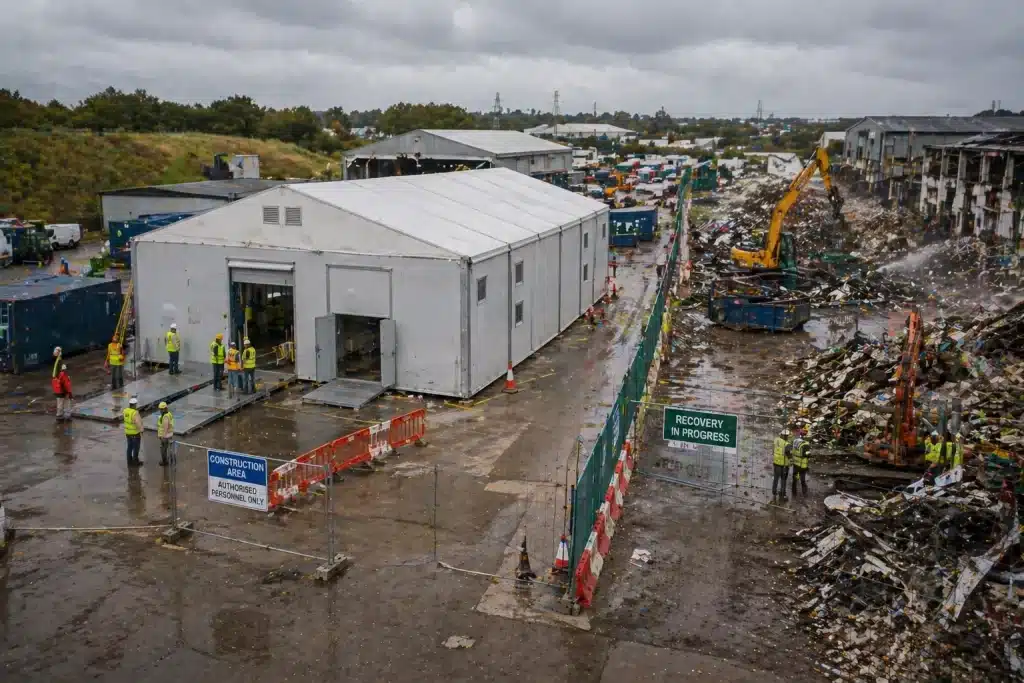
What factors affect continuity planning for warehousing?
The suitability of temporary warehousing depends on more than storage volume alone. Businesses need to assess how the temporary facility will function operationally within the realities of the site, inventory profile and wider recovery environment.
One of the biggest factors is access. A temporary warehouse may need to support forklifts, articulated vehicles, loading operations, dispatch activity or movement between production and storage zones. If access routes are constrained or poorly planned, operational continuity can still suffer even if additional storage space has been created.
Ground conditions and available site space also influence what is realistic. Businesses dealing with disruption may already have reduced operational areas, restricted movement routes or recovery works taking place elsewhere on site. Temporary storage therefore needs to fit into a live and potentially changing operational environment.
Inventory type matters as well. Different products create different operational requirements. Palletised goods, production materials, high-value inventory, sensitive products or bulky stock may all require different layouts, access arrangements or environmental considerations.
Continuity planning should also account for:
- how stock will be received and dispatched
- whether inventory needs to remain close to production
- how operational teams will move through the site
- whether stock rotation or sequencing is important
- how security and stock visibility will be maintained
- whether temporary arrangements will remain workable if disruption continues longer than expected
This is where operational usability becomes more important than headline capacity figures. A structure that technically stores inventory but disrupts movement, slows fulfilment or creates handling inefficiencies may increase operational pressure rather than reduce it.
Businesses assessing continuity-focused temporary warehousing should therefore evaluate how suitable the storage environment is for real operational use. This is explored further in our article relating to evaluating warehouse suitability, particularly in relation to access, workflow and practical day-to-day functionality.
How quickly can temporary storage capability be restored?
There is no universal timeframe for restoring temporary storage capability because every disruption scenario differs. The speed of implementation depends on the operational environment, the condition of the site and the practical requirements of the business.
In some situations, the site itself may remain largely operational, with only a specific storage area affected. In others, access restrictions, safety concerns or infrastructure damage may create additional constraints that affect what can realistically be installed and when.
Factors affecting implementation timelines typically include:
- site accessibility
- available installation space
- ground conditions
- structure size and specification
- stock type and operational requirements
- vehicle access needs
- coordination with ongoing recovery activity
- internal approvals or stakeholder involvement
Businesses under pressure sometimes focus only on how quickly additional space can appear on site. However, continuity planning is usually more effective when implementation speed is balanced against operational integration.
A quickly installed structure that disrupts logistics routes, restricts vehicle access or creates inefficient stock handling may still prolong operational disruption. This is why continuity-focused temporary warehousing should prioritise usability and operational flow alongside delivery timing.
The wider recovery context also matters. Some businesses may require temporary warehousing only for short-term stabilisation. Others may need a medium-term operational solution while repair, reinstatement or future site decisions continue. The structure and layout should therefore reflect the likely operational role during that recovery period rather than only the initial emergency response.
In some scenarios, businesses may also need to compare temporary continuity solutions with alternative approaches such as fragmented off-site storage or operational workarounds. Where operational flow and stock accessibility are critical, a properly integrated temporary warehouse may provide greater control and continuity than moving inventory across multiple disconnected locations.
What risks come from poorly planned continuity responses?
Poor continuity responses often create secondary operational problems that persist long after the initial disruption.
One common issue is reactive stock relocation. Under pressure, businesses may move inventory into whatever space is immediately available without considering workflow, access or handling efficiency. While this can create short-term breathing room, it may also increase stock movement time, reduce visibility and place additional pressure on operational teams.
Fragmented storage is another risk. Dividing stock across multiple disconnected locations can make fulfilment slower and more difficult to coordinate, particularly where inventory needs to move frequently between storage, dispatch and production environments.
Other risks may include:
- unsafe vehicle or pedestrian movement routes
- reduced loading and unloading efficiency
- stock deterioration or damage
- inefficient picking and dispatch processes
- operational bottlenecks caused by poor layout planning
- reduced visibility of critical inventory
- prolonged downtime caused by temporary arrangements becoming semi-permanent without review
Commercial consequences can also increase over time if continuity planning is not controlled. Delayed fulfilment, inconsistent stock access or inefficient operational workarounds may affect customer relationships, production schedules and internal operational confidence.
The article should avoid exaggerating these risks, but it should be realistic about them. Continuity pressure often encourages quick decisions, yet poorly coordinated responses can extend disruption rather than resolve it.
This is also where planned continuity differs from improvised recovery. Businesses that approach temporary warehousing as an operational continuity measure are usually better positioned to maintain control of access, movement and stock management while the wider recovery process develops.
Where disruption is linked to repair works, reinstatement or phased site recovery, there may also be overlap with storage during refurbishment projects, although the current article remains focused on unplanned disruption scenarios.
Building a more resilient storage continuity strategy
Storage continuity planning is ultimately about protecting operational capability rather than simply protecting space.
Businesses that depend heavily on warehousing often discover during disruption that inventory storage is deeply connected to fulfilment, production, logistics and customer delivery expectations. When storage functionality is weakened, the wider operation can quickly become less stable, less efficient and more difficult to control.
A more resilient continuity approach therefore focuses on maintaining usable operational storage capability under changing conditions.
That includes understanding:
- which inventory is operationally critical
- what level of stock accessibility must be preserved
- how goods move through the operation
- what site constraints affect continuity planning
- how temporary storage integrates into wider recovery activity
Temporary warehousing can support this resilience when it is treated as part of operational continuity planning rather than as an isolated emergency measure. The objective is not simply to regain storage space. The objective is to preserve operational function while uncertainty, repair works or recovery activity continue.
For many businesses, this also changes how continuity planning is viewed internally. Warehousing is no longer treated only as a facilities issue. It becomes recognised as a core operational dependency that directly affects continuity, customer service and business stability.

What should you focus on now to maintain control?
When warehouse disruption affects storage capability, maintaining control depends on protecting operational flow as early as possible.
That usually means focusing on three linked priorities: preserving stock accessibility, supporting safe and efficient movement, and creating enough operational stability for longer-term recovery decisions to be made properly.
Businesses that respond in a structured way are often better positioned to reduce avoidable disruption. Instead of treating temporary storage as a short-term workaround, they assess how inventory, logistics, fulfilment and site operations interact – and then introduce continuity measures that support those operational realities.
Temporary warehousing can play an important role in that process where existing storage capability has been reduced, restricted or lost. Used correctly, it provides a practical way to maintain operational storage function while repairs, reinstatement or future site decisions continue to develop.
How to move forward
If your operation is currently dealing with disrupted, restricted or unusable warehouse space, the priority should be understanding how storage continuity affects the wider business before operational pressure escalates further.
At this stage, a temporary warehousing solution may be appropriate where stock accessibility, fulfilment capability, production flow or operational control are at risk. The benefit of acting early is not simply additional storage capacity – it is creating a more stable operational environment while recovery decisions remain ongoing.
LM Structures works with businesses requiring temporary warehouse storage for continuity planning, helping operational teams assess how temporary warehousing can integrate into live commercial environments, recovery activity and wider continuity requirements.
Temporary Warehouse For Business Continuity FAQs
The priority should be maintaining operationally effective storage capability. That includes protecting inventory, preserving stock accessibility, supporting safe movement routes and reducing avoidable disruption to fulfilment, logistics or production activities.
Implementation timelines vary depending on site access, structure requirements, operational complexity and the wider recovery environment. Temporary warehousing can often be introduced faster than permanent construction, but continuity planning should prioritise operational integration as well as speed.
In many cases, yes. However, suitability depends on factors such as stock type, access requirements, operational workflow and site conditions. Temporary warehousing should be planned around how the inventory needs to function operationally, not simply where it can be placed.
If warehouse storage becomes unusable, the business may lose the ability to store, access or move inventory efficiently. This can affect fulfilment, production, logistics and customer commitments, particularly where stock movement is closely tied to operational flow.
Yes. Temporary warehousing can help businesses maintain operational storage capability when existing warehouse space becomes disrupted, unsafe or inaccessible. The key is ensuring the temporary solution supports real operational use, including access, stock movement and workflow continuity.