What Happens During Temporary Warehouse Installation?
Installing temporary warehousing on a live site can raise practical concerns about access, disruption, safety and day-to-day workflow. Facilities Managers often need to understand not only how the structure will be installed, but how that work will be planned around vehicles, staff, stock movement and continuing operations.
In Short
Temporary warehouse installation is a planned operational process involving site assessment, preparation, access coordination, safety planning and integration with live workflows. The aim is to introduce additional storage capacity in a controlled way, without creating avoidable disruption to warehouse, logistics or fulfilment activity.
For businesses already considering temporary warehousing and storage solutions, the key issue is usually confidence. The solution may make sense in principle, but the installation still needs to work in the real environment: where vehicles move, where goods are handled, where teams need safe access, and where operational deadlines continue while the project is being delivered.
A temporary warehouse should not be treated as something that simply arrives and is assembled in isolation. On an active site, installation needs to be planned around existing movement patterns, delivery requirements, safety arrangements and operational priorities. The better these factors are understood before work begins, the easier it becomes to manage implementation without unnecessary bottlenecks or confusion.
Implementation Priorities at a Glance
A successful temporary warehouse installation depends on structured preparation before activity begins on site.
The most important priorities are:
- understanding where the warehouse will sit within the existing site layout
- confirming access for installation vehicles, operational traffic and pedestrians
- identifying any clearance, surface or preparation requirements
- coordinating installation activity around live operations
- managing safety responsibilities, communication and site rules
- planning how the temporary warehouse will be used once operational
The installation itself is only one part of the process. The real measure of success is whether the temporary warehouse functions properly within the wider operation once it is in use.
Table of Contents – In this article
What happens before a temporary warehouse is installed?
Before a temporary warehouse is installed, the priority is to understand the site, the operational requirement and the practical constraints that may affect delivery. This normally starts with a discussion around what the temporary warehouse needs to achieve: whether it is supporting additional stockholding, freeing up internal warehouse space, protecting materials, improving operational flow, or creating capacity during a specific period of pressure.
From there, attention turns to the site itself. A temporary warehouse has to fit into a working environment, which means the proposed location must be considered in relation to existing buildings, vehicle routes, loading areas, pedestrian movement, fire routes, staff access and any operational zones that must remain clear.
These issues are especially important on busy industrial or logistics sites, where even small changes to circulation can affect throughput.
The planning stage should also clarify who needs to be involved. Facilities Managers may need input from operations, health and safety, procurement, site management, maintenance teams and senior stakeholders. Where the temporary warehouse will affect deliveries, dispatch, stock movement or contractor access, those teams need to understand the proposed sequence before installation activity starts.
This early coordination helps reduce the risk of practical problems emerging once equipment, vehicles and installation teams are already on site. If access is restricted, surfaces are unsuitable, operational areas have not been cleared, or internal teams are unclear about temporary changes to workflow, installation can become more disruptive than necessary.
The aim at this stage is not to overcomplicate the process. It is to make sure the installation is planned around real site conditions, rather than assumptions. That distinction matters because temporary warehouse installation is most effective when the structure, site and ongoing operation are considered together.
How is a site assessed for temporary warehousing?
A site assessment looks at whether the proposed location can support the temporary warehouse physically, operationally and safely. It is not simply a question of whether there is enough empty space. The location must also work for the way the business actually uses the site.
One of the first considerations is the intended use of the temporary warehouse. A structure used for overflow stock, packaging materials or non-critical storage may have different operational requirements from one supporting dispatch, fulfilment or time-sensitive logistics activity. The assessment should consider what will be stored, how often goods will move in and out, what equipment may be used, and how the temporary space connects to the rest of the operation.
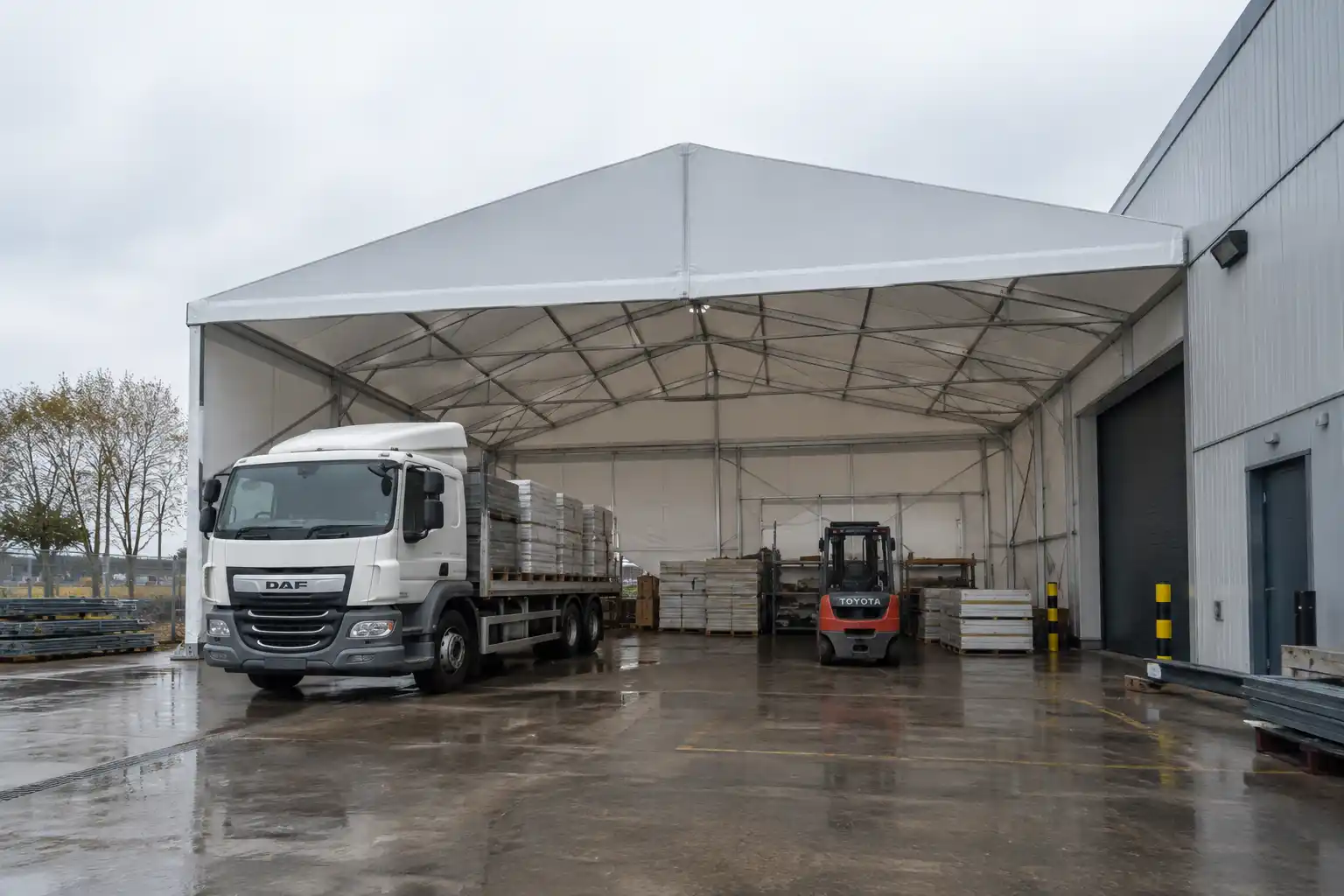
Access is another central factor. Installation vehicles need suitable routes into and around the site, and the completed warehouse must be positioned so that day-to-day operations remain practical. If the structure is placed where it restricts vehicle turning, loading activity or staff movement, the business may gain storage capacity but create inefficiency elsewhere.
Surface conditions also need to be reviewed. Temporary warehousing may be installed on different types of existing surfaces depending on the structure, use case and site conditions, but the suitability of the ground needs to be understood before installation planning is finalised. This may affect preparation requirements, layout decisions and the way the installation is sequenced.
Health and safety considerations should be addressed early as part of the assessment. The HSE workplace transport guidance highlights the importance of managing vehicle movement, pedestrian safety and loading activity in workplace environments. For temporary warehouse installation, this reinforces the need to think carefully about how installation activity interacts with normal site traffic and operational movement.
The assessment should also consider whether the proposed location supports the long-term usability of the temporary warehouse. A position that is convenient for installation may not be the best position for daily use. For that reason, site assessment should look beyond the installation phase and consider how the building will function once operational.
This is where temporary warehouse operational suitability becomes important. The right location, access arrangement and operational connection can make the difference between a structure that simply provides extra covered space and one that genuinely supports the working site.
What preparation is usually required before installation?
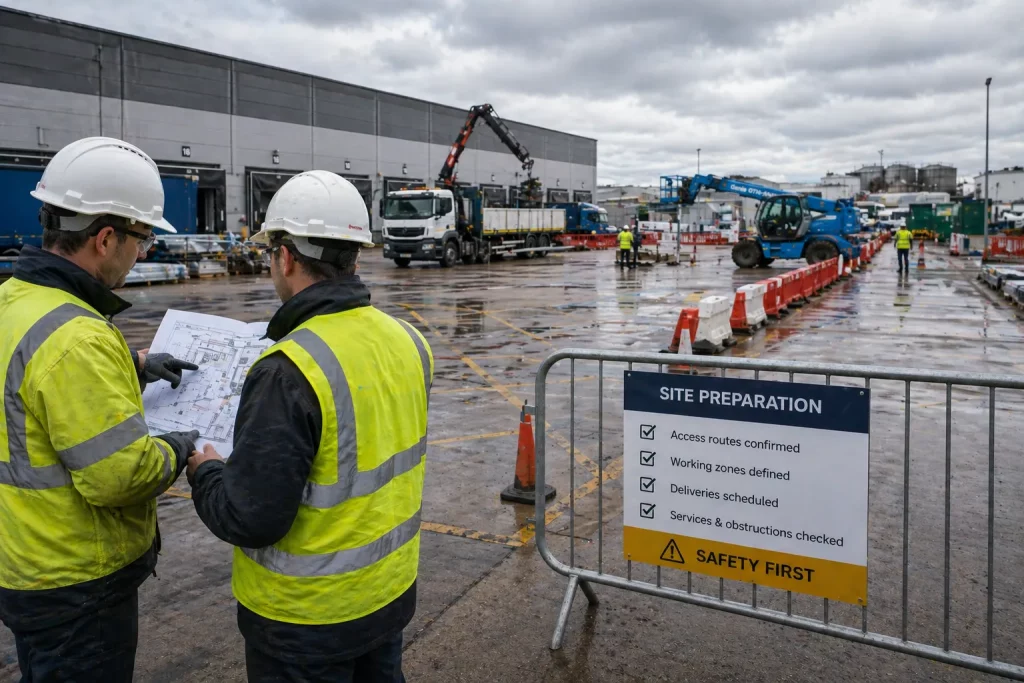
Preparation requirements vary depending on the site, the structure, the intended use and the level of operational complexity. In most cases, preparation is less about major disruption and more about ensuring that the installation area is ready, accessible and safe when work begins.
The most immediate requirement is usually clearance. The proposed installation area may need to be cleared of stored materials, parked vehicles, redundant equipment, waste, temporary obstructions or anything else that could prevent installation teams from working safely and efficiently. If the site is already under pressure for space, this clearance needs to be planned carefully so that materials are not simply moved into another operationally sensitive area.
Access preparation is also important. Installation vehicles, delivery vehicles and site traffic may need to use the same routes, so the business should understand whether temporary access arrangements are required. This could involve agreeing delivery windows, identifying holding areas, adjusting traffic flow temporarily, or communicating access restrictions to staff and third parties.
Where warehouse or logistics operations are continuing, preparation should also include workflow planning. Teams need to know whether any loading bays, yard areas, storage zones or circulation routes will be temporarily affected. If activity needs to be re-sequenced, it is better to plan this before installation begins than to make reactive adjustments once the site is already busy.
Safety preparation may include confirming site rules, agreeing induction requirements, reviewing RAMS where appropriate, and clarifying how installation activity will be separated from normal operations. Depending on the nature and scope of the project, the HSE guidance on CDM 2015 commercial clients may also be relevant to how suitable arrangements are made for managing health and safety during construction-related work.
Facilities Managers should also consider communication. Even a well-planned installation can create confusion if internal teams do not understand what is happening, where vehicles will move, which areas are restricted, or when temporary changes begin and end. Clear communication helps reduce unnecessary delays, avoid unsafe movement and maintain confidence across the site.
Good preparation protects both the installation process and the wider operation. It reduces the likelihood of access problems, workflow disruption and avoidable delays, while helping the temporary warehouse become usable more quickly once installation is complete.
Will installation disrupt live warehouse or logistics operations?
For many businesses, this is the most important question in the entire process. The concern is usually not whether installation is technically possible, but whether the site can continue operating effectively while work is taking place.
In practice, some level of operational impact is normal during temporary warehouse installation, particularly on constrained or high-activity sites. However, the scale of disruption depends heavily on planning quality, sequencing and how well the installation is coordinated around existing workflows.
The objective is not to eliminate all operational interaction. It is to manage that interaction in a controlled way.
On many sites, installation activity can be planned around:
- delivery schedules
- dispatch periods
- shift patterns
- peak vehicle movement windows
- operationally sensitive areas
This allows the business to maintain throughput while reducing avoidable congestion or workflow disruption. In some cases, temporary route adjustments or phased access controls may be needed while installation equipment is operating, but these arrangements are normally temporary and planned in advance.
Operational continuity becomes particularly important where:
- stock movement is time-sensitive
- customer delivery windows are strict
- warehouse throughput is high
- site circulation space is already constrained
- multiple contractors or departments share the site
Poor coordination in these environments can create knock-on effects beyond the installation area itself. Restricted vehicle access, blocked circulation routes or unclear temporary arrangements can slow loading operations, delay dispatch activity or create unnecessary pressure on operational teams.
This is why implementation planning matters as much as the structure itself. The temporary warehouse should support operational continuity, not compromise it during delivery.
For businesses already experiencing space pressure, how to increase warehouse capacity quickly may also help frame why implementation planning needs to be aligned with operational priorities rather than focused solely on speed.

How temporary warehouse installation works on operational sites
On a live operational site, installation normally follows a structured sequence designed to balance installation efficiency with operational continuity.
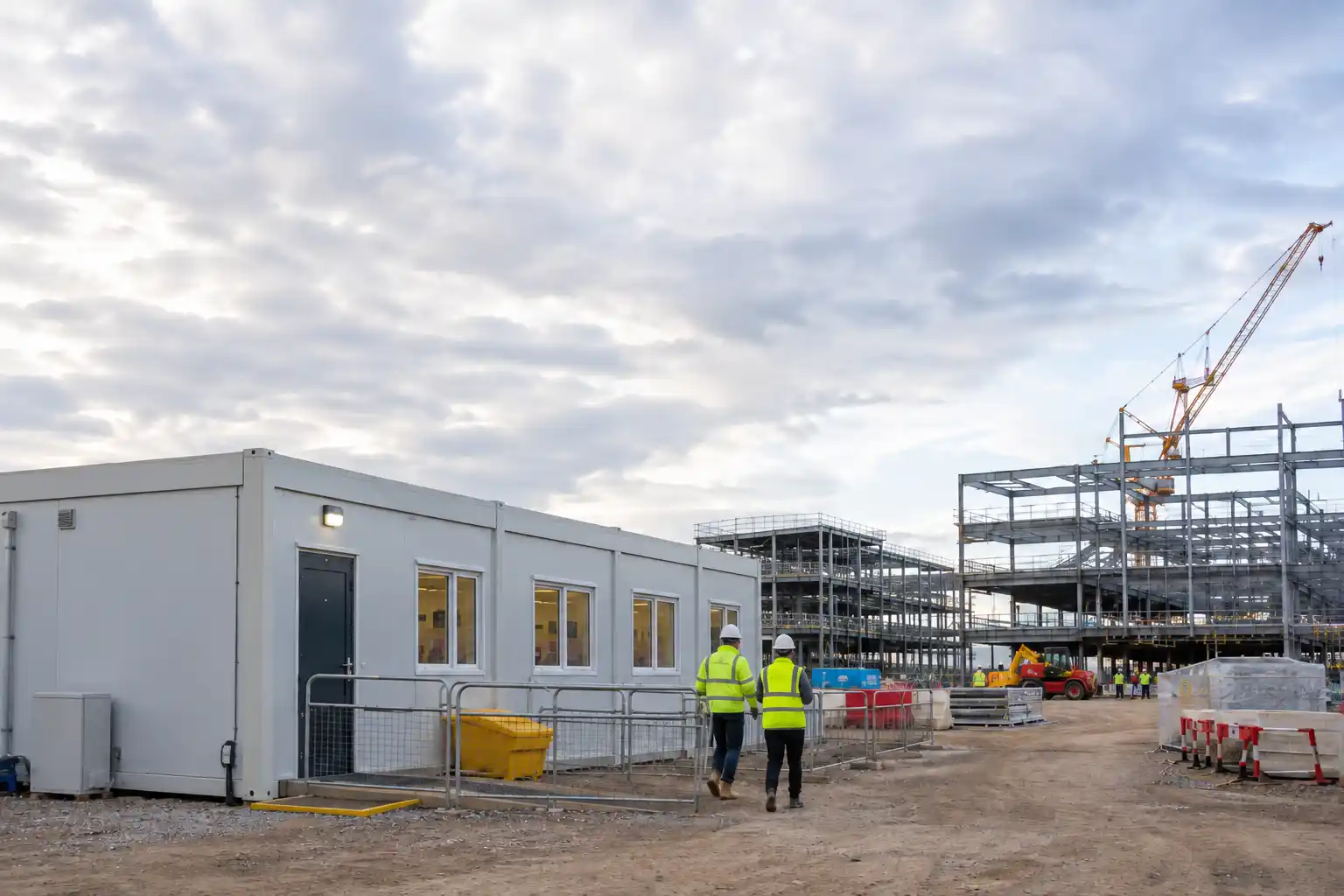
The process usually begins with agreed access arrangements and site coordination. Installation teams need safe and practical access to the working area, while operational teams need clarity around temporary changes affecting vehicle movement, pedestrian routes, loading activity or restricted zones.
Depending on the project, installation activity may involve:
- delivery of structural components
- unloading and positioning activity
- installation equipment movement
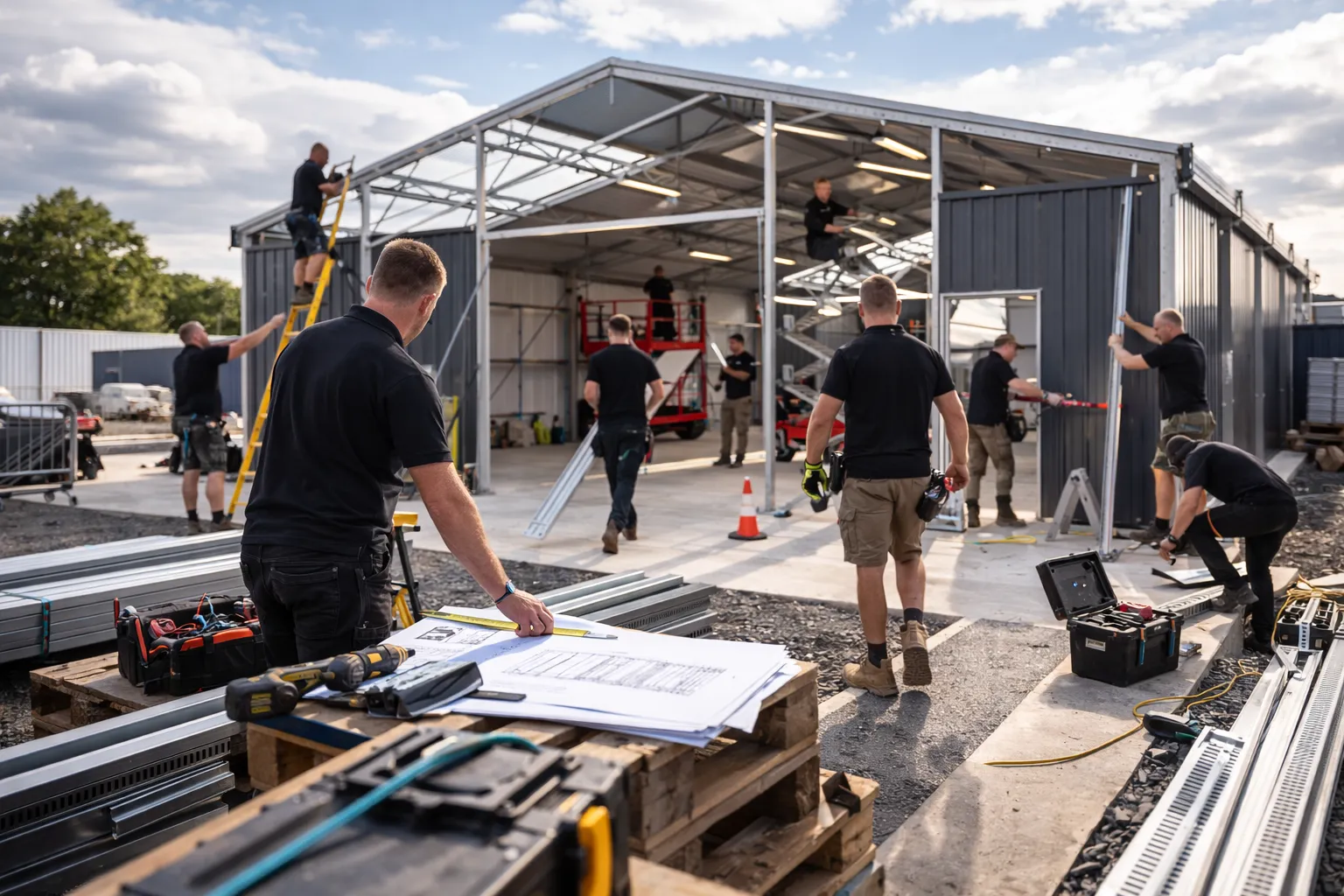
- phased assembly sequences
- coordination around adjacent operational activity
The exact sequence varies according to the structure type, site layout and operational environment. However, the principle remains consistent: installation activity must integrate into the wider operation rather than function independently from it.
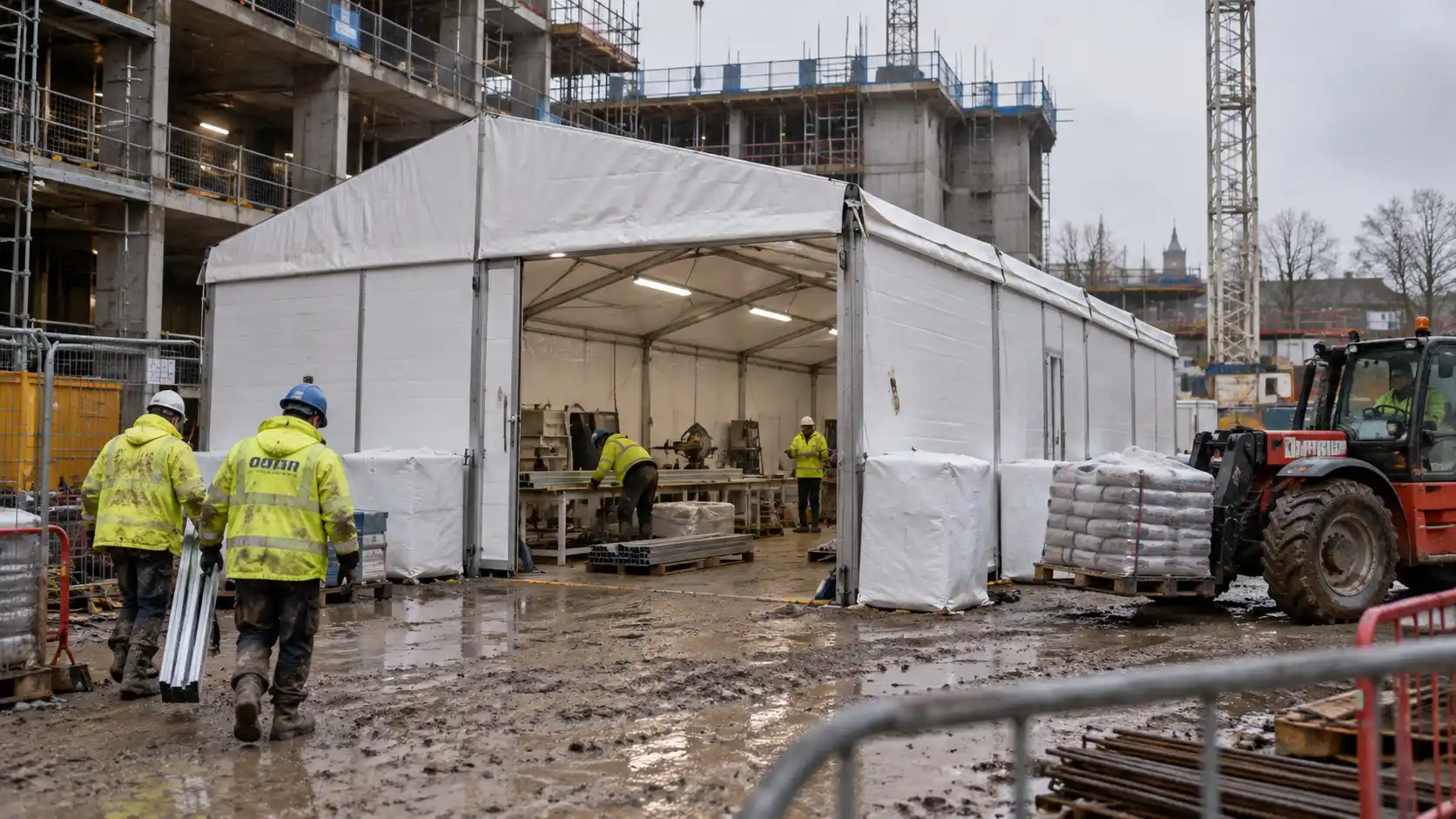
On busy industrial and logistics sites, this often means installation is planned in stages. Certain areas may remain operational while work progresses elsewhere, helping businesses avoid unnecessary downtime or operational standstill.
Coordination is especially important where:
- forklift routes pass near installation zones
- loading bays remain operational
- staff continue working nearby
- external deliveries continue throughout the project
- multiple operational activities overlap
The HSE workplace transport guidance reinforces the importance of managing vehicle and pedestrian interaction safely in active workplace environments. During temporary warehouse installation, this principle becomes highly relevant because operational traffic and installation activity may temporarily share parts of the site.
Installation planning should also consider what happens immediately after the structure becomes operational. A temporary warehouse that is technically complete but poorly integrated into site workflow can still create inefficiency. Access points, loading arrangements, stock movement and circulation all affect how usable the structure becomes once day-to-day operations begin.
This is one reason why implementation quality has long-term operational implications. A well-coordinated installation supports smoother adoption into normal operations, while poorly planned integration can create ongoing friction long after the installation team has left site.
What access, logistics, and safety factors need planning?
Access and logistics planning are often the areas that determine whether temporary warehouse installation feels controlled or disruptive.
The first consideration is normally vehicle movement. Installation vehicles, operational traffic, supplier deliveries and staff movement may all need to function simultaneously during the project. If circulation routes are already tight, even temporary restrictions can affect loading efficiency, dispatch timing or internal traffic flow.
This is particularly important on sites where:
- articulated vehicles operate regularly
- loading bays remain active throughout installation
- forklifts move continuously between operational areas
- external suppliers access the site frequently
- pedestrian movement overlaps with operational traffic
Planning should therefore identify:
- primary and secondary access routes
- temporary restrictions
- unloading locations
- turning areas
- holding areas for vehicles if required
- any periods where operational movement may need temporary adjustment
These arrangements help reduce the risk of congestion, confusion or unsafe movement during installation activity.
Safety coordination also needs careful consideration. The installation area must function safely alongside live operations, which may involve temporary segregation measures, revised access controls or additional communication with operational teams.
The HSE workplace transport guidance highlights the importance of separating pedestrians and vehicles wherever possible. On active industrial sites, this principle becomes especially important during temporary installation projects where movement patterns may change temporarily.
Depending on the project scope, businesses may also need to coordinate:
- inductions
- contractor access procedures
- delivery schedules
- temporary signage
- restricted operational zones
- communication protocols between teams
The goal is not to create excessive process. It is to ensure installation activity does not introduce avoidable operational or safety risk into an already active environment.
Where operational disruption would have wider continuity implications, temporary warehousing for continuity planning may also help businesses understand how temporary storage infrastructure supports resilience during periods of operational pressure or change.

How can disruption be reduced during installation?
The most effective way to reduce disruption is to treat temporary warehouse installation as an operational coordination exercise rather than a standalone construction activity.
Disruption is usually reduced through:
- early planning
- realistic sequencing
- operational communication
- access management
- clear understanding of workflow priorities
One of the most effective approaches is aligning installation activity with the operational rhythm of the site. If dispatch periods, delivery peaks or high-traffic windows are understood early, installation can often be planned around them rather than directly through them.
This becomes especially important on sites where:
- operational continuity is commercially sensitive
- customer delivery expectations are strict
- throughput volumes fluctuate during the day
- multiple departments depend on shared circulation areas
Facilities Managers and operational teams also play an important role in disruption reduction because they understand how the site functions day to day. Installation planning becomes far more effective when it reflects real operational behaviour rather than static site drawings alone.
Communication is another major factor. Operational teams should understand:
- what activity is taking placewhen restrictions apply
- which routes or areas may be affected temporarily
- how workflows may change during installation
Without this clarity, even minor temporary adjustments can create unnecessary confusion or delay.
It is also important to maintain realistic expectations. Temporary warehouse installation is often less disruptive than permanent construction activity, particularly because it can avoid some of the extended programme and infrastructure disruption associated with traditional expansion works. However, it still requires active coordination and operational planning to work effectively on a live site.
The businesses that experience the smoothest implementation are usually those that begin planning before operational pressure becomes critical. Once sites are already heavily constrained, even relatively manageable installation activity can become more difficult to coordinate efficiently.
What happens after the temporary warehouse is operational?
Once the temporary warehouse is operational, attention shifts from installation activity to long-term usability within the wider site operation.
At this stage, the priority is making sure the structure supports efficient day-to-day workflow rather than simply providing additional covered space. This includes reviewing how stock moves in and out of the warehouse, how vehicles access the area, how circulation routes function in practice and whether any operational adjustments are still required following installation.
In many cases, operational teams adapt quickly once the structure becomes part of the normal working environment. However, the effectiveness of this transition often depends on the quality of planning earlier in the process.
If access arrangements, loading activity and workflow integration were considered properly before installation, the temporary warehouse is more likely to function as a practical extension of the operation rather than an isolated storage area.
Post-installation considerations may include:
- ongoing traffic flow management
- stock organisation
- loading and unloading procedures
- lighting and access arrangements
- operational workflow refinement
- future scalability requirements
This is particularly important where the temporary warehouse is supporting:
- long-term operational growth
- phased expansion
- ongoing overflow storage
- continuity planning
- seasonal stockholding increases
Businesses should also recognise that operational requirements can evolve over time. A temporary warehouse introduced for short-term pressure may remain operational longer if the structure integrates successfully into the business workflow and continues supporting operational efficiency.
The long-term value of temporary warehousing is therefore shaped not only by the structure itself, but by how effectively it fits into the operational environment around it.
What factors affect implementation timelines?
Implementation timelines depend on far more than the physical installation process alone.
One of the biggest influences is site readiness. If access routes are unclear, operational areas have not been prepared, or clearance work is incomplete, installation activity can slow significantly before assembly even begins.
Other factors affecting timelines may include:
- site access complexity
- vehicle movement restrictions
- operational sequencing requirements
- structure size and layout
- ground or surface conditions
- coordination with live warehouse activity
- weather conditions
- delivery scheduling
- stakeholder approvals
Operational environments also affect how installation is planned. A quiet site with unrestricted access may allow a more straightforward installation sequence than a high-throughput logistics operation where loading bays, dispatch activity and vehicle circulation must remain active throughout the project.
This is why temporary warehouse implementation should not be reduced to simplistic programme claims. While temporary warehousing can often provide additional capacity more flexibly than permanent construction, realistic delivery planning still depends on operational coordination, site conditions and preparation quality.
The most reliable approach is usually to assess implementation timelines within the context of the live operational environment rather than viewing installation as an isolated construction exercise.

What matters most as you move forward?
Successful temporary warehouse installation depends less on speed alone and more on how well the structure is integrated into the operational environment around it.
Businesses that achieve the smoothest outcomes are usually those that plan early, coordinate clearly and treat implementation as part of wider operational management rather than a standalone installation project. Access planning, workflow integration, safety coordination and realistic sequencing all affect how effectively additional storage capacity supports the site once operational.
For Facilities Managers and operational stakeholders, the goal is not simply to complete installation. It is to introduce additional warehousing capacity in a way that protects continuity, supports workflow and avoids creating unnecessary pressure elsewhere on the site.
Next step
If your operation is currently preparing for additional storage capacity, or if site constraints are beginning to affect workflow, throughput or operational flexibility, this is usually the stage where early implementation planning becomes most valuable.
Exploring temporary warehouse installation and storage solutions before operational pressure becomes critical allows more time to assess site conditions, coordinate access arrangements and plan installation around live operational activity. That often leads to a smoother implementation process and a more effective long-term operational outcome.
LM Structures supports businesses that need temporary warehousing to function within real commercial environments – including active industrial sites, logistics operations and continuity-sensitive facilities where planning, coordination and operational integration matter as much as the structure itself.
For more information call 0333 358 4989 or email enquiries@lmstructures.co.uk
Temporary Warehouse Installation FAQs
Long-term success depends on how well the warehouse integrates into the wider operation once installation is complete. Access routes, loading arrangements, workflow efficiency and operational usability all influence whether the structure supports the business effectively over time.
Early preparation helps reduce avoidable delays, congestion and workflow disruption once installation teams arrive on site. Clearance work, access planning, operational coordination and communication with internal teams all contribute to a smoother implementation process.
In many cases, yes. Temporary warehouse installation can often be planned around live operational activity, although the level of disruption depends on site conditions, circulation space, operational intensity and how well installation is coordinated.
Yes. Vehicle access is often one of the most important operational considerations during installation. Delivery vehicles, operational traffic, forklifts and pedestrian movement may all need to function safely alongside installation activity, particularly on constrained industrial sites.
Temporary warehouse installation typically involves site preparation, delivery coordination, access management, structural assembly and operational integration planning. On live sites, installation activity is usually coordinated around existing workflows to reduce disruption to warehouse or logistics operations.