How to Increase Warehouse Capacity Quickly
If your warehouse is already under pressure, the immediate question is not simply how to find more space. It is how to add usable capacity quickly without disrupting the operation you are trying to protect.
In Short
Increasing warehouse capacity quickly means choosing a solution that can be delivered, accessed and used within your operational timeframe. Temporary warehousing is often the most practical route when permanent construction, relocation or outsourced storage cannot meet the required speed, control or continuity needs.
Rapid Capacity Priorities at a Glance
When storage pressure becomes urgent, the best solution is rarely the one that looks fastest on paper. It is the one that can be implemented safely, integrated into existing operations and used effectively without creating new bottlenecks.
For Operations Directors and supply chain teams, the key priorities are:
- understanding how quickly additional space must become operational
- assessing which options are realistic within that timeframe
- protecting stock flow, handling routes and vehicle access
- avoiding rushed long-term commitments
- maintaining customer, contract and fulfilment performance
- choosing a capacity solution that supports operational continuity
This is where temporary warehousing and storage solutions can provide a practical middle ground: more flexible than permanent construction, more robust than short-term cover, and better suited to live operational environments than a purely temporary workaround.
Table of Contents – In This Article
What does “increasing warehouse capacity quickly” actually mean?
Increasing warehouse capacity quickly does not simply mean finding extra square footage. In a live logistics or storage environment, capacity only becomes useful when it can support real operational activity.
That means the space must be accessible, suitable for the goods being stored, safe for staff and vehicles, and capable of working alongside existing warehouse flows. A building or storage area that is technically available but difficult to access, poorly located or unsuitable for handling equipment may not resolve the pressure in practice.
For that reason, “quickly” should be judged against operational readiness, not just installation or availability. The right question is not only “how fast can we add space?” but “how fast can we add space that the operation can actually use?”
This distinction matters when the pressure is time-sensitive. A permanent extension may eventually provide the ideal long-term footprint, but planning, approvals, construction sequencing and site disruption can make it unrealistic for an urgent requirement. UK Government guidance on when planning permission is required also reinforces that changes to buildings and land use need to be considered carefully rather than assumed to be automatic.
Temporary warehousing can often be more suitable for urgent capacity needs because it is designed around shorter implementation cycles and practical integration. However, it still depends on the site, the intended use, access, ground conditions, specification and any planning considerations.
A credible rapid capacity solution therefore needs to balance four things:
- speed of implementation
- operational usability
- site suitability
- commercial flexibility
If one of these is ignored, a quick decision can create further disruption rather than solve the capacity problem.
Why urgent storage capacity needs arise
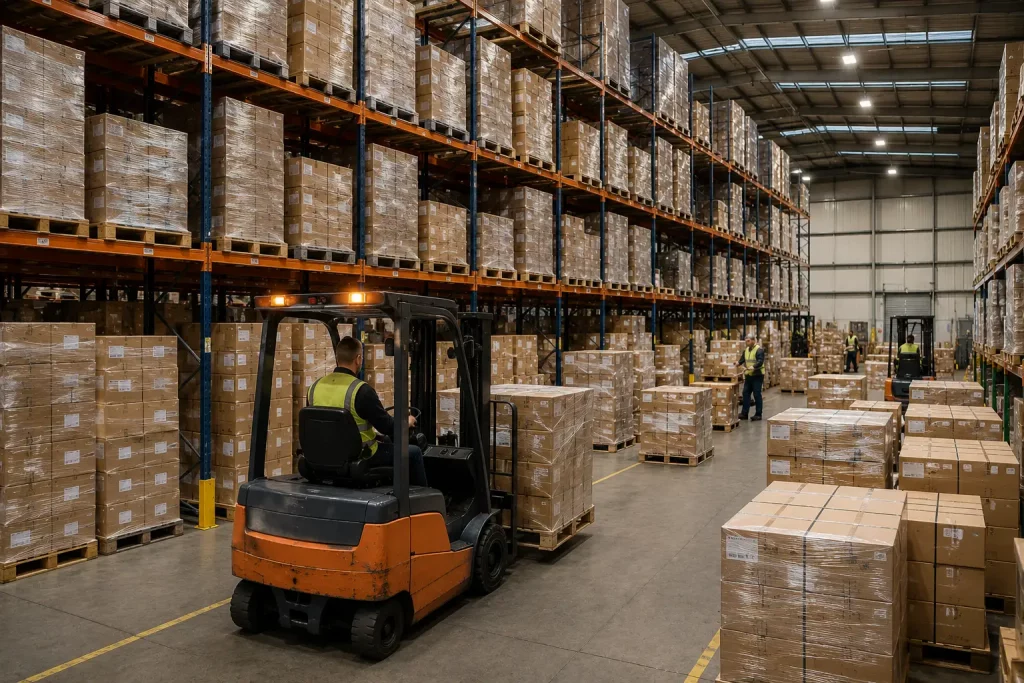
Urgent storage capacity pressure often appears when demand moves faster than the infrastructure around it. In some cases, the business may have forecast growth but underestimated the speed or scale of additional stock movement. In others, the trigger may be sudden and external.
Common causes include new contracts, unexpected order volumes, delayed outbound movement, changes in supplier behaviour, seasonal stock arriving earlier than planned, or a shift in customer requirements. These scenarios can place immediate pressure on racking, floor space, loading areas, despatch zones and vehicle movement.
Unlike planned expansion, urgent capacity pressure does not usually arrive with a comfortable programme attached. The operation may already be congested. Teams may be working around restricted aisles, temporary holding areas or inefficient stock movement. Incoming goods may have nowhere practical to go, while outbound operations continue to demand clear access and reliable throughput.
This is where the situation becomes commercially sensitive. A warehouse that is “nearly full” may still function for a time, but once the operation starts losing flexibility, the effect can spread quickly. Picking becomes slower. Goods may be handled more than once. Supervisors spend more time managing space conflicts. Transport schedules become harder to maintain.
For an Operations Director, the issue is not just storage volume. It is whether the business can continue to meet commitments while capacity is under pressure.
This article is focused specifically on urgent capacity requirements. If the pressure is predictable and linked to a known seasonal peak, the decision process may sit closer to handling warehouse overflow during peak demand. If the pressure is part of longer-term expansion, it may be more useful to assess wider warehouse growth capacity challenges.
Here, the situation is more immediate. The business needs capacity soon, and the chosen solution must reduce pressure without creating a new operational problem.
What happens if additional space isn’t added in time?
When warehouse capacity is not increased in time, the impact usually appears first as inefficiency rather than complete failure. This is one reason the risk can be underestimated.
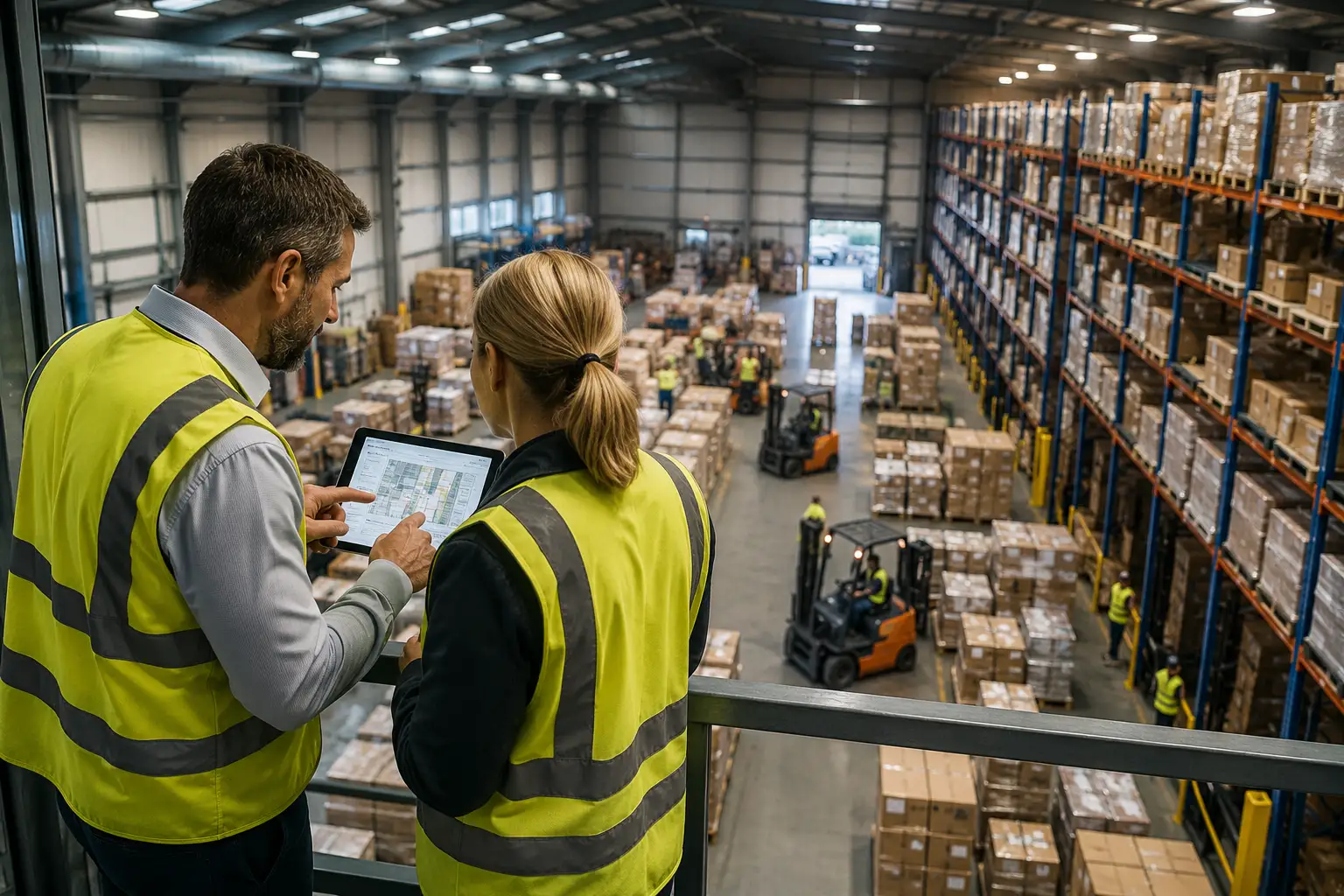
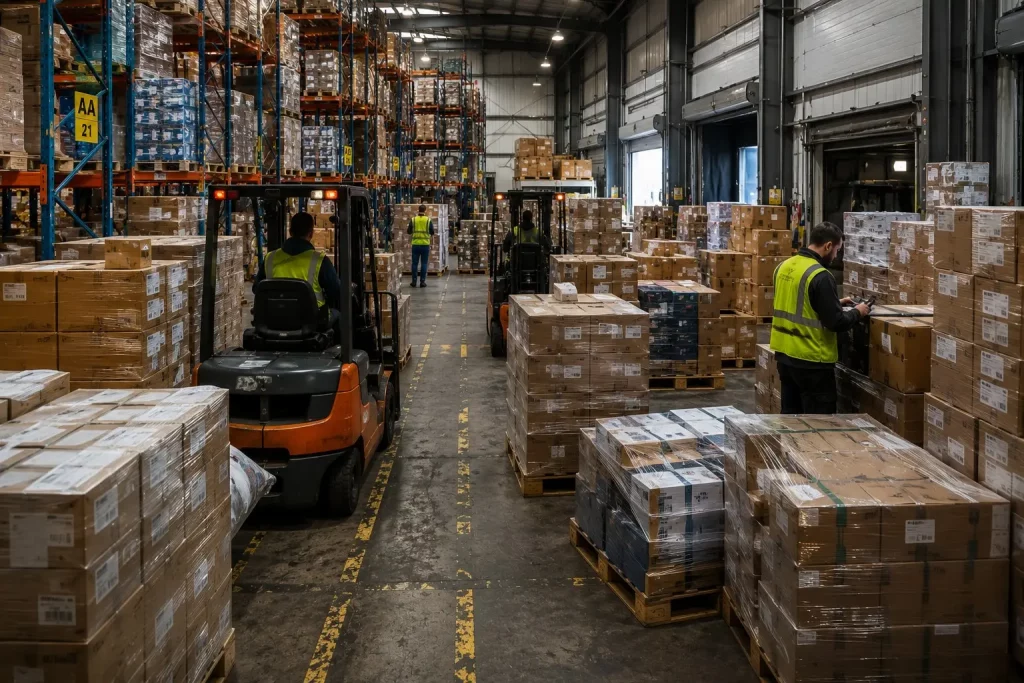
A congested warehouse may still be operating, but it may be doing so with slower movement, reduced visibility, additional handling and less margin for error. Stock may be stored in areas that were not designed for it. Loading bays may become holding areas. External yards may become congested. Routes used by forklifts, pedestrians or vehicles may come under more pressure.
HSE guidance on warehousing and storage health and safety highlights the importance of safe storage, workplace transport and warehouse activity planning. In a capacity-constrained environment, these considerations become more important because space pressure can affect how people, vehicles and goods move around the site.
The commercial consequences can also build quickly. If incoming goods cannot be received efficiently, supply chain flow may slow down. If goods cannot be stored, picked or despatched effectively, customer service and contract performance may be affected. If the business takes on a new opportunity but cannot support the operational requirement behind it, revenue potential may be limited by infrastructure rather than demand.
There is also a decision-making risk. Under pressure, it can be tempting to choose the first available space, outsource storage at short notice or commit to a longer-term solution that feels decisive but does not fit the actual operational requirement. These choices may provide relief, but they can also introduce additional transport, duplicated handling, reduced stock control or unnecessary long-term cost exposure.
The aim should be to stabilise the operation without locking the business into the wrong answer. That means judging each option not only by how quickly it can be arranged, but by how effectively it supports the existing warehouse, supply chain and commercial commitments.
What are the options for adding warehouse capacity quickly?
When additional storage space is needed urgently, most businesses consider four broad options:
- permanent construction
- relocation
- outsourced storage
- temporary warehousing
On paper, each may appear capable of solving the problem. In practice, the right choice depends on how quickly the additional capacity must become operational, how closely it needs to integrate with existing workflows, and how much disruption the business can tolerate during implementation.
Permanent construction may provide the most comprehensive long-term solution, but it is rarely aligned with urgent operational timelines. Relocation can create access to a larger facility, but it may introduce major programme, staffing and continuity risks. Outsourced storage can offer short-term relief, though often with reduced operational control and additional transport dependency.
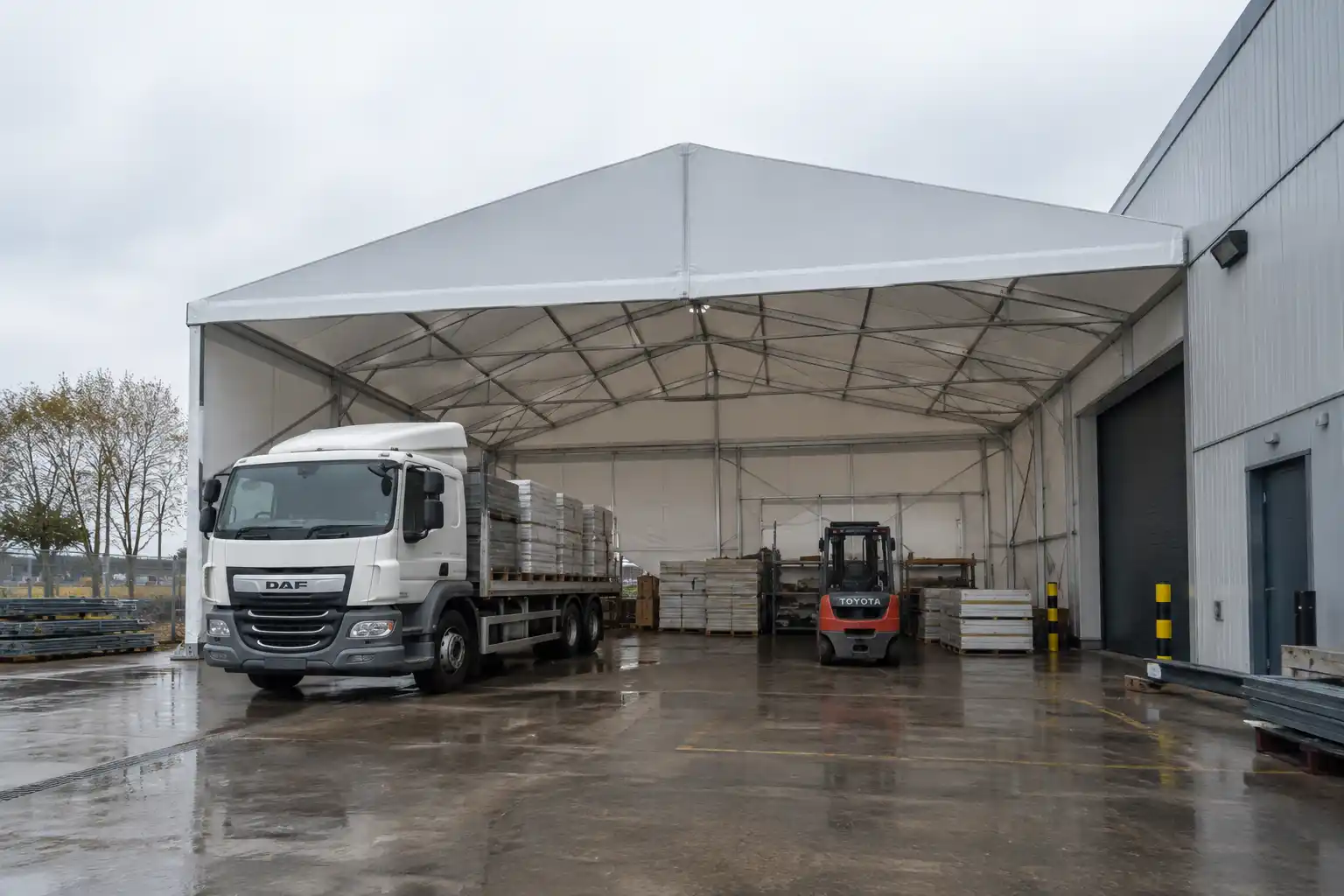
Temporary warehousing sits between these approaches. It allows businesses to expand capacity within the existing operational footprint while avoiding many of the delays associated with permanent expansion.
The important point is that speed alone should not drive the decision. A solution that appears quick but creates handling inefficiencies, fragmented stock management or restricted vehicle movement may increase operational pressure rather than reduce it.
This is why rapid capacity decisions should be assessed against four practical questions:
- How quickly can the space become operational?
- How disruptive is implementation likely to be?
- Can the solution integrate effectively with existing workflows?
- Does the solution create unnecessary long-term commitment?
These questions help separate genuinely viable rapid-capacity options from solutions that only appear attractive under pressure.
How fast is permanent construction realistically?
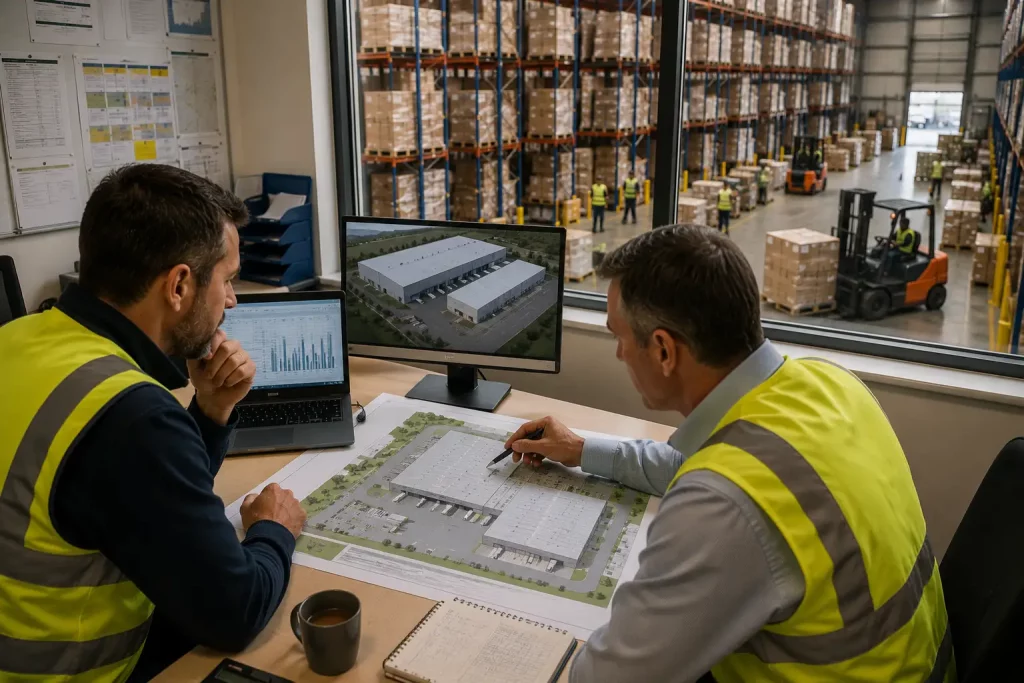
Permanent warehouse construction is usually measured in months rather than weeks. Even where the physical build itself is relatively straightforward, the wider process often includes planning considerations, design development, approvals, procurement sequencing and site preparation before construction activity can begin.
In some circumstances, permitted development rights or existing site conditions may simplify parts of the process. However, businesses should avoid assuming that a permanent warehouse extension can be delivered rapidly simply because the requirement is urgent.
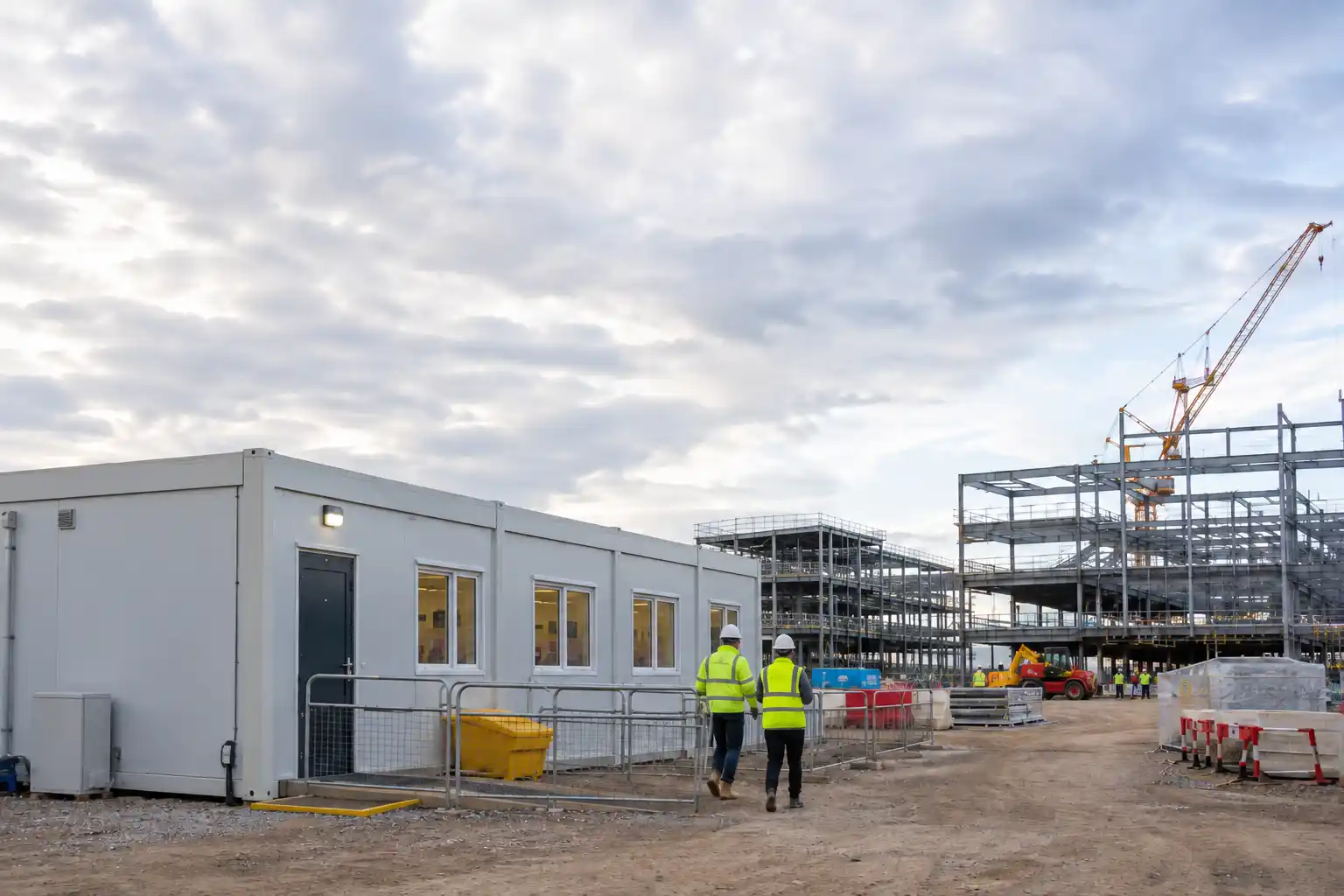
The challenge is not only the build programme itself. Permanent expansion also affects live-site operations. Construction activity, contractor access, material storage, traffic management and infrastructure works can all create operational pressure while the facility is still functioning.
This becomes particularly difficult when the warehouse is already congested. The site may have limited spare circulation space, restricted access routes or insufficient room for both construction activity and normal logistics movement at the same time.
There is also a commercial consideration around commitment. Permanent construction requires businesses to make a long-term infrastructure decision, often at a point where the immediate priority is operational stabilisation rather than strategic estate expansion.
That does not mean permanent construction is the wrong choice. In some cases, it may ultimately become the preferred long-term solution. However, for businesses facing urgent storage constraints, it is often incompatible with the timeframe required to relieve immediate operational pressure.
This is one reason why businesses exploring rapid warehouse capacity solutions often assess temporary warehousing first. It can provide additional operational capacity while longer-term estate decisions remain under review.
Can relocating or outsourcing storage solve the problem quickly?
Relocation and outsourced storage can sometimes provide access to additional capacity faster than permanent construction, but both approaches introduce operational trade-offs that need careful consideration.
Relocating to a larger warehouse may appear attractive where the existing site has reached its physical limit. However, moving an active warehouse operation is rarely simple, particularly under time pressure.
The business must consider:
- transfer sequencing
- stock migration
- transport continuity
- workforce impact
- systems integration
- customer service risk
- operational downtime during transition
Even where a suitable building is available, relocation can still become a significant operational project in its own right.
Outsourced storage introduces a different set of challenges. Using third-party storage facilities may relieve immediate space pressure, but it can reduce operational visibility and create dependency on additional transport movements between sites.
This can affect:
- picking efficiency
- response times
- stock accuracy
- vehicle scheduling
- labour coordination
- handling costs
In some cases, split-site operations may also create duplicated handling, with goods being moved multiple times before despatch.
The practicality of outsourced storage therefore depends heavily on the type of goods involved, required response times and how closely the additional storage must integrate with day-to-day warehouse activity.
For some businesses, outsourced storage may provide a useful temporary buffer. For others, particularly where throughput speed and operational control are critical, it may create additional friction rather than resolving the underlying problem.
This is where operational suitability becomes important. Businesses evaluating rapid expansion options should assess not only whether additional space exists, but whether that space can support real warehouse activity effectively. This is explored further when evaluating warehouse suitability.
How quickly can temporary warehousing be deployed?
Temporary warehousing is specifically designed to provide additional operational space within shorter implementation timeframes than permanent construction. However, realistic deployment speed still depends on several practical factors.
The site itself is one of the biggest influences. Available footprint, access routes, ground conditions, vehicle circulation and proximity to existing operations all affect how quickly a structure can be installed and brought into use.
Specification also matters. A temporary warehouse intended for simple overflow storage may have different requirements from a structure supporting high-throughput logistics activity, integrated loading operations or temperature-sensitive stock.
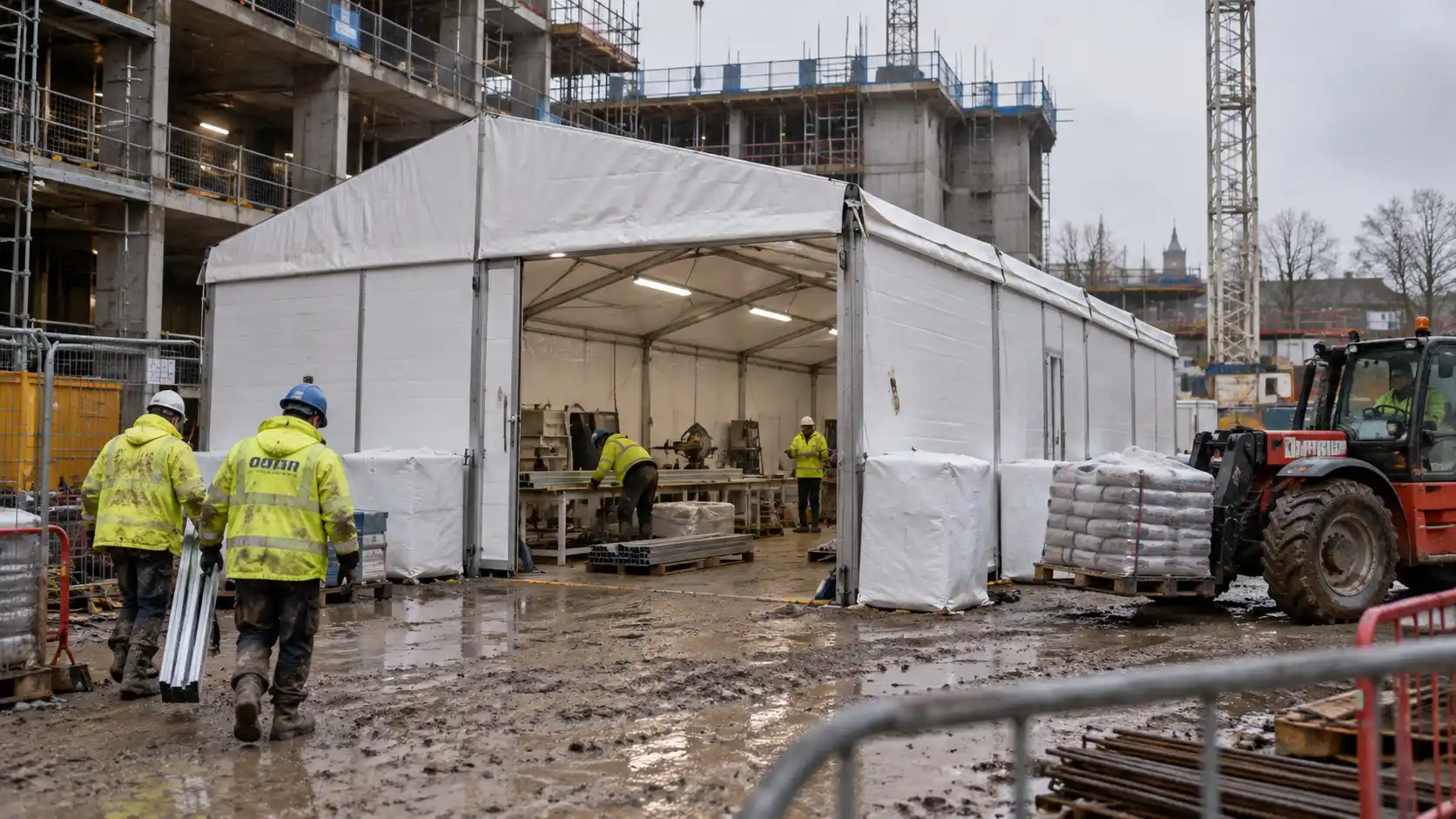
The advantage of temporary warehousing is that it can often be integrated into live operational environments without requiring the business to relocate or commit immediately to permanent expansion.
This makes it particularly useful where:
• demand has increased unexpectedly
• operations must remain active during expansion
• timelines are constrained
• long-term requirements are still uncertain
Unlike outsourced storage, temporary warehousing also allows the business to maintain operational control within the existing site footprint. Goods, vehicles and staff can continue working within familiar workflows rather than across fragmented locations.
This does not mean temporary warehousing should be viewed as an “instant” solution. Planning position, site preparation, safe installation sequencing and operational integration still need to be assessed carefully. MPBA guidance on portable and modular buildings also reinforces the importance of suitability, standards and proper deployment planning within temporary building environments.
For Operations Directors under pressure, the value of temporary warehousing is often not just speed itself, but the balance between:
- speed
- operational continuity
- flexibility
- scalability
- reduced long-term commitment
That balance is what makes it a practical rapid-capacity solution in many live warehouse environments.

What factors affect how fast capacity can be added?
The speed at which warehouse capacity can be increased depends on more than the chosen building type. In many cases, operational and site constraints become the determining factor.
One of the most important considerations is available space. A site may technically have spare land, but that does not automatically mean it is suitable for additional warehousing. Vehicle routes, loading access, turning circles, emergency access and operational segregation all need to be maintained.
Ground conditions and infrastructure can also affect programme speed. Depending on the proposed structure and intended use, preparation works may still be required before installation can begin.
Planning considerations vary by site and circumstance. Planning Portal guidance on temporary buildings and planning permission explains that some temporary buildings may fall within permitted development rights in certain situations, while others may require planning permission. Temporary warehousing should therefore be assessed on a site-specific basis rather than assumed to be exempt from planning requirements.
Operational readiness is equally important. Even where a structure can be installed quickly, the surrounding operation still needs to function effectively afterwards.
This may include:
- stock movement planning
- loading coordination
- handling equipment access
- workflow integration
- safe segregation between vehicles and pedestrians
- storage layout planning
HSE workplace transport guidance on traffic routes and site movement management reinforces the importance of maintaining safe movement around operational sites, particularly where layouts are changing or temporary infrastructure is being introduced.
The fastest warehouse expansion solution is therefore not always the one with the shortest installation period. It is the one that can realistically become operational with the least disruption to the wider site.
What trade-offs exist between speed, cost and flexibility?
Every rapid-capacity decision involves compromise somewhere. The challenge is understanding which trade-offs are commercially and operationally acceptable within the timeframe available.
A permanent extension may provide the strongest long-term infrastructure outcome, but it often requires the greatest commitment in terms of programme, capital exposure and operational disruption during delivery.
Outsourced storage may reduce immediate pressure quickly, but operational control, stock accessibility and handling efficiency can be affected when storage becomes fragmented across multiple locations.
Temporary warehousing often provides a more balanced approach because it allows businesses to increase capacity without immediately committing to permanent construction or relocation.
However, the solution still needs to align with:
- intended operational duration
- stock profile
- throughput requirements
- site limitations
- future expansion plans
This is why the article should not present temporary warehousing as universally “better” than every alternative.
Instead, it should be positioned as particularly well suited to situations where:
- operational continuity matters
- additional capacity is needed within constrained timelines
- flexibility remains important
- the long-term requirement is still evolving
The most effective rapid-capacity decisions are usually the ones that stabilise the operation first while preserving future flexibility.
Choosing the right rapid capacity solution
The right solution depends on the nature of the pressure the business is facing.
If the requirement is long-term, predictable and supported by sufficient programme time, permanent expansion may eventually become appropriate. If the issue is short-term overflow with limited operational dependency, outsourced storage may provide temporary relief.
However, where additional capacity is needed quickly within a live operational environment, the priority usually becomes maintaining continuity while avoiding further disruption.
This is why temporary warehousing is often the most practical route in urgent scenarios. It allows businesses to add usable operational space without waiting for full permanent construction programmes or undertaking complex relocation activity during periods of pressure.
The key is not simply adding space fast. It is adding space that works operationally, supports throughput, protects continuity and allows the business to remain commercially responsive while the situation stabilises.

What should you focus on now to maintain control?
When warehouse capacity becomes constrained, the most important decision is often not how to maximise space long term, but how to restore operational stability quickly and realistically.
That means focusing on:
- usable capacity rather than theoretical floor area
- continuity rather than disruption
- operational integration rather than isolated storage availability
- flexibility rather than rushed permanence
Businesses that respond early typically retain more control over implementation, workflow planning and commercial exposure. Businesses that delay often find themselves making decisions under greater operational strain and with fewer practical options available.
In urgent scenarios, temporary warehousing can provide a way to increase storage capacity while preserving flexibility around longer-term estate decisions. It allows operations to continue functioning while the business evaluates whether the pressure is temporary, structural or part of wider growth.
Next step
If your operation is currently under pressure because existing warehouse space can no longer support incoming stock, throughput or fulfilment requirements, this is usually the stage where rapid-capacity planning becomes operationally critical.
Reviewing temporary warehousing and storage solutions early can help clarify what additional capacity is realistically achievable within your site constraints, programme pressures and operational requirements.
For businesses balancing urgent timelines with continuity concerns, the priority is not simply adding more space. It is implementing a solution that can support live operations effectively while reducing the risk of further disruption or unnecessary long-term commitment.
For more information call 0333 358 4989 or email enquiries@lmstructures.co.uk
Increase warehouse capacity quickly – FAQS
Not necessarily. Outsourced storage may provide access to additional space quickly, but it can also create transport inefficiencies, split-site handling issues and reduced operational visibility. For operations requiring close integration and fast stock movement, onsite temporary warehousing may be more effective.
Common causes include sudden demand increases, new contracts, supply chain changes, delayed stock movement and growth that has exceeded forecasting assumptions. In many cases, operational congestion develops before the warehouse reaches full physical capacity.
Yes. Businesses can increase capacity through temporary warehousing, outsourced storage or operational reconfiguration without committing immediately to a permanent build. The right approach depends on how closely the additional space needs to integrate with existing operations.
There is no single universal timeframe because installation speed depends on the structure type, operational requirements and site preparation needs. In most cases, temporary warehousing is designed to be delivered significantly faster than a permanent warehouse extension.
Temporary warehousing is often the fastest practical option because it can usually be integrated into an existing operational site without the long programmes associated with permanent construction. However, actual timelines still depend on site conditions, access, specification and planning considerations.