What to Do if you find your warehouse Out of Space
If your warehouse is filling up because the business is growing, the decision is not simply about finding more storage. It is about protecting fulfilment performance, avoiding unnecessary long-term commitment and choosing a capacity route that supports growth without restricting future flexibility.
In Short
When a warehouse runs out of space during business growth, the first step is to assess whether the issue is a short-term pressure or a structural capacity constraint. Temporary warehousing can provide flexible, scalable storage that supports growth while giving the business time to assess whether permanent expansion, relocation or reconfiguration is justified.
Executive Summary
A warehouse space shortage is often a positive sign that demand is increasing, product ranges are expanding or new contracts are creating additional throughput. However, if the issue is not managed early, warehouse capacity can become a constraint on the very growth the business is trying to support.
The problem is rarely limited to physical storage. Capacity pressure can affect picking efficiency, stock visibility, replenishment, dispatch times, staff productivity and the ability to take on new commercial opportunities. In many cases, the warehouse begins to limit performance before it is visibly full.
For growing businesses, the decision is not always between staying where they are or investing in a permanent new facility. Options may include reconfiguring existing space, outsourcing part of the operation, relocating, developing permanent infrastructure or using temporary warehousing and storage solutions to create additional capacity while growth patterns become clearer.
The right route depends on the stability of demand, the reliability of forecasts, available site space, operational requirements and the level of long-term commitment the business is ready to make.
Table of Contents – In This Article
- What to Do if you find your warehouse Out of Space
- What does it mean when your warehouse runs out of space?
- Why business growth creates storage capacity problems
- What happens when you operate at or beyond warehouse capacity?
- How do you know if your warehouse is limiting your growth?
- What are your options for increasing warehouse capacity?
- Should you expand permanently or use temporary solutions?
- Can temporary warehousing support business growth?
- What factors should influence your capacity decision?
- When is the right time to increase warehouse space?
- Creating a scalable storage strategy for continued growth
- What matters most as your warehouse capacity decision develops?
- How to move forward
- Warehouse Out Of Space Solutions FAQs
What does it mean when your warehouse runs out of space?
When a warehouse runs out of space, the problem is not always that every available bay, rack or floor area is completely full. In many growing operations, the first signs appear in the way the warehouse functions.
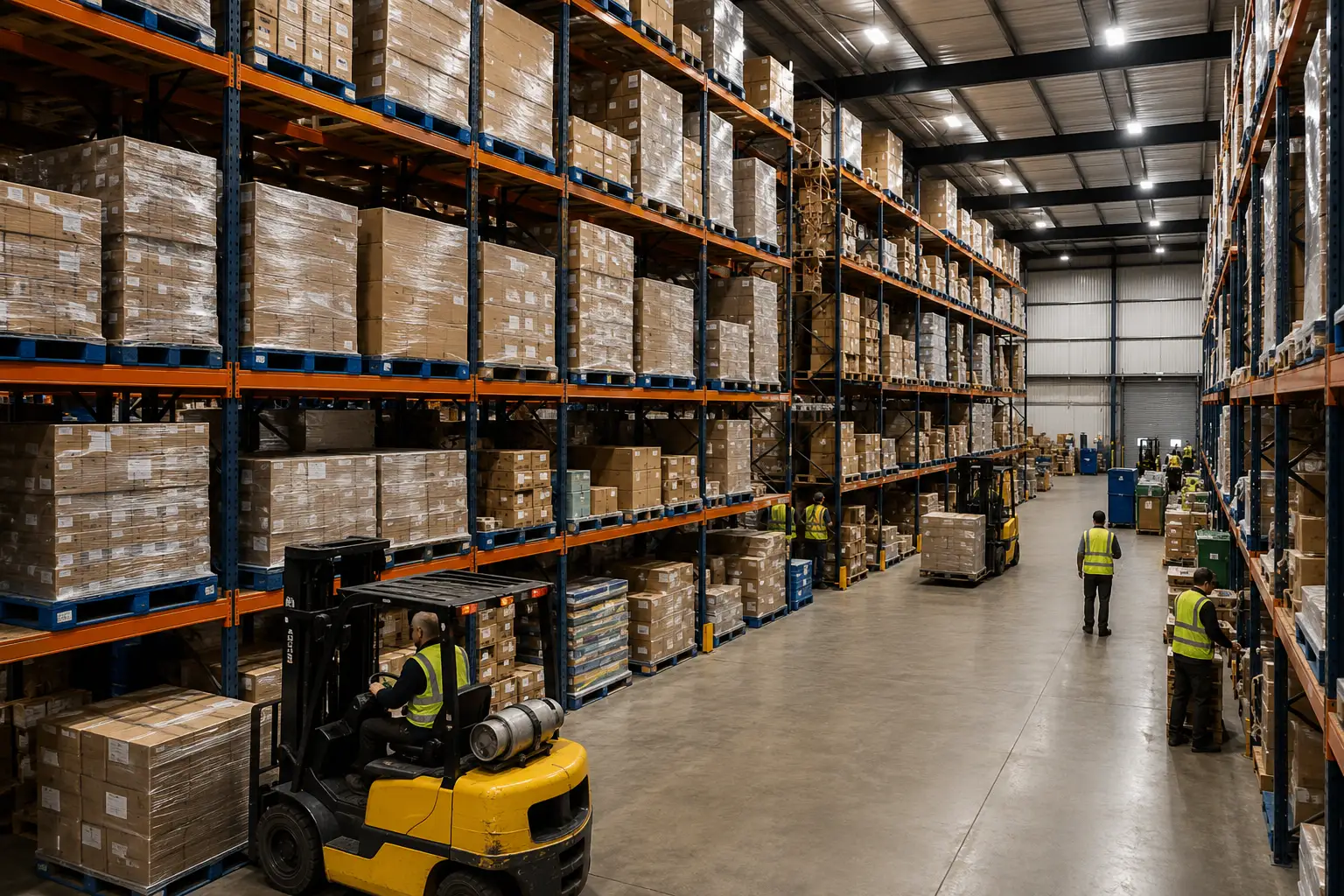
Stock becomes harder to organise. Picking routes become less efficient. Goods may need to be moved several times before they reach the right location. Inbound deliveries become harder to process because there is not enough room to receive, sort or stage stock properly. Dispatch areas may become congested, particularly when order volumes increase.
This is why warehouse capacity should be understood as an operational issue, not just a space issue. A warehouse can still have some physical space available while already operating beyond an efficient level. Once the layout begins working against the process, the warehouse is no longer supporting growth as effectively as it should.
For an Operations Director or Warehouse Manager, this matters because the warehouse is not a passive storage area. It is part of the business’s ability to fulfil demand, protect customer service levels and scale reliably. If the operation becomes compressed, each additional order, product line or contract can place more pressure on people, systems, equipment and available space.
Running out of warehouse space during growth is therefore a decision point. It signals that the current operating environment may no longer match the scale of the business. The question becomes whether the pressure can be managed through better use of existing space, or whether additional capacity is needed to protect performance.
Why business growth creates storage capacity problems
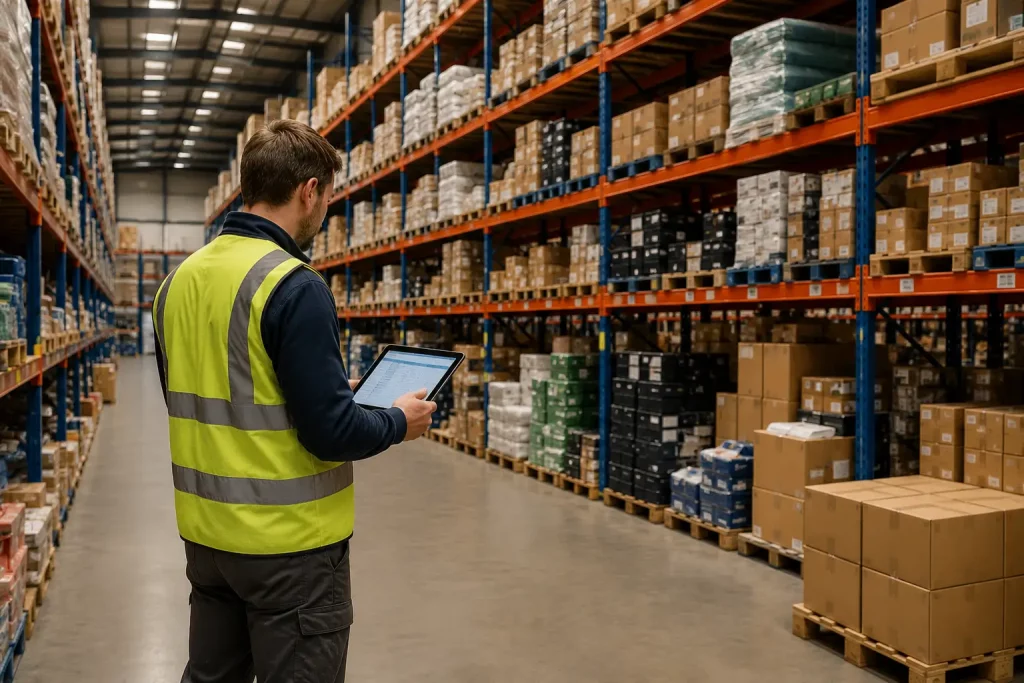
Sustained business growth changes the demands placed on a warehouse. It is not just a matter of holding more stock. Growth often increases the complexity of the entire operation.
A business may be dealing with higher order volumes, wider product ranges, more frequent deliveries, increased stockholding, greater SKU variation or new customer requirements. Each of these factors affects how space is used. More stock may require more storage locations, but more orders may also require more picking space, packing space, goods-in capacity and dispatch staging.
This is where growing businesses can experience capacity pressure even when the warehouse was originally well planned. A layout that worked for a smaller operation may not scale cleanly as volumes increase. A system that once allowed stock to move efficiently through the building may become strained as more goods, people and equipment compete for the same working areas.
The Chartered Institute of Logistics and Transport notes that warehouse storage capacity is closely linked to the ability to receive goods and fulfil orders effectively, not simply to the volume of stock a site can hold. Its guidance on ways to increase warehouse storage capacity reinforces the importance of understanding storage needs now and into the future, including product flow and growth projections.
That is particularly relevant in a growth scenario. If the business has secured new contracts or increased sales volumes, warehouse pressure may continue building. Treating the issue as a temporary inconvenience can delay the point at which a structured capacity decision is made.
This is also where growth-led capacity pressure must be separated from handling peak demand overflow. Peak demand is usually cyclical, predictable or time-bound. Growth-driven pressure is different because it suggests the baseline operation has changed.
If the business is consistently carrying more stock, processing more orders or expanding its product range, the warehouse may need a more strategic capacity response.
What happens when you operate at or beyond warehouse capacity?
Operating at or beyond warehouse capacity can gradually reduce performance across the whole operation. The effects may not appear as one single failure point. They often build through a series of smaller inefficiencies that become more difficult to absorb as the business continues to grow.
Picking can become slower because stock is harder to locate or access. Replenishment may take longer because goods cannot move cleanly from receiving areas into storage. Temporary holding areas may become semi-permanent storage zones, reducing the space available for normal warehouse activity.
Stock visibility can also suffer. When goods are stored wherever space can be found, the risk of misplacement, duplication or handling errors increases. This can affect order accuracy, slow down fulfilment and place additional pressure on warehouse teams.
There may also be a commercial consequence. If the warehouse cannot process increased volumes efficiently, growth can become harder to convert into reliable revenue. Orders may take longer to fulfil, customer expectations may become harder to meet, and new contracts may create operational strain rather than controlled expansion.
In some cases, the business may begin making short-term compromises simply to keep moving. These could include splitting stock across inconvenient locations, relying on additional manual handling, increasing temporary labour or using external storage that does not integrate well with the main operation. Each decision may be understandable in isolation, but together they can increase cost, complexity and management pressure.
There is also a practical safety and control dimension. HSE guidance on warehousing and storage health and safety highlights risk areas such as workplace transport, manual handling and storage systems. This does not mean every growing warehouse has a compliance problem, but it does underline the importance of maintaining clear movement, handling and storage discipline as capacity pressure increases.
The key point is that a warehouse does not need to fail completely before action is needed. If capacity pressure is already affecting throughput, visibility or control, the business should begin assessing its warehouse expansion options before the constraint starts limiting growth more directly.
How do you know if your warehouse is limiting your growth?
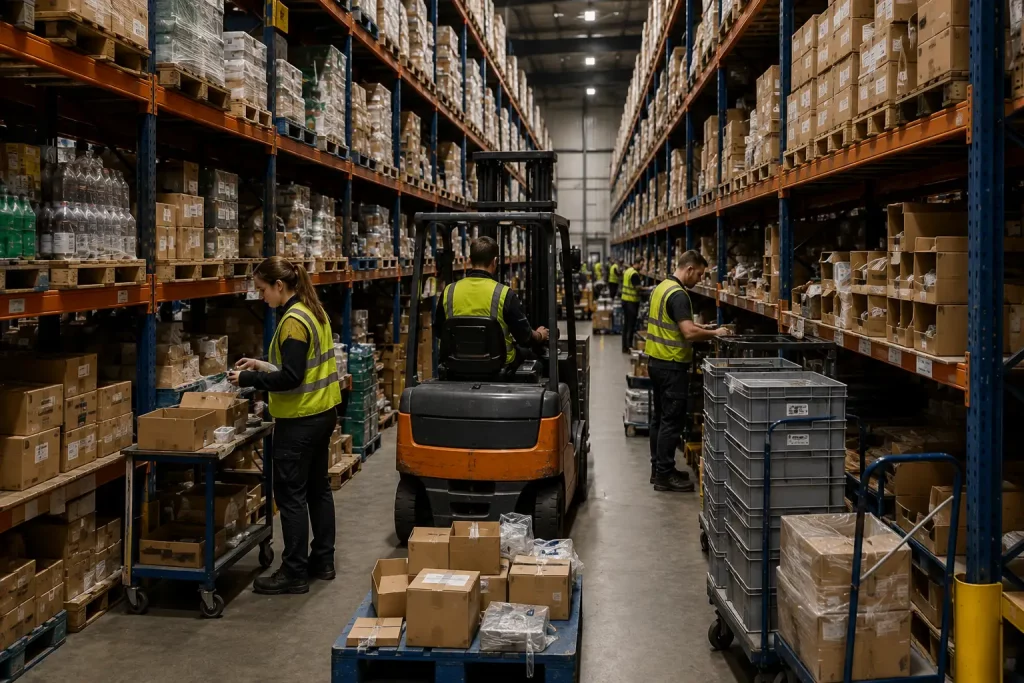
In many businesses, warehouse limitations appear gradually. The operation adapts to increasing pressure for a period of time, and teams often find ways to keep orders moving even as efficiency declines. The problem is that these workarounds can mask the underlying capacity issue until performance, cost or customer service is already being affected.
One of the clearest indicators is when operational decisions begin revolving around available space rather than operational efficiency. Stock may be stored wherever room can be found instead of where it best supports picking and replenishment. Goods-in areas may remain occupied for longer because stock cannot move cleanly into storage locations. Dispatch operations may become compressed during busy periods because staging space is limited.
The warehouse may also begin restricting commercial decisions. A business that is growing successfully should normally be able to absorb additional orders, customers or product lines in a controlled way. If new opportunities are creating concern about storage capacity, handling capability or fulfilment pressure, the warehouse may already be constraining growth.
Other common indicators include:
- increasing picking times
- reduced stock visibility
- rising handling complexity
- more frequent congestion within operational areas
- growing reliance on temporary overflow arrangements
- reduced flexibility within the warehouse layout
- inability to maintain efficient product flow
For some businesses, the trigger is strategic rather than operational. Leadership teams may recognise that the warehouse can support current activity, but not projected growth over the next 12–24 months. In that situation, the business is not responding to failure. It is responding to forecast pressure before the operation becomes reactive.
This distinction matters because earlier intervention generally provides more options. Businesses that assess capacity requirements before severe operational strain develops are more likely to make controlled decisions around timing, investment and scalability.
What are your options for increasing warehouse capacity?

When warehouse capacity becomes restrictive, there is rarely a single correct solution. The right option depends on the stability of growth, the operational model of the business, available site constraints and the level of long-term commitment the organisation is prepared to make.
For some businesses, the first step may be improving the use of existing space. Reconfiguring layouts, adjusting racking systems or improving stock organisation can sometimes create additional capacity without changing facilities. However, this approach has limits. If the warehouse is already operating efficiently, internal reconfiguration may only delay a larger expansion decision.
Another option is outsourcing part of the storage operation. This can reduce immediate pressure, particularly for slower-moving stock or overflow inventory. The challenge is that external storage may increase handling complexity, reduce operational visibility or create separation between storage and fulfilment activity.
Relocation is another possible route, particularly where the current site has severe infrastructure limitations. However, moving warehouse operations can introduce significant operational disruption, transition risk and cost exposure. Depending on the local industrial property market, suitable facilities may also be difficult to secure quickly or at commercially attractive terms.
Permanent expansion may provide the strongest long-term solution where growth is stable and forecasts are reliable. This could involve extending the current facility, developing a new warehouse or investing in additional infrastructure. However, permanent expansion introduces longer-term financial commitment, planning considerations and the risk of overcapacity if demand changes.
This is where businesses often begin exploring alternatives to building a new warehouse as part of a phased growth strategy. The goal is not necessarily to avoid permanent investment altogether, but to avoid committing too early while operational requirements are still evolving.
For businesses that need additional capacity without locking themselves immediately into permanent infrastructure, temporary warehousing can provide a more flexible route.
This is particularly relevant where:
- growth forecasts are positive but still developing
- operational continuity must be maintained
- additional capacity is needed relatively quickly
- site space is available
- the business wants time to assess longer-term expansion requirements
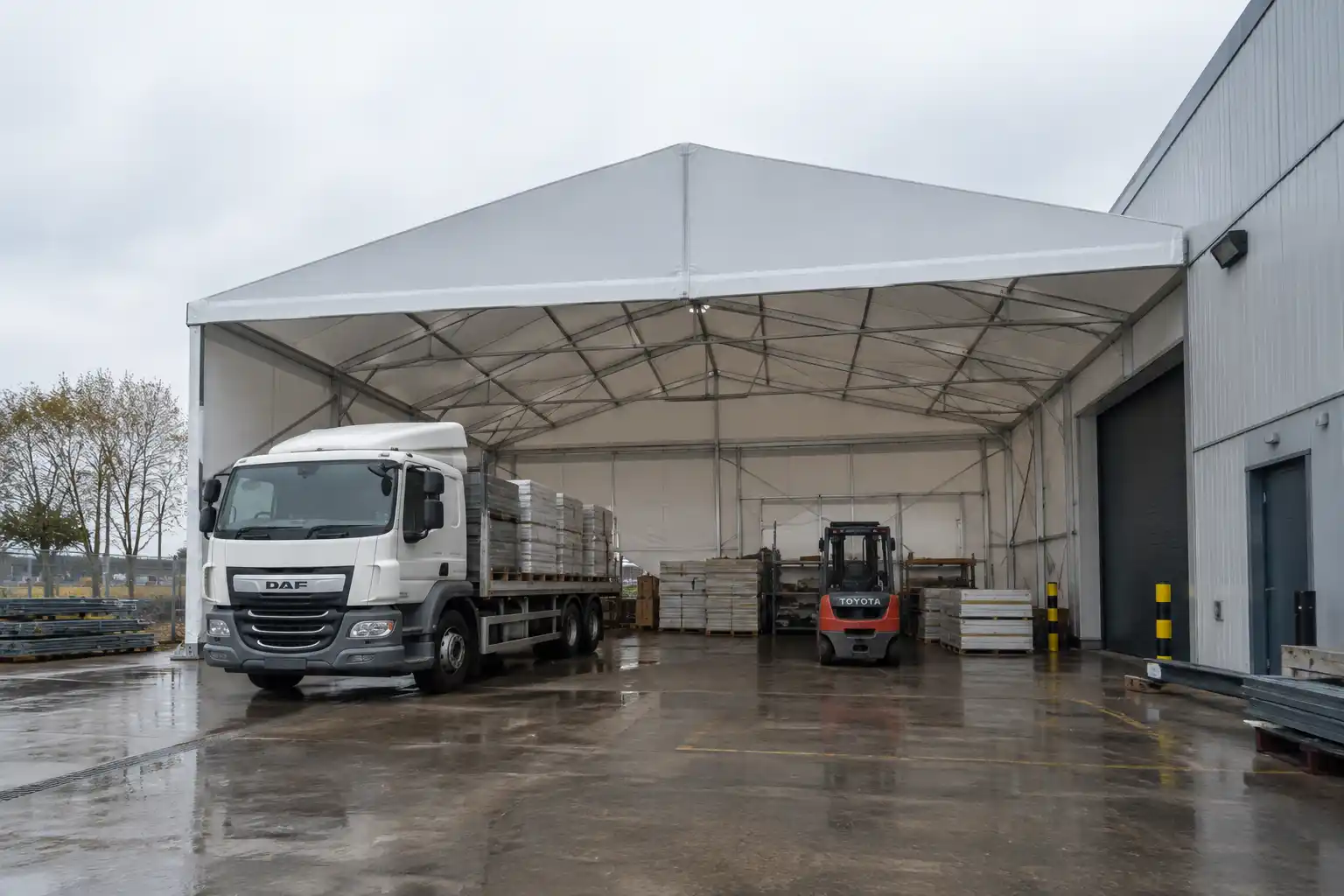
In some scenarios, temporary warehousing may operate alongside an existing facility to increase storage capacity while preserving established workflows. In others, it may support phased expansion while a business evaluates whether relocation or permanent development is commercially justified.
This differs from increasing warehouse capacity quickly, which focuses more heavily on accelerated implementation. In this article, the emphasis remains on structured decision-making and long-term scalability.
Should you expand permanently or use temporary solutions?
The decision between permanent expansion and temporary warehousing is rarely just about space. It is a question of certainty, timing and long-term operational strategy.
Permanent expansion may make sense where growth is stable, long-term demand is predictable and the business is confident that additional capacity will remain necessary for years to come. A permanent facility can provide long-term operational control and may support wider strategic development plans.
However, permanent expansion also carries longer-term implications. Construction programmes, planning considerations, financing commitments and infrastructure coordination can all affect implementation timelines and investment exposure. If growth slows, changes direction or becomes less predictable, the business may find itself committed to more permanent infrastructure than it actually requires.
This is why some businesses delay permanent expansion until growth patterns become clearer. The challenge is that waiting too long can create operational strain if warehouse capacity continues tightening during that period.
Temporary warehousing provides a different type of flexibility. Rather than committing immediately to permanent development, the business can increase storage capacity while retaining the ability to reassess future requirements later.
That flexibility can be commercially valuable in growth environments where:
- demand is increasing but still evolving
- inventory profiles are changing
- operational processes are still scaling
- long-term forecasting remains uncertain
- expansion decisions need to remain adaptable
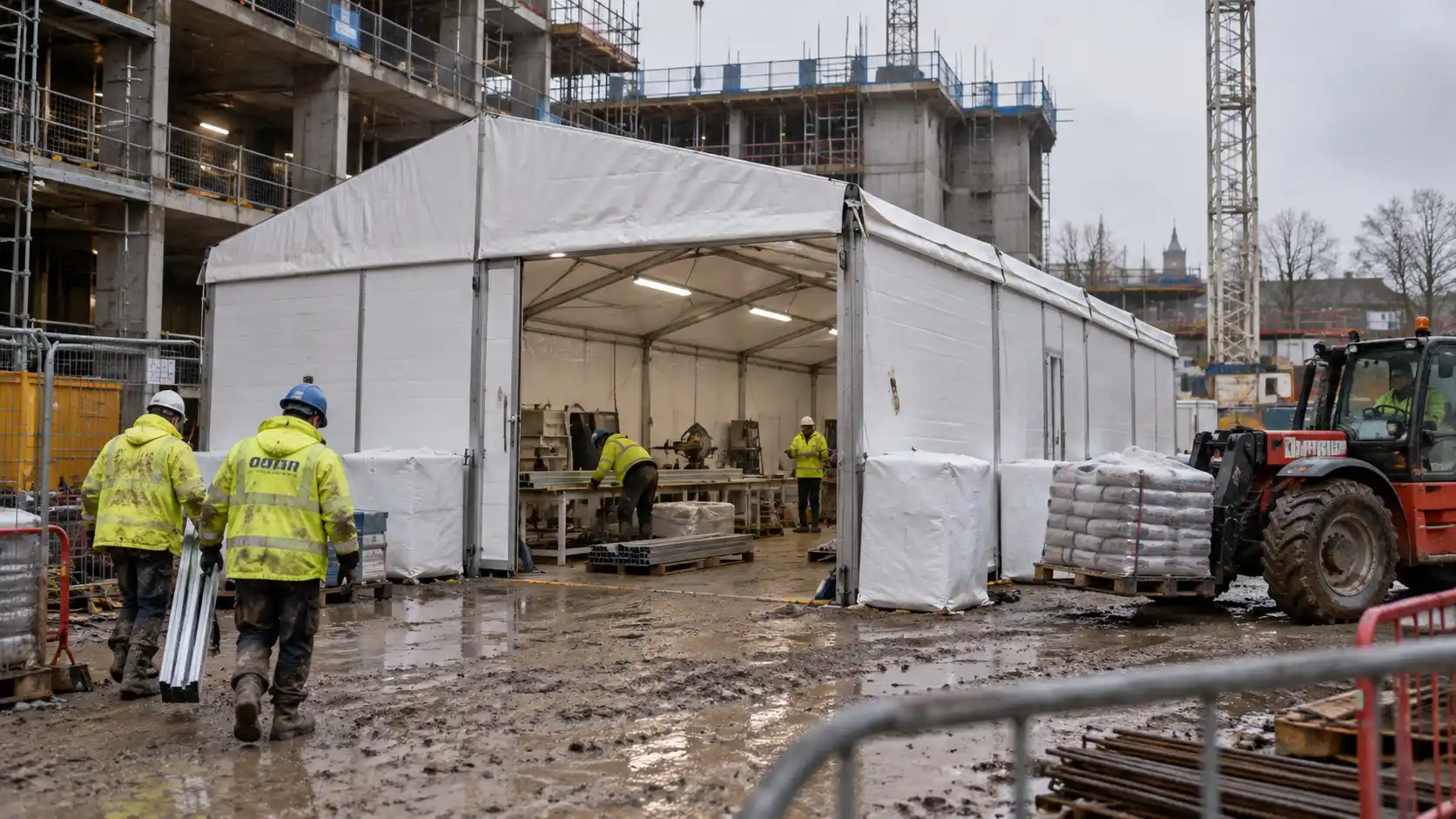
Temporary warehousing can also reduce the operational disruption associated with relocation or redevelopment. In some situations, additional capacity can be created on or near an existing site, allowing fulfilment operations to continue while the business evaluates longer-term infrastructure decisions.
This does not mean temporary warehousing is automatically the right answer in every case. The suitability of any solution depends on operational requirements, site conditions, growth stability and long-term commercial objectives. Businesses should assess how any expansion route affects workflow, handling efficiency, scalability and operational continuity.
The wider UK warehousing market also affects these decisions. The Chartered Institute of Logistics and Transport has highlighted ongoing industrial space pressures affecting logistics and warehousing growth in the UK. Its reporting on the UK warehouse shortage and economic growth impact reinforces that suitable warehouse capacity is not always readily available, particularly for businesses trying to scale quickly.
For many growing businesses, the decision is therefore not permanent versus temporary in absolute terms. It is about whether temporary warehousing can provide a lower-risk transitional stage while longer-term operational needs become clearer.
Can temporary warehousing support business growth?
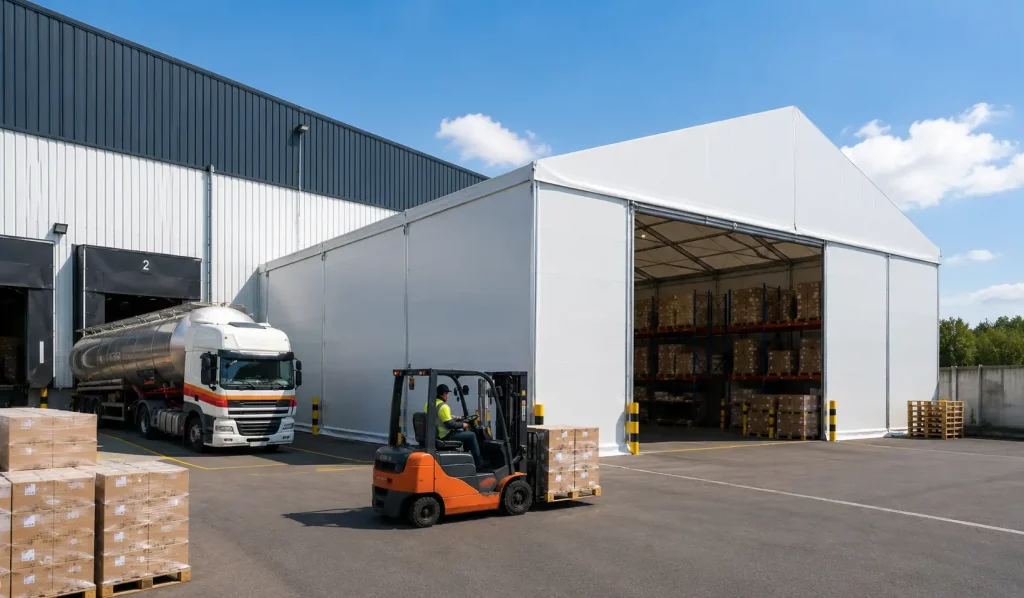
Temporary warehousing can support business growth by providing additional operational capacity without requiring an immediate permanent infrastructure commitment.
For growing businesses, this can create valuable flexibility. Instead of forcing the organisation into a major relocation or long-term capital investment at the point where warehouse pressure first appears, temporary warehousing can provide additional storage space while operational forecasts, customer demand and inventory requirements continue developing.
The practical value of this approach depends on the operational scenario. In some businesses, temporary warehousing may be used to increase bulk storage capacity while the primary warehouse continues handling fulfilment activity. In others, it may support expansion into new product lines, create additional dispatch space or reduce pressure on congested storage areas.
Temporary warehousing may also help businesses maintain operational continuity during wider growth programmes. For example, if an organisation is considering permanent redevelopment or relocation, temporary capacity can provide breathing room during the transition period rather than forcing immediate operational change.
This flexibility is one reason some businesses explore flexible warehouse storage capacity before committing to permanent expansion. The objective is not simply to create more space, but to support growth in a controlled way while preserving future decision-making options.
Suitability remains important. Businesses should still assess:
- site conditions
- access requirements
- stock profiles
- operational flow
- handling methods
- anticipated duration of use
- integration with existing warehouse activity
This is where evaluating warehouse suitability becomes important. Not every storage operation has the same requirements, and temporary warehousing should support operational efficiency rather than simply increasing footprint.
The key advantage is strategic flexibility. Temporary warehousing allows businesses to respond to sustained growth while avoiding the pressure to make irreversible infrastructure decisions before the long-term operational picture is fully established.
What factors should influence your capacity decision?
The right warehouse expansion decision depends on more than immediate space pressure. Businesses should assess both current operational strain and the likely direction of future growth before deciding how to increase capacity.
One of the most important considerations is growth stability. If increased demand appears consistent and long-term, permanent investment may become more commercially viable. If growth forecasts remain uncertain or volatile, maintaining flexibility may be more valuable than committing immediately to permanent infrastructure.
Operational requirements also matter. Different businesses have different storage and fulfilment profiles. Factors such as SKU complexity, stock turnover, dispatch frequency and handling methods all affect what type of capacity solution is practical.
Site constraints can also influence the decision significantly. Some operations may have available land or adjacent space that supports temporary expansion. Others may face circulation limitations, restricted access or operational layouts that make certain expansion routes less suitable.
Timing is another important factor. Businesses should consider how quickly additional capacity is required and whether current warehouse pressure is already affecting throughput, fulfilment or customer service performance. Earlier planning generally creates more flexibility than waiting until the operation is already under severe strain.
Financial exposure should also be assessed carefully. Permanent infrastructure decisions may involve longer-term commitment, while temporary solutions may allow the business to phase investment more gradually as operational certainty improves.
The article should not frame this as a choice between “good” and “bad” options. Different businesses will reach different conclusions depending on their operational model, commercial priorities and growth trajectory. The goal is to choose an approach that supports scalability without creating unnecessary restriction or risk.
When is the right time to increase warehouse space?
The best time to increase warehouse capacity is usually before operational performance begins deteriorating significantly.
Many businesses wait until the warehouse feels completely full before assessing expansion options. By that stage, however, efficiency may already be declining. Picking routes may be congested, stock management may be becoming more difficult and warehouse teams may already be operating within increasingly compressed workflows.
Earlier intervention provides more control. It allows businesses to evaluate capacity options strategically rather than reactively. This can improve decision quality, reduce operational disruption and create more flexibility around implementation timing.
Businesses should begin reviewing expansion requirements when:
- warehouse workflows become noticeably less efficient
- stockholding continues increasing over a sustained period
- growth forecasts suggest additional pressure is likely
- new contracts or product ranges are planned
- operational flexibility within the existing warehouse is becoming limited
- temporary workarounds are becoming part of normal operations
The right timing also depends on the wider business strategy. Some organisations may intentionally use temporary warehousing as an intermediate step while assessing whether long-term growth is stable enough to justify permanent investment. Others may already know that permanent expansion is necessary but require transitional capacity while longer-term infrastructure programmes are developed.
What matters most is avoiding reactive decision-making. Once warehouse pressure begins affecting fulfilment reliability, customer performance or operational control, the business may have fewer options and less flexibility around implementation.
Creating a scalable storage strategy for continued growth
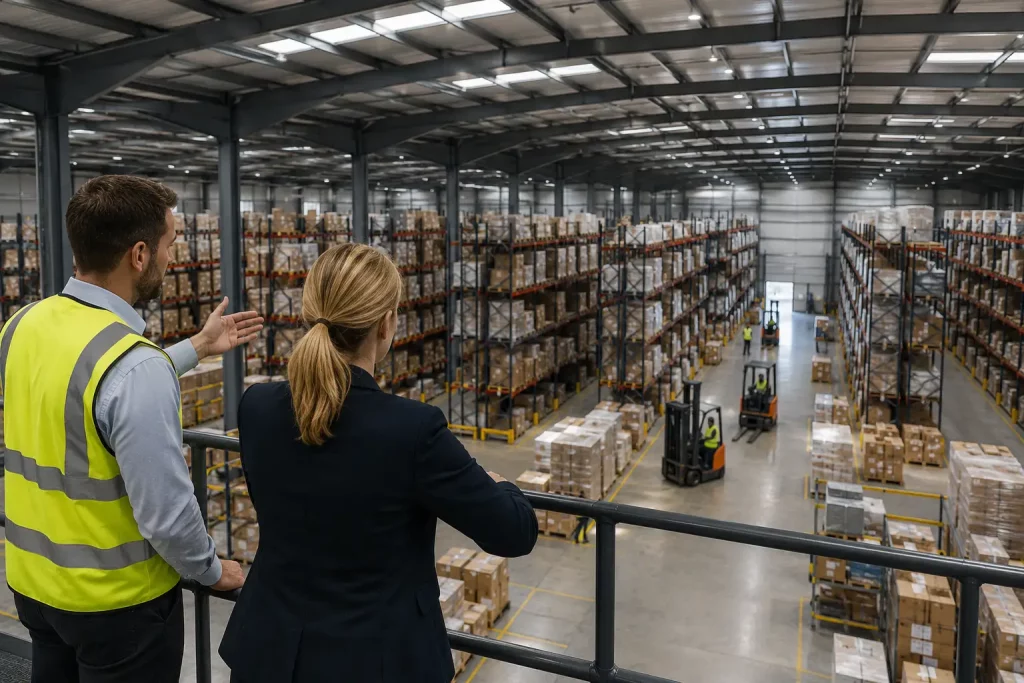
Warehouse capacity decisions should support the long-term direction of the business, not simply resolve short-term operational pressure.
As businesses grow, storage requirements rarely remain static. Product ranges evolve, fulfilment expectations change and inventory profiles become more complex. The challenge is therefore not just increasing capacity once, but creating an operational approach that can continue adapting as the business develops.
That is why flexibility is often valuable during growth phases. Businesses that expand too aggressively may create unnecessary long-term cost exposure if demand changes. Businesses that delay action too long may restrict their own ability to scale efficiently.
A more structured approach involves aligning warehouse capacity decisions with operational forecasts, growth stability and infrastructure planning. In some cases, that may lead directly to permanent expansion. In others, it may support a phased strategy where temporary warehousing creates additional capacity while longer-term requirements become clearer.
The most effective storage strategy is usually the one that protects operational performance while preserving enough flexibility for future decision-making. Capacity should support growth, not become a constraint on it.
What matters most as your warehouse capacity decision develops?
When warehouse space becomes constrained during business growth, the most important step is not simply finding more storage. It is understanding what type of growth the business is experiencing and how that growth is likely to develop over time.
Some businesses will ultimately require permanent expansion. Others may benefit from a more phased approach that increases capacity while maintaining flexibility and reducing long-term commitment risk. The right decision depends on operational requirements, forecast confidence, site conditions and the wider commercial direction of the business.
What matters most is avoiding reactive decision-making after operational strain has already intensified. Earlier assessment gives businesses more control over how they scale, how they protect fulfilment performance and how they manage future infrastructure investment.
Temporary warehousing can play an important role within that process by allowing organisations to increase capacity in a controlled way while longer-term operational needs continue to evolve.
How to move forward
If your warehouse is beginning to restrict operational efficiency, fulfilment performance or future growth planning, it is usually worth assessing expansion options before the pressure becomes more disruptive.
For businesses that need additional storage capacity but are not yet ready to commit to permanent infrastructure, exploring temporary warehousing and storage solutions can provide a more flexible route forward. This can help maintain operational continuity, support continued growth and reduce the risk of making premature long-term facility decisions while demand patterns are still developing.
LM Structures works with commercial and industrial businesses that need scalable warehouse capacity in live operational environments, including situations where flexibility, continuity and phased growth planning are important considerations.
To speak to a member of our team call 0333 358 4989 or email enquiries@lmstructures.co.uk
Warehouse Out Of Space Solutions FAQs
In some cases, yes. Temporary warehousing can sometimes be installed on or near an existing operational site, depending on available space and site constraints. This may allow businesses to increase storage capacity while maintaining continuity within the existing warehouse operation.
Delaying action can increase operational inefficiency, reduce fulfilment performance and make warehouse workflows harder to manage. As pressure builds, businesses may also face higher operational complexity and reduced flexibility around future expansion decisions.
The decision depends on factors such as growth stability, forecast confidence, operational requirements and available site conditions. Temporary solutions may be appropriate where demand is increasing but future long-term infrastructure requirements are still evolving.
Yes, temporary warehousing can provide scalable additional capacity while preserving operational flexibility. It is often used when businesses need more storage space but want time to evaluate whether long-term growth justifies permanent investment.
The first step is to determine whether the issue is temporary or driven by sustained growth. Businesses should assess how capacity pressure is affecting fulfilment, storage flow and operational efficiency before comparing options such as reconfiguration, relocation, permanent expansion or temporary warehousing.