How Should You Store Materials on a Construction Site?
When materials, plant or project inventory cannot be stored properly, the pressure quickly moves beyond “where do we put it?” and becomes a question of workflow, access, protection and site control.
In Short
Temporary storage for construction sites gives project teams a secure, organised way to manage materials and equipment where permanent warehouse infrastructure is unavailable or impractical. When planned around access, movement, protection and project phases, temporary warehousing can support safer logistics, reduce avoidable delays and help maintain operational efficiency across the site.
Project environments are rarely static. A compound that works during mobilisation may become less practical once deliveries increase, subcontractor activity intensifies, or the site layout changes. For Project Managers, Site Managers and Operations Managers, storage is not simply a background requirement. It affects how efficiently materials move, how safely people and vehicles operate, and how reliably the programme can continue.
Temporary warehousing and storage can provide the additional infrastructure needed to keep materials protected, accessible and organised without committing to permanent storage facilities. Used well, it becomes part of the project’s operational system rather than a separate area of covered space.
Project Storage Priorities at a Glance
Temporary and offsite project environments create storage pressures because materials, equipment and deliveries need to be managed in locations that were not necessarily designed for long-term warehousing. This makes planning, positioning and access critical from the outset.
A suitable temporary storage strategy should consider:
- What needs to be stored, for how long, and at what stage of the project
- How materials will arrive, be handled, accessed and distributed
- Where storage can sit without disrupting vehicle movement, pedestrian routes or working areas
- How stock, tools or equipment will be protected from damage, weather exposure or loss
- How storage requirements may change as the project progresses
The key decision is not simply whether more storage is needed. It is whether the storage arrangement supports the wider logistics of the project.
Table of Contents – In this article
Why temporary and offsite projects create storage challenges
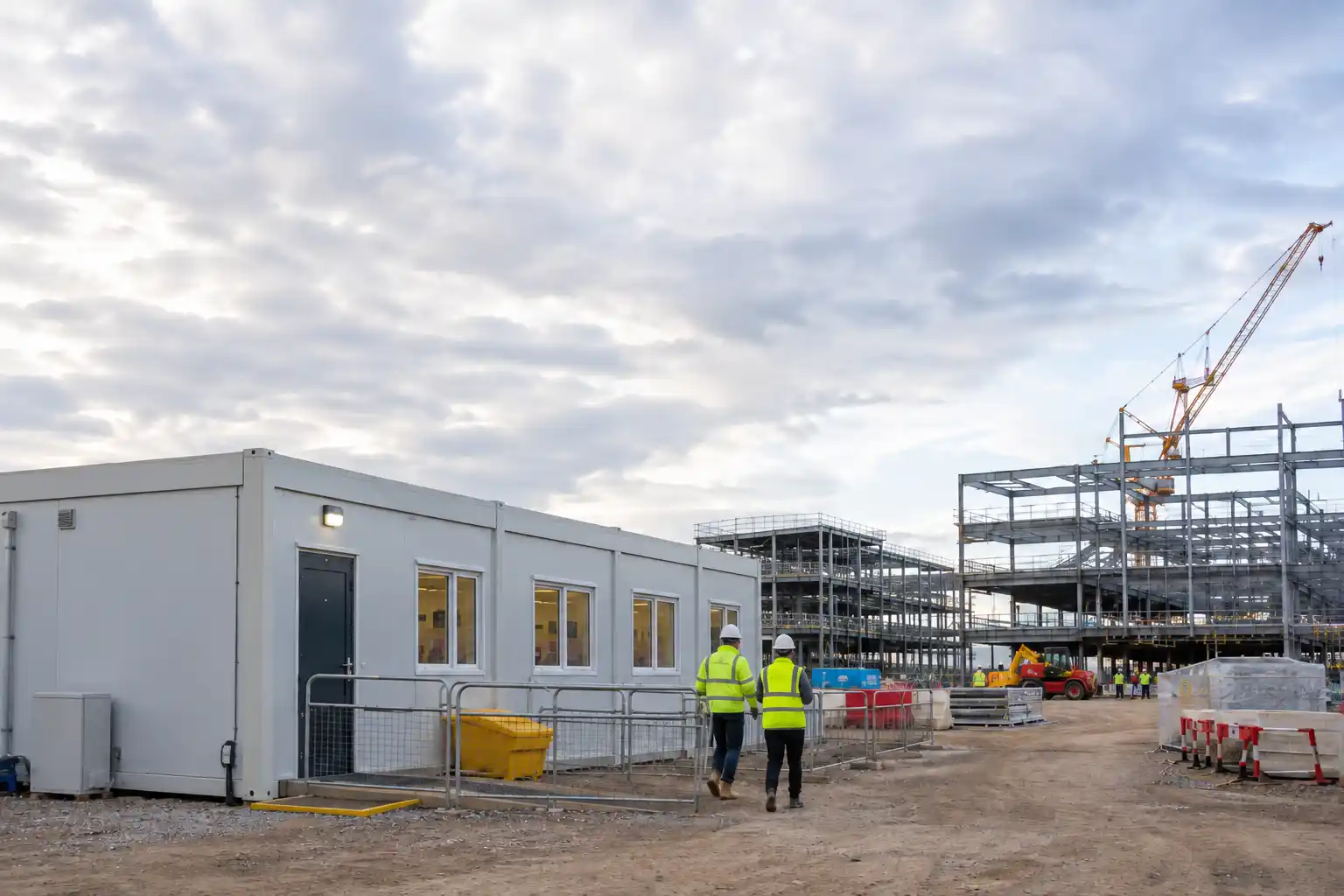
Construction, infrastructure and offsite project environments often need to operate before permanent facilities are available. Materials may arrive before final installation areas are ready, equipment may need to remain close to the workface, and project teams may need controlled storage within a temporary compound, remote site or changing operational footprint.
This creates a different set of pressures from a fixed warehouse environment. A traditional warehouse is usually planned around defined racking, goods-in areas, handling equipment, access routes and stock control systems. A project site is more fluid. Routes change, working zones move, delivery schedules shift, and storage areas may need to adapt as the programme develops.
That is why temporary storage for construction sites needs to be considered as part of site logistics, not treated as a spare area for materials that have nowhere else to go. If storage is placed without thinking through vehicle access, pedestrian movement, unloading requirements and future site phases, it can quickly create friction elsewhere.
HSE guidance on materials storage and waste management on construction sites reinforces the importance of planning how materials will be delivered, stored and managed on site. This is directly relevant to temporary project environments, where poor storage planning can affect both operational efficiency and site safety.
A temporary warehouse or storage structure can help create a more controlled environment for materials, equipment or project inventory. However, its value depends on how well it fits the wider site arrangement. The structure needs to support how the project actually works: where deliveries arrive, how materials are moved, who needs access, and how requirements may change over time.
This is where temporary warehousing and storage solutions can become part of the project’s operational infrastructure. Rather than simply adding cover, they can support organisation, protection and workflow when permanent storage is unavailable or unsuitable.
What happens when materials and equipment are poorly organised on-site?
Poor material organisation creates problems that are often felt across the project, even when the storage issue itself appears local. If items are difficult to find, stored too far from the point of use, exposed to weather, or positioned in a way that obstructs movement, the result can be wasted time, unnecessary handling and reduced productivity.
For site teams, this can mean operatives waiting for materials, deliveries being moved more than once, equipment being stored in unsuitable locations, or valuable working areas becoming congested. These issues may seem small in isolation, but they can affect sequencing, labour efficiency and coordination between different teams.
The commercial consequences are usually indirect but real. If materials are delayed, damaged or inaccessible, work packages may slow down. If subcontractors cannot access what they need when they need it, programme pressure increases. If storage areas interfere with delivery routes or safe movement, site managers may need to adjust workflows at short notice.
This is not about overstating the risk. It is about recognising that storage decisions influence delivery conditions. On a live construction or infrastructure site, inefficient storage can create avoidable friction across the wider operation.
There are also protection and loss considerations. Materials stored in unsuitable conditions may be vulnerable to weather damage, contamination, accidental impact or theft. Equipment that is not properly organised can be harder to control, track or secure. In remote or decentralised project environments, these risks may increase because oversight, access control and infrastructure are often more limited.
HSE guidance on construction site traffic management is also relevant here, because storage areas influence how vehicles and people move around site. If storage is poorly positioned, it can obstruct routes, complicate loading and unloading, or create unnecessary interaction between vehicles, pedestrians and working areas.
A more structured approach to storage helps reduce these operational pressures. It gives teams a clearer system for where materials are held, how they are accessed, and how they support the next stage of work. In that sense, temporary storage is not just a protective measure. It is a way to support smoother project logistics.
What types of storage solutions work best for temporary project environments?

The right storage solution depends on what the project needs to store, how the site operates, how long the requirement will last, and how access needs to be managed. A small volume of tools or consumables may only require a simple secure storage arrangement. Larger quantities of materials, equipment, fixtures, components or project inventory may need a more structured temporary warehouse solution.
Common project-site storage options may include secure containers, covered storage areas, temporary storage buildings, temporary warehouse structures and wider compound-based storage arrangements. Each has a role, but each also has limitations. Containers can be useful for compact, secure storage, but they may not suit larger items, frequent access or organised material handling. Open or lightly covered storage may be appropriate for some robust materials, but it may not provide enough protection or control for weather-sensitive, high-value or frequently used stock.
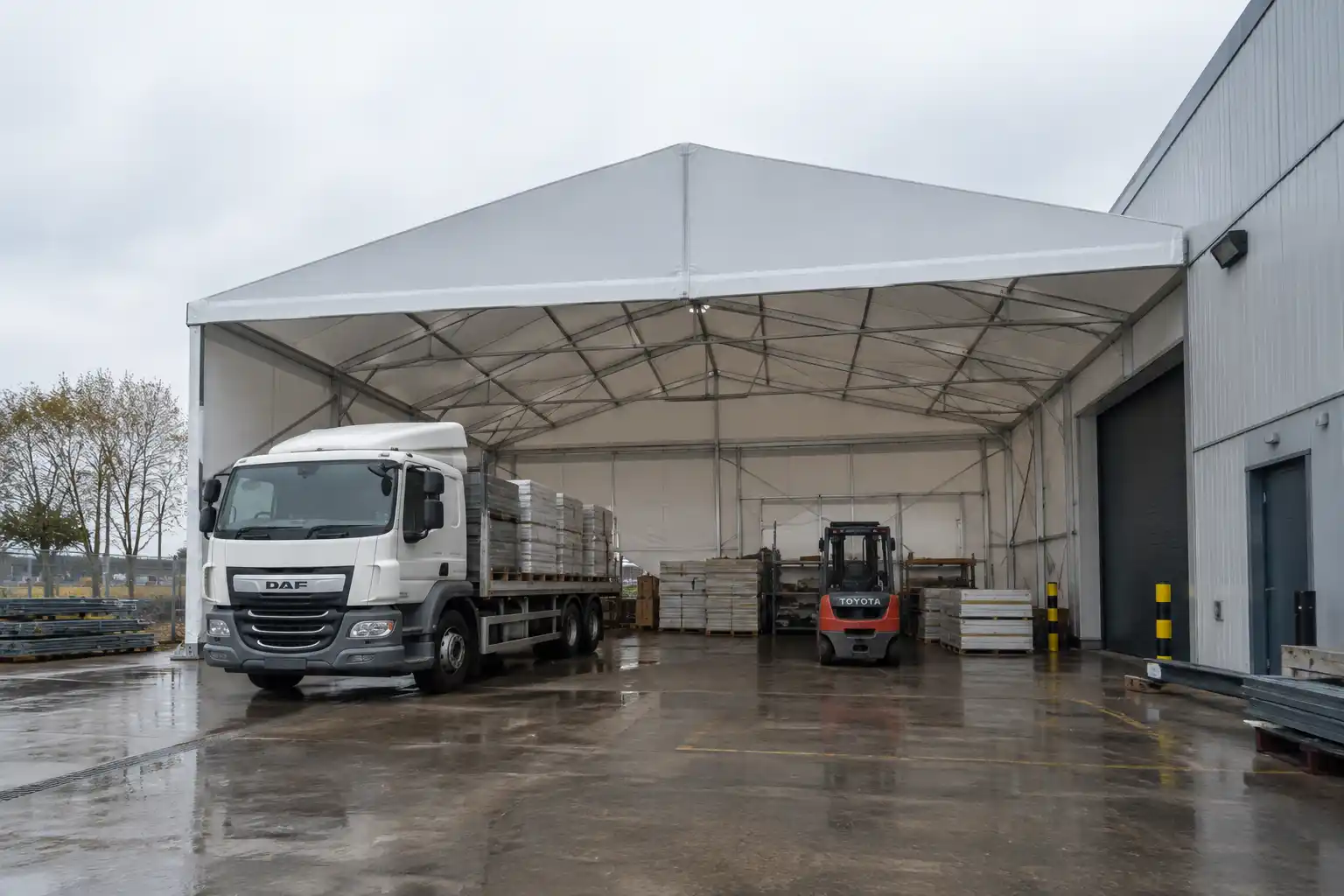
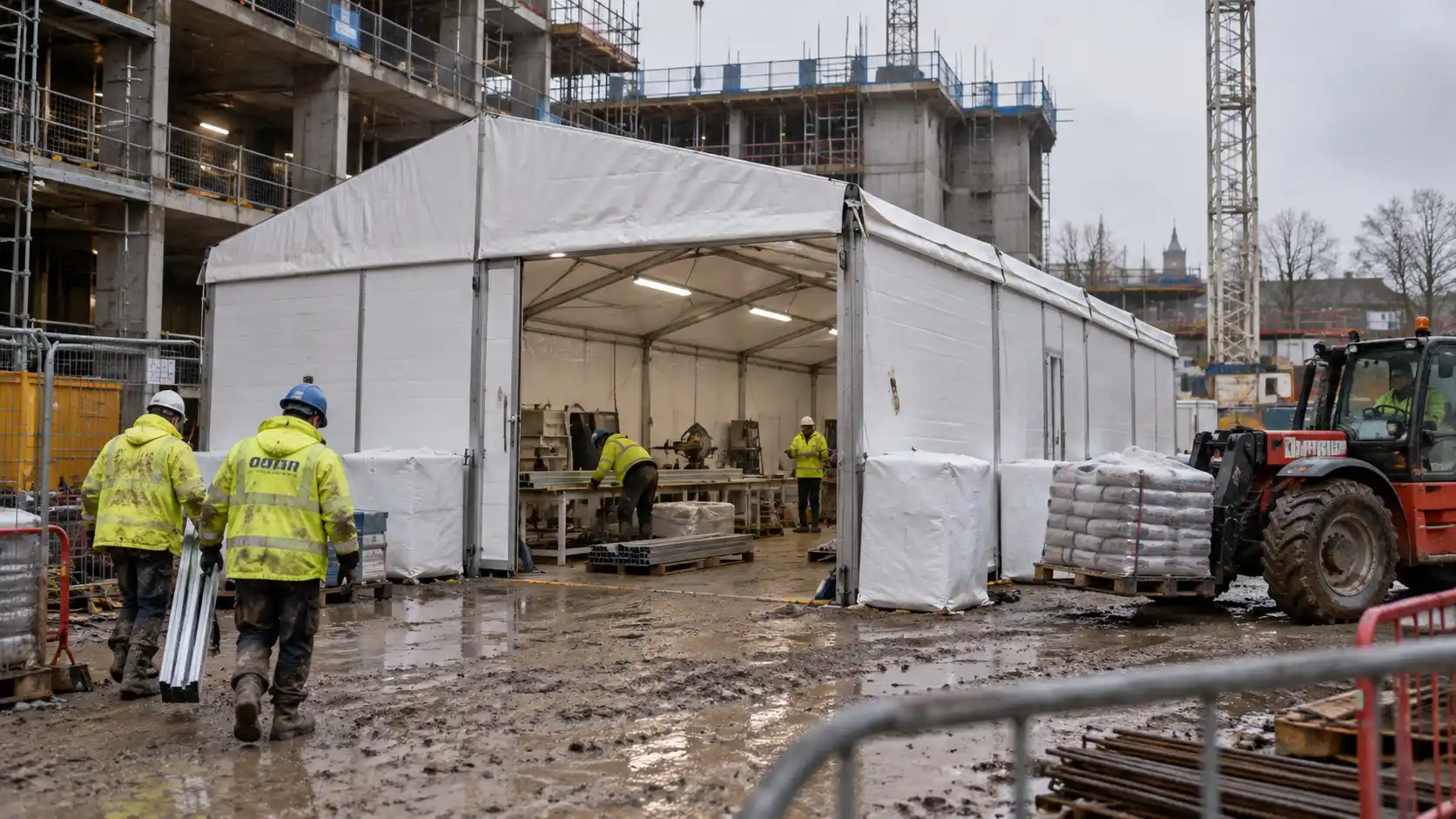
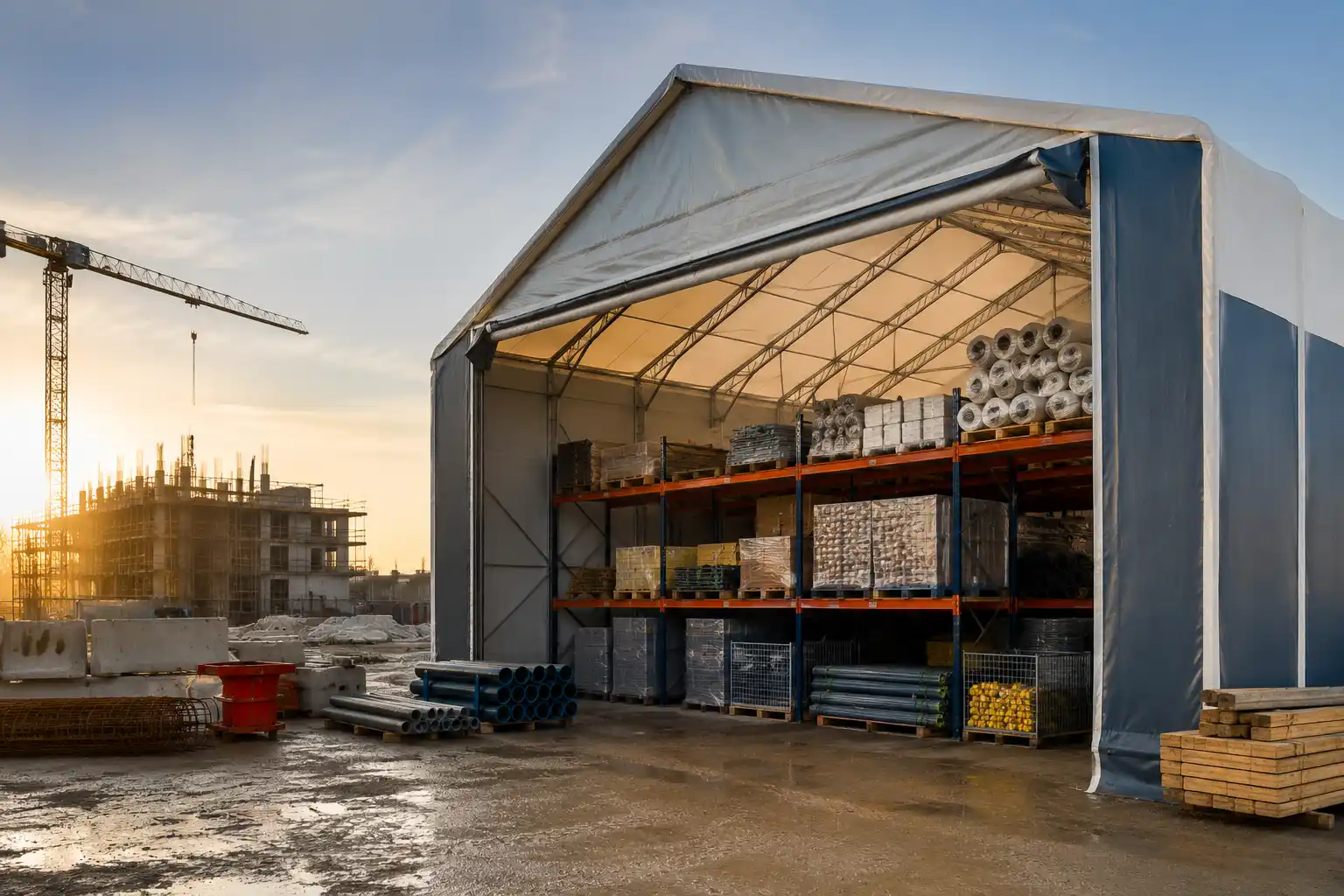
Temporary warehousing becomes more relevant where the project needs a larger, more accessible and more operationally useful storage environment. This might include storing construction materials, equipment, stock, components or staged project inventory close to the point of use. It can also help when the site needs a defined storage zone that supports loading, unloading, movement and retrieval.
Suitability should be assessed through operational questions rather than product preference:
- What materials or equipment need to be stored?
- How frequently will they be accessed?
- Are they weather-sensitive, high-value or difficult to move?
- What handling equipment will be used?
- How will deliveries enter and leave the site?
- Does the storage area need to change as the project progresses?
These questions help distinguish between basic storage and storage that genuinely supports workflow. A temporary warehouse for construction projects should not create a new operational obstacle. It should help the project team manage materials with more control.
This is also where the article differs from guidance on temporary warehouse solutions for constrained sites. A constrained fixed site may be dealing mainly with limited footprint or restricted access. A temporary project environment may have those issues too, but the wider challenge is often the changing nature of the site itself.
For more complex project environments, it is worth thinking beyond the structure alone and considering what makes a temporary warehouse operationally suitable. Suitability depends on access, layout, protection, movement and how the storage function integrates with the project programme.
Can temporary warehousing support construction and infrastructure projects?
Yes, temporary warehousing is commonly used on construction, infrastructure and industrial project environments where materials, equipment or inventory need to be stored securely and accessed reliably without relying on permanent warehouse facilities.
Its role is not simply to create covered space. A well-planned temporary warehouse can support operational flow across the site by improving organisation, reducing unnecessary handling, protecting materials and helping teams maintain more consistent access to what they need.
This becomes particularly important on projects where:
- deliveries are phased across long programmes
- materials arrive ahead of installation
- specialist equipment needs controlled storage
- multiple contractors are operating simultaneously
- site layouts evolve over time
- remote locations limit access to external storage infrastructure
In these environments, relying entirely on off-site warehousing can create additional transport movements, retrieval delays and coordination pressure. Bringing controlled storage closer to the operational area can help reduce those inefficiencies, provided the storage arrangement itself is properly integrated into site logistics.
Temporary warehousing may also support projects where the site footprint changes through different phases. During early groundwork or enabling works, storage requirements may be relatively limited. As installation activity increases, the need for organised, accessible storage often becomes more significant. Later in the programme, requirements may reduce again as areas are completed or operational handover approaches.
This flexibility is one of the reasons temporary storage infrastructure is widely used across project-led environments. It allows storage capacity and organisation to align more closely with operational demand rather than forcing the project to work around fixed permanent facilities.
The UK Government’s Construction Playbook also reinforces the value of coordinated planning, logistics and delivery management across construction and infrastructure projects. Temporary storage planning fits naturally within that broader operational approach.
How temporary storage improves project logistics and workflow
Storage affects much more than where materials are physically placed. It influences how efficiently people work, how deliveries are coordinated, how safely movement is managed and how reliably the programme progresses.
When materials are disorganised or difficult to access, workflow slows down. Operatives spend more time locating items, moving equipment or waiting for deliveries to be repositioned. Repeated handling increases labour inefficiency and may increase the risk of damage or loss. On busy sites, poorly planned storage can also create congestion around loading areas, pedestrian routes or active working zones.
A more structured temporary storage arrangement helps reduce this friction by creating clearer operational flow. Materials can be grouped according to project phases, trade requirements or installation sequences. Frequently used items can be positioned closer to the point of use. Delivery schedules can be coordinated around available storage space rather than reacting to short-term pressures.
This does not eliminate operational complexity, but it can make project logistics more manageable.
Accessibility is particularly important. Storage that is secure but difficult to access can create its own inefficiencies. Equally, highly accessible storage without proper organisation may become difficult to control.
Effective project-site storage planning needs to balance:
- operational access
- material protection
- vehicle movement
- labour efficiency
- inventory visibility
- site safety considerations
This is why temporary warehousing should be viewed as part of operational infrastructure rather than simply a protective structure.
For some projects, temporary storage may also help support sequencing and coordination between multiple contractors or delivery streams. Materials can be staged in advance of installation, reducing pressure on immediate delivery windows and helping teams maintain continuity when operational conditions change.
In larger or more complex environments, project teams may also need to consider how the storage arrangement itself will be installed and integrated into the wider site programme. Understanding the temporary warehouse installation process can help operational teams coordinate access, positioning and mobilisation more effectively.
What layout and positioning factors matter on project sites?
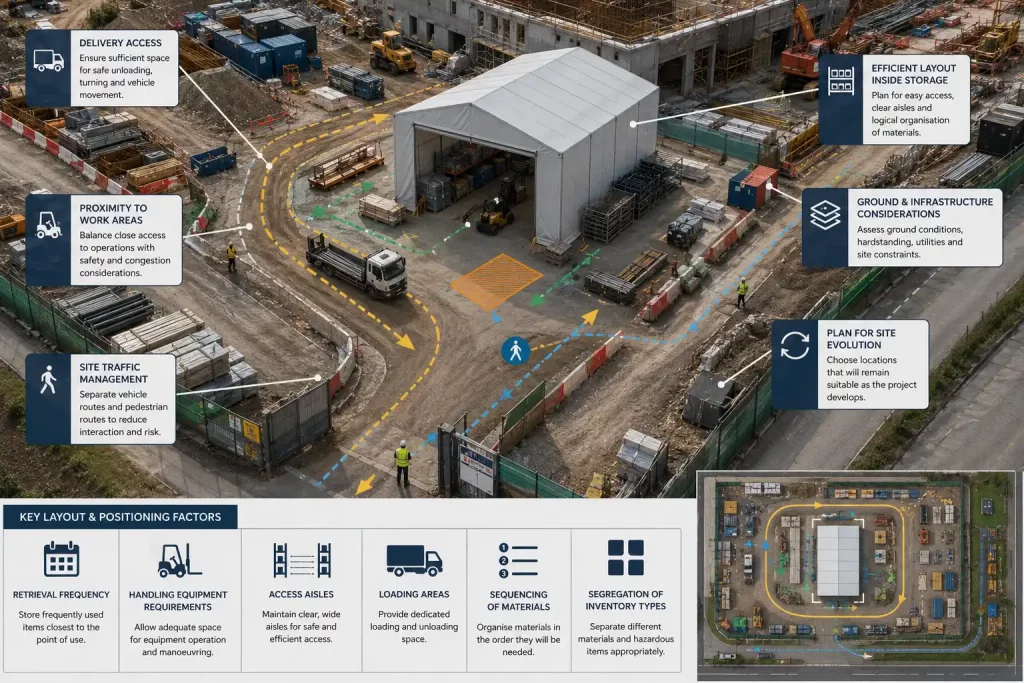
Positioning temporary storage within a live project environment requires more consideration than simply identifying spare space. The location of a temporary warehouse or storage area directly affects movement, access, workflow and operational efficiency across the site.
One of the first considerations is how materials will arrive and move through the project environment. Deliveries need sufficient access for unloading, turning and safe movement. Storage areas positioned too far from operational zones may increase handling time and labour requirements. Storage positioned too close to active works may create congestion, safety issues or disruption to other activities.
Site traffic routes are particularly important. Vehicle movement, pedestrian access and material handling should work together rather than compete for the same operational space. HSE guidance on construction site traffic management highlights the importance of planning suitable traffic routes and reducing unnecessary interaction between vehicles and pedestrians. Storage positioning plays a direct role in this.
Ground conditions and infrastructure also influence suitability. Some project environments may have uneven terrain, limited hardstanding, restricted utilities or evolving site boundaries. Temporary storage solutions need to fit within these operational realities rather than assuming ideal warehouse conditions.
The layout inside the storage area matters as well. If operatives cannot access materials efficiently, productivity may still suffer even when adequate storage capacity exists.
Project teams should therefore think about:
- retrieval frequency
- handling equipment requirements
- access aisles
- loading areas
- sequencing of stored materials
- segregation of different inventory types
This becomes increasingly important on long-duration projects where storage volumes and operational priorities may change over time.
Positioning should also reflect future site evolution. Areas that are accessible during early mobilisation may later become constrained by additional works, increased vehicle movements or expanded operational zones.
Temporary storage planning should therefore account for how the site is expected to develop throughout the programme, not just how it operates on day one.
How security, access, and protection affect storage planning
Construction and infrastructure projects often involve storing valuable materials, specialist equipment or operational inventory within temporary or remote environments. This creates a balance between maintaining security and preserving efficient operational access.
Storage that is difficult to access may slow down workflow and increase labour inefficiency. However, storage that is too open or poorly controlled may increase exposure to theft, accidental damage or inventory loss. The most effective arrangements are usually those that integrate protection, organisation and accessibility into the wider logistics plan.
Environmental protection is another important consideration. Materials exposed to weather, moisture or contamination may deteriorate before installation, particularly on long-duration projects or remote operational sites. Temporary storage buildings can help provide more controlled protection for weather-sensitive items while still allowing operational access when needed.
Protection requirements will vary depending on:
- the type of materials being stored
- storage duration
- handling frequency
- environmental exposure
- project location
- operational activity around the storage area
Security planning should also consider how the site operates day to day. On some projects, multiple contractors may require controlled access to specific inventory or equipment. On others, restricted access may be needed because of high-value materials, specialist tools or sensitive operational components.
This is why temporary warehousing should not be planned in isolation. Storage arrangements work best when integrated into wider site management, logistics coordination and operational control procedures.
The CITB guidance materials for construction site management reinforce the importance of structured planning and coordination within live project environments. Temporary storage planning sits within that broader operational discipline.
What challenges come from changing site conditions?
One of the defining characteristics of temporary project environments is that conditions rarely remain fixed for long. As works progress, site layouts, delivery routes, operational zones and storage requirements may all change.
A storage arrangement that works during mobilisation may become restrictive later in the programme if vehicle movements increase, work areas expand or additional contractors move onto the site. Similarly, storage capacity that initially appears sufficient may become inadequate once installation activity accelerates or delivery volumes increase.
This creates a need for flexibility within temporary storage planning.
Project teams often need to adapt to:
- phased construction activity
- changing access routes
- evolving compound layouts
- revised delivery schedules
- additional material requirements
- temporary operational constraints
If storage infrastructure cannot adapt alongside these changes, operational friction tends to increase. Materials may need to be relocated repeatedly, handling requirements may rise, and previously efficient routes may become congested or impractical.
This is one reason temporary warehousing is frequently used within evolving project environments. It allows storage arrangements to respond more flexibly to operational conditions without committing the project to permanent infrastructure that may not suit later phases.
The challenge is not simply adding more storage space when pressure increases. It is maintaining organised, accessible and operationally effective storage as the wider site environment changes around it.
How should temporary storage align with project timelines?
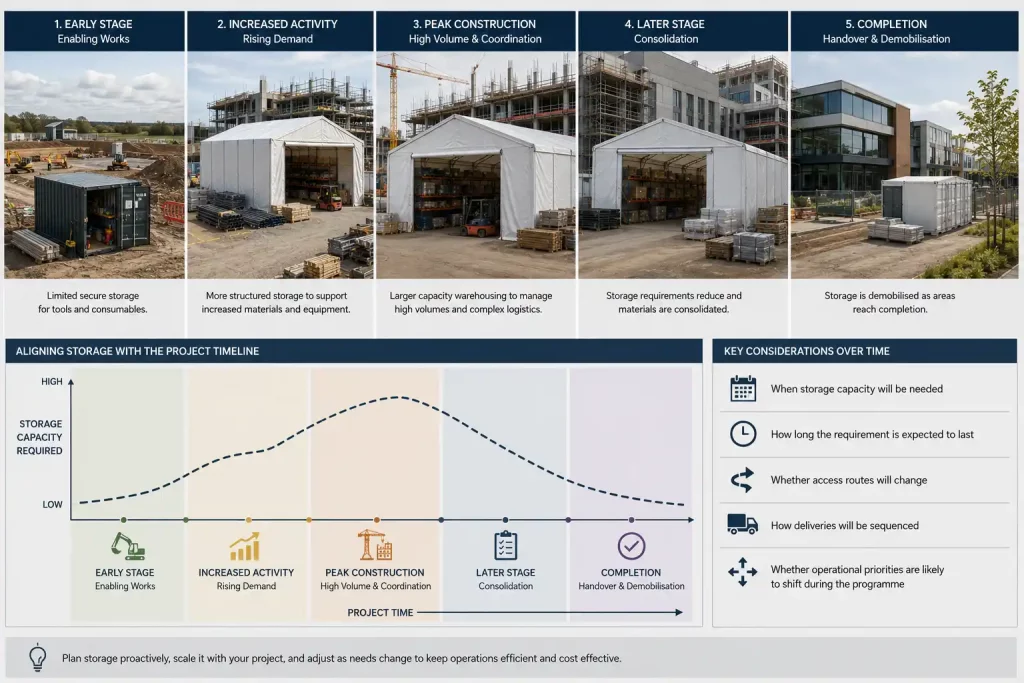
Storage planning is most effective when it forms part of the wider project programme rather than being introduced reactively after operational pressure has already developed.
On many projects, storage requirements evolve alongside construction phases. Early-stage enabling works may only require limited secure storage. As installation activity increases, the project may need larger or more structured warehousing arrangements to support incoming materials, equipment coordination and workflow management. Later phases may require storage consolidation or relocation as areas move toward completion.
Aligning temporary storage with project timelines helps reduce disruption during these transitions.
This usually means considering:
- when storage capacity will be needed
- how long the requirement is expected to last
- whether access routes will change
- how deliveries will be sequenced
- whether operational priorities are likely to shift during the programme
Projects that wait until storage pressure becomes critical may face fewer suitable positioning options, increased operational disruption or more difficult coordination with existing site activity.
At the same time, overcommitting to unnecessary storage infrastructure too early in the programme may create avoidable cost exposure or inefficient use of operational space. The most effective approach is usually phased and proportionate, with storage capability aligned to the operational realities of each project stage.
Temporary warehousing supports this approach because it allows project teams to introduce more structured storage infrastructure when operational conditions justify it, without requiring permanent warehouse development.
Building a more efficient project-site storage strategy
Temporary and offsite project environments require more than somewhere to place materials under cover. Storage decisions influence how efficiently deliveries move through the site, how safely operations are managed, how reliably teams can access inventory and how effectively the wider programme continues.
Well-organised temporary storage helps reduce avoidable delays, improve workflow coordination and support more consistent operational control across changing project conditions. It also gives project teams greater flexibility when permanent infrastructure is unavailable, impractical or unsuitable for the realities of the site.
The most effective arrangements are usually those planned around the operational needs of the project itself:
- how materials move
- how access is maintained
- how workflows are sequenced
- how the site is expected to evolve over time
That is why temporary warehousing should be viewed as part of project logistics infrastructure rather than simply additional storage space.
What should your next operational priority be?
If a project environment is already experiencing congestion, material handling inefficiencies or growing pressure on storage areas, it is usually worth reviewing whether the existing arrangement still supports the way the site is operating.
At this stage, the priority is not necessarily increasing storage capacity for its own sake. The more important question is whether the storage setup supports operational flow, access and logistics coordination across the project.
Where materials are difficult to access, deliveries are becoming harder to manage, or project phases are changing site requirements, a more structured temporary warehousing approach may help improve organisation and operational efficiency without committing to permanent infrastructure.
For projects operating within temporary compounds, remote environments or evolving site layouts, early planning can also help reduce disruption later in the programme by allowing storage infrastructure to align more closely with changing operational conditions.
How to move forward
When storage pressures begin affecting workflow, delivery coordination or operational efficiency, it is usually a sign that the project needs a more structured approach to site logistics rather than simply additional covered space.
LM Structures provides temporary storage solutions for project environments that support construction, infrastructure and operational sites where permanent warehousing is unavailable or impractical. This may include temporary warehouse structures, storage buildings and operational storage arrangements designed around access, movement, protection and evolving site requirements.
If your project is approaching a phase where material volumes, logistics pressure or operational complexity are increasing, reviewing storage requirements early can help reduce avoidable disruption and support more efficient project delivery.
Temporary Storage For Construction Sites FAQs
Yes. Temporary warehousing is often used where projects operate in remote, decentralised or temporary locations without permanent infrastructure. In these situations, temporary storage can help provide more organised, secure and operationally practical material management on-site.
Important considerations include access routes, delivery coordination, site layout, handling equipment, security requirements, environmental protection and how the site is expected to evolve during the programme. Storage planning should support wider operational flow rather than function separately from it.
Poor storage organisation can slow down workflow, increase handling time and create unnecessary operational friction. Materials that are difficult to locate or access may delay installation activity, reduce labour efficiency and complicate logistics coordination across the site.
Yes. Temporary warehousing is widely used on infrastructure and industrial projects where operational storage is needed without developing permanent warehouse facilities. It can help support material coordination, delivery sequencing and workflow management across changing project environments.
The best approach depends on the type of materials, how frequently they are accessed and how the site operates. In most cases, materials should be stored in organised, secure areas that support efficient retrieval while protecting stock from weather exposure, accidental damage or loss.