Where to Store Stock During Warehouse Refurbishment
Warehouse refurbishment or expansion can remove usable storage space before the project itself is complete, leaving facilities teams to protect stock, maintain access and keep operations moving around live works.
In Short
Storage during warehouse refurbishment should be planned as part of the project, not treated as a last-minute space problem. Temporary warehousing can provide safe, accessible stock capacity while construction, reconfiguration or upgrade works reduce the space available inside the main warehouse.
Refurbishment Storage Priorities at a Glance
A warehouse refurbishment project affects more than the areas under construction. Once storage zones, access routes, loading areas or internal workflows are altered, the wider operation can become harder to manage.
For Facilities Managers, the key priority is to maintain enough storage capacity without creating avoidable disruption for warehouse teams, contractors or transport activity. That means looking beyond simple square footage and considering how stock will be received, moved, accessed, protected and returned to normal operation as the project progresses.
A controlled storage strategy should consider whether stock can remain on site, whether part of the operation needs off-site support, and whether temporary warehousing and storage solutions could help maintain continuity during the works.
Table of Contents – In this Article
Why warehouse refurbishment projects create storage challenges
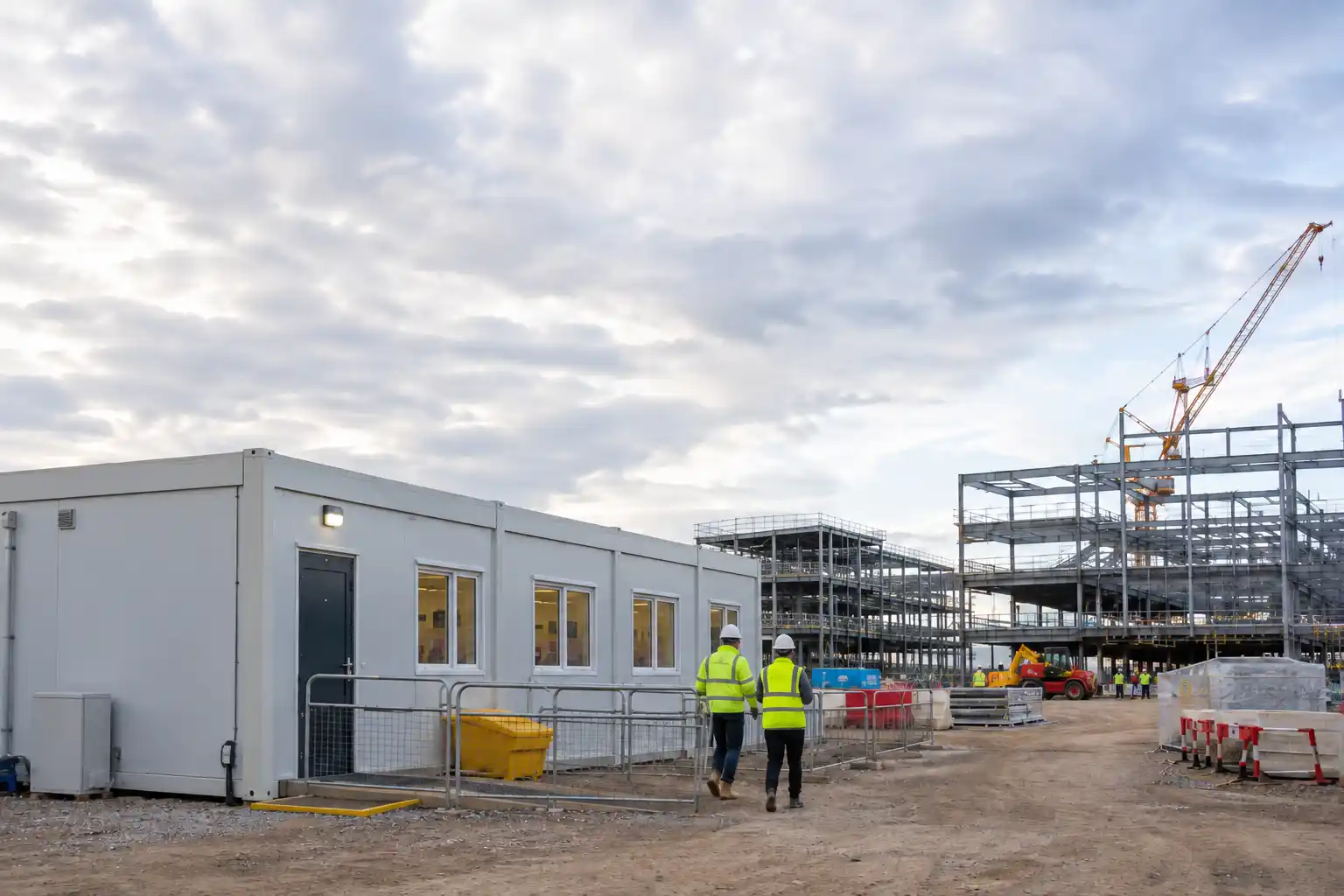
Warehouse refurbishment projects often take place while the business is still operating. That creates a different type of pressure from a new-build project or a closed-site redevelopment, because the site still needs to receive, store, pick, move or dispatch stock while parts of the warehouse are being changed.
The challenge usually begins when normal storage areas are taken out of use. Racking zones may be cleared. Floor areas may become unavailable. Loading or circulation routes may be altered. Stock that would normally sit in a defined, accessible location may need to be moved elsewhere, sometimes more than once during the project.
This can quickly affect the wider operation. A storage area that looks workable on a plan may be less practical if forklifts cannot move through it safely, if staff have to walk further to retrieve stock, or if contractors need access through the same route. The issue is not only where stock is placed, but whether that location still supports the way the warehouse needs to function.
For commercially accountable teams, this matters because inefficient storage planning can affect fulfilment speed, stock visibility, production support and customer responsiveness. Even where disruption is planned, it can still create avoidable operational cost if storage arrangements are not built into the project sequence early enough.
This is why storage continuity should be treated as part of the refurbishment strategy from the beginning. It needs to sit alongside construction phasing, access planning, contractor coordination and operational workflow, rather than being addressed once space has already been lost.
What happens when usable warehouse space is reduced during works?
When usable warehouse space is reduced, the immediate impact is usually felt in access and movement rather than storage volume alone. Stock may still physically fit somewhere on site, but if it becomes harder to reach, move or identify, the operation can slow down.
Typical issues include restricted aisles, temporary congestion, longer picking routes, displaced stock, reduced loading efficiency and increased pressure on remaining storage zones. In some cases, the warehouse team may need to handle the same stock multiple times as construction phases move through the building.
That can create operational inefficiency even when the business remains open. Staff may spend more time locating materials. Vehicles may need to wait longer for loading or unloading. Contractors may be delayed by stock that has been placed in areas needed for the works. These are not always major failures, but they can steadily affect productivity, programme control and day-to-day confidence.
Safety also becomes more important when normal layouts change. HSE guidance on warehousing and storage health and safety highlights the need to manage risks such as workplace transport, manual handling and movement around warehouse environments. During refurbishment, those risks can become more complex because staff, vehicles, stock and contractors may be operating within a changing layout.
Where vehicle movement is affected, the HSE’s guidance on workplace transport is also relevant context. It reinforces why temporary routes, loading areas and pedestrian access should be considered carefully when warehouse operations continue around site works.
For the article’s scenario, the practical point is straightforward: reduced warehouse space affects how the whole site operates. A storage continuity plan needs to protect capacity, but it also needs to protect access, movement and safe working patterns.
How can businesses keep operations running during refurbishment?
Keeping operations running during refurbishment depends on planning storage continuity before the works begin. The most effective approach is usually to map what storage capacity will be lost, when it will be unavailable, how stock will need to move, and what parts of the operation must remain accessible at each stage.
This should include a realistic view of operational priorities. Some stock may need to remain close to production, dispatch or picking teams. Other materials may be suitable for temporary relocation if they are slower-moving or less frequently accessed. High-turnover items, critical spares or customer-facing stock usually need more careful positioning because poor access can affect service levels quickly.
Businesses may also need to consider whether the existing warehouse can absorb the disruption internally. In some projects, a phased internal reconfiguration may be enough. In others, the remaining space becomes too constrained, or the workflow becomes too inefficient, making temporary storage a more practical part of the project plan.
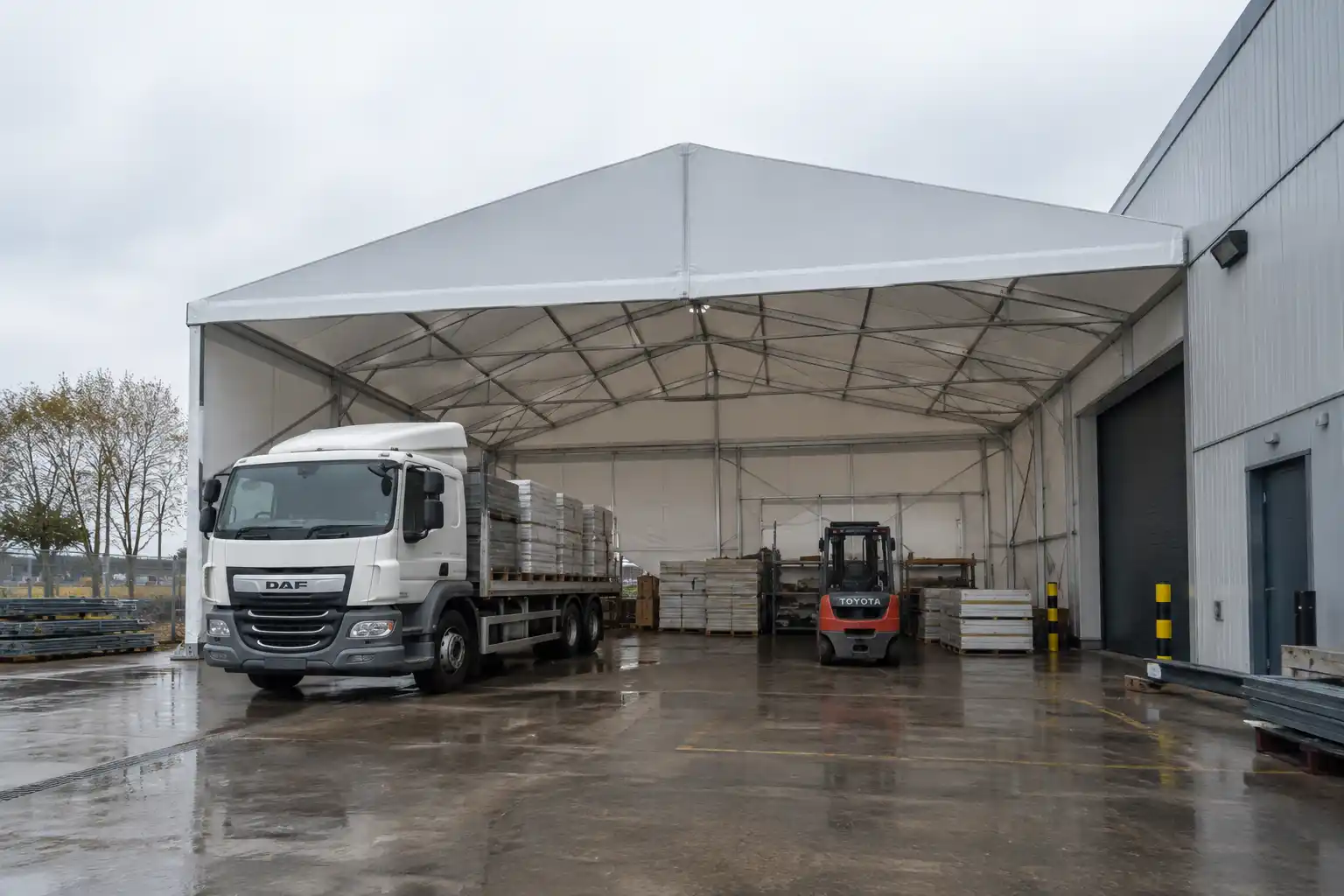
This is where temporary warehousing can support planned disruption. A temporary warehouse can provide additional storage capacity while refurbishment or expansion work is taking place, helping the business maintain stock organisation and operational control without relying solely on compressed internal space.
It should not be treated as a standalone structure decision. The value comes from how well the temporary storage arrangement supports the live operation: where it is positioned, how vehicles access it, how stock moves between areas, and how it aligns with the refurbishment programme.
Commercial clients also have responsibilities around suitable arrangements for construction projects under CDM 2015. HSE guidance on commercial client duties under CDM 2015 provides useful high-level context for why planning, coordination and appropriate project arrangements matter when works are being carried out. For LM Structures content, this should remain a light-touch planning reference, not a technical compliance claim.
What are the options for storing stock during warehouse projects?
The right storage approach depends on how much capacity is being lost, how the warehouse operates day to day, and whether the project affects access, workflow or vehicle movement as well as storage space itself.
In some refurbishment projects, businesses can absorb the disruption internally by reorganising existing storage zones or relocating lower-priority stock temporarily. This may work where the affected area is relatively small or where the works are being phased carefully over time.
However, internal reconfiguration can become difficult if the project removes critical circulation space or forces too much stock into a reduced operational footprint. Congestion, duplicated handling and restricted access can quickly reduce efficiency even if sufficient floor space technically remains available.
A more structured approach may involve:
- temporary on-site warehousing
- off-site storage facilities
- phased stock relocation
- hybrid arrangements combining multiple approaches
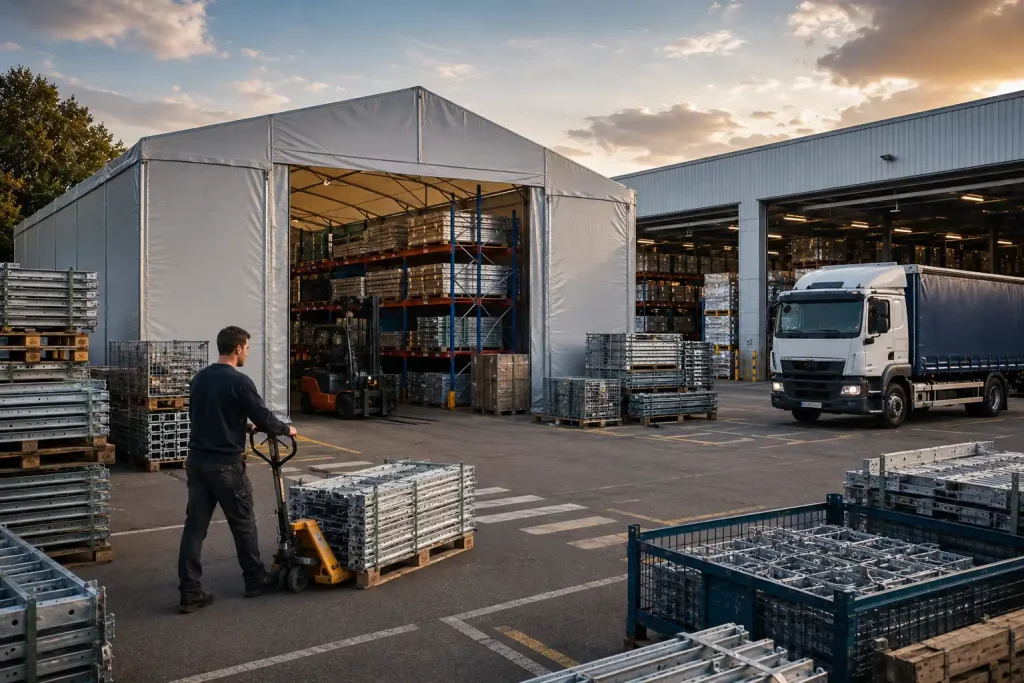
On-site temporary warehousing is often preferred where operational responsiveness matters. It can help maintain direct access to stock while separating operational activity from construction works. This is particularly relevant where the warehouse supports production schedules, time-sensitive fulfilment or high stock movement volumes.
Off-site storage may suit slower-moving inventory or stock that does not need regular operational access. However, it can introduce additional transport coordination, increased handling requirements and reduced day-to-day flexibility if operational demand changes during the project.
Some businesses also use phased relocation strategies, moving stock progressively as construction phases advance. This can reduce operational disruption, but only if the sequencing is coordinated carefully. Poorly timed relocation can create avoidable handling inefficiencies and conflict with contractor access requirements.
The article should guide the reader toward evaluating storage arrangements based on operational suitability rather than simply available space. The question is not only where stock can fit, but whether the arrangement supports safe and workable day-to-day operations throughout the refurbishment period.
Should temporary storage be on-site or off-site?
The decision between on-site and off-site storage usually comes down to operational control, accessibility and how closely stock availability affects the wider business.
On-site temporary warehousing often provides the strongest continuity benefits because stock remains close to the live operation. Warehouse teams can usually maintain faster access to inventory, retain existing workflows more easily and reduce additional transport movements between locations.
This approach may also support phased construction more effectively. As different areas of the warehouse move in and out of use, temporary on-site storage can help absorb operational pressure without forcing the business into repeated relocation exercises.
However, on-site storage is not always practical. Some refurbishment or expansion projects significantly reduce available circulation space or vehicle access routes, making additional structures harder to integrate safely. Site boundaries, loading areas, contractor compounds and access segregation requirements may all influence what is achievable.
This is where temporary storage for constrained sites becomes a related consideration. In some projects, the limitation is not storage volume alone, but the operational complexity of fitting construction and warehousing activity into the same footprint.
Off-site storage can reduce pressure on the live site where space is extremely limited or where large volumes of stock do not require immediate access. It may also suit projects involving major redevelopment or infrastructure upgrades where operational segregation becomes difficult to maintain safely.
The trade-off is usually operational responsiveness. Once stock leaves the main site, retrieval times, transport coordination and stock movement planning become more important. For businesses with fast-moving inventory or tightly controlled fulfilment schedules, that loss of immediacy may create operational friction if not managed carefully.
The most suitable approach is often determined by:
- stock movement frequency
- operational criticality of inventory
- available site space
- vehicle circulation requirements
- construction phasing
- loading and unloading constraints
- how much operational flexibility the business can realistically absorb during the works
How temporary warehousing supports live operational environments
Temporary warehousing can support refurbishment projects by creating a defined operational buffer between live storage activity and construction works.
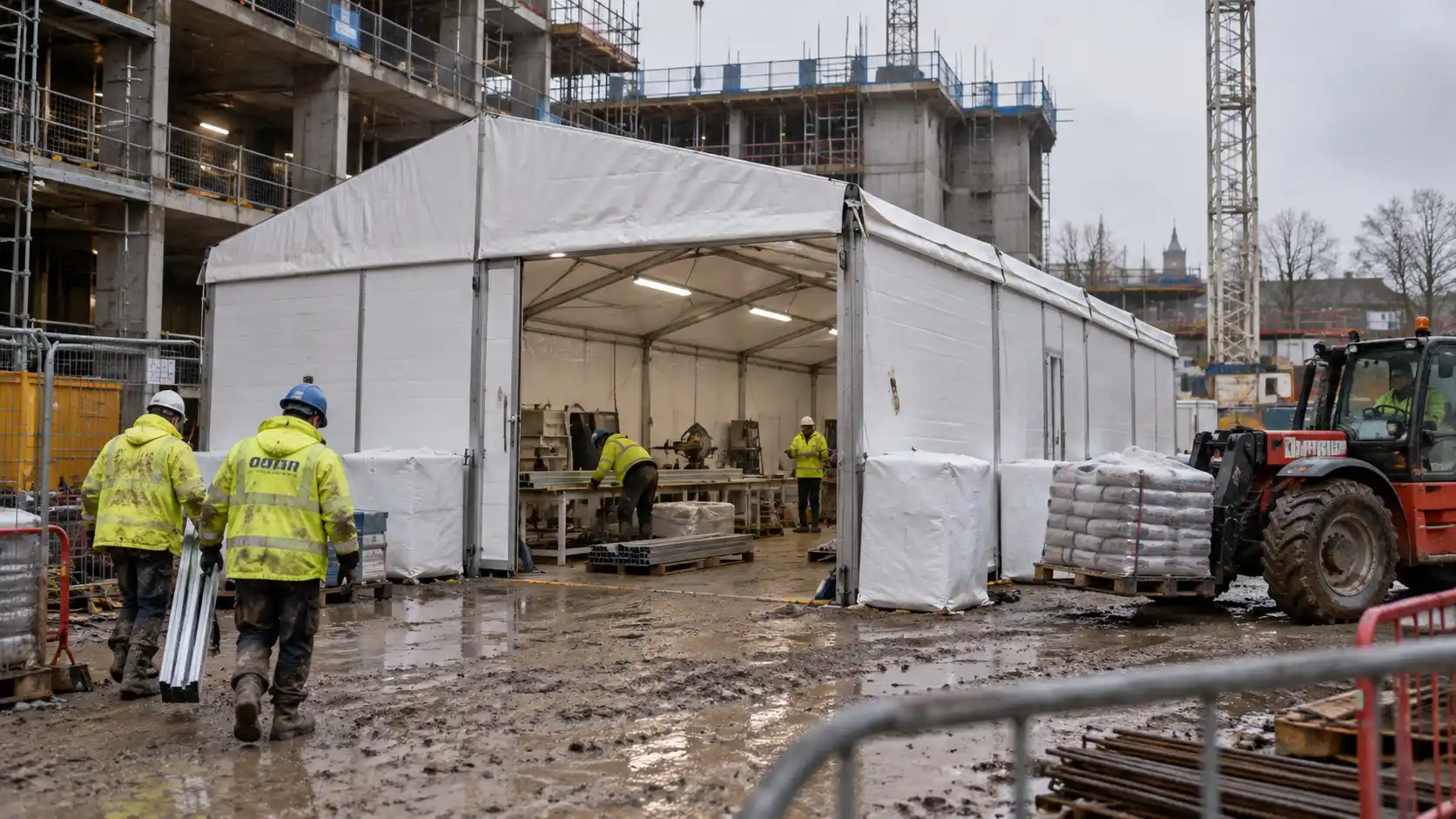
In practical terms, this allows businesses to continue operating while parts of the existing warehouse are unavailable, rather than compressing the entire operation into a reduced footprint. That separation can improve workflow control, maintain safer movement routes and reduce conflict between operational teams and contractors.
The operational benefit is not only additional storage capacity. It is the ability to preserve a more stable working environment while the site changes around it.
For example, temporary warehousing may help businesses:
- maintain accessible stock locations
- preserve clearer loading and circulation routes
- reduce repeated stock handling
- separate operational and construction traffic
- support phased relocation strategies
- maintain continuity during infrastructure upgrades
This becomes especially important in warehouses with high daily movement volumes. Once picking routes, dispatch processes or loading activity become congested, delays can affect much more than storage efficiency alone. Fulfilment performance, production support and customer responsiveness can all become harder to maintain.
A well-planned temporary storage arrangement can also support construction sequencing. Instead of delaying works until storage areas become available, businesses may be able to release sections of the warehouse progressively while continuing to operate elsewhere on site.
The article should reinforce that temporary warehousing is most effective when integrated into the wider operational plan early enough. Late-stage decisions often lead to reactive layouts, inefficient stock movement and avoidable disruption.
This is also why operational suitability matters as much as structural suitability. Businesses assessing temporary solutions should consider circulation, loading access, workflow integration and stock handling practicality, not only floor area.
The related article on what makes a temporary warehouse operationally suitable supports this broader evaluation process.
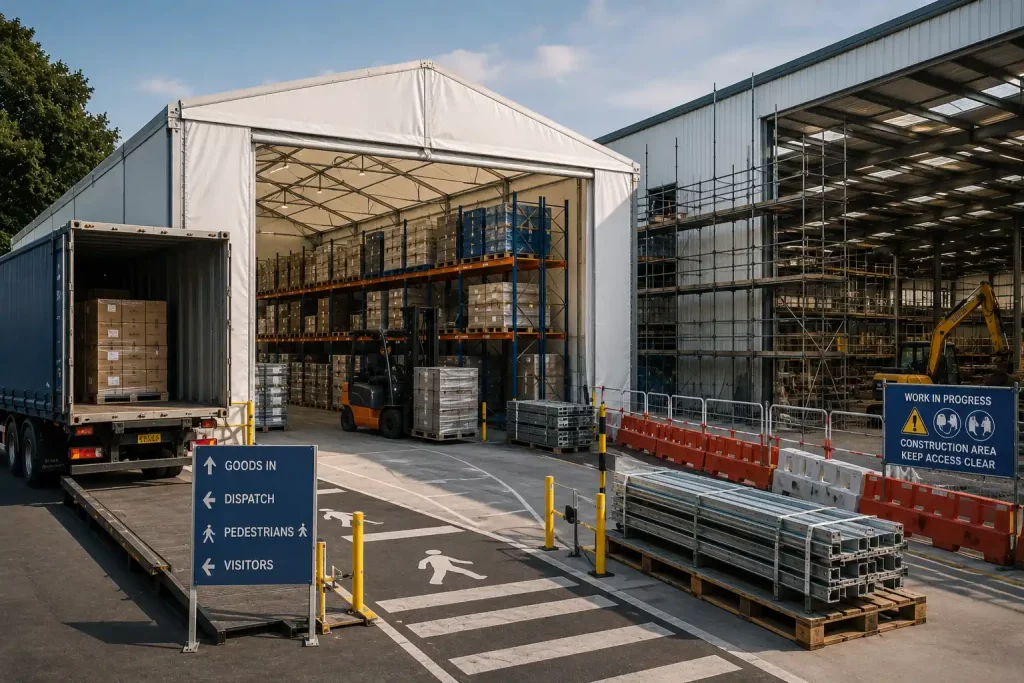
What access, workflow, and logistics factors need planning?
Access planning is one of the most important parts of maintaining warehouse continuity during refurbishment works because operational disruption is often caused by movement constraints rather than storage volume alone.
As construction activity changes the layout of the site, normal workflows may no longer function efficiently. Forklift routes may be restricted. Loading areas may need temporary relocation. Pedestrian movement may need separating from operational traffic and contractor access. Stock handling patterns that previously worked well may become inefficient once circulation routes narrow or storage zones move.
These issues should be assessed early because they affect both operational continuity and site safety.
HSE guidance on safe loading and unloading practices reinforces the importance of managing vehicle movement and loading activity safely within warehouse environments. During refurbishment, these considerations become more complex because the operational environment may be changing in phases rather than remaining stable.
Key planning considerations may include:
- vehicle access routes
- loading and unloading continuity
- forklift circulation
- stock transfer sequencing
- temporary picking arrangements
- contractor segregation
- pedestrian movement
- emergency access requirements
- temporary exclusion zones
Workflow planning should also reflect how the warehouse actually operates day to day. A storage arrangement that works for static inventory may be unsuitable for fast-moving operational stock. Similarly, relocating stock away from dispatch or production areas may create repeated handling inefficiencies that affect throughput throughout the project.
This is where structured continuity planning becomes more valuable than reactive overflow storage decisions. The goal is not simply to fit stock somewhere temporarily. It is to maintain a workable operational environment while the site remains active.
Businesses managing broader continuity concerns during live disruption may also evaluate temporary warehousing for business continuity as part of a wider operational resilience strategy.
How should storage planning align with construction timelines?
Storage continuity planning should begin alongside the refurbishment or expansion programme itself, not after operational space has already been removed.
In many projects, disruption develops progressively. One section of the warehouse may close first, followed by additional phases later. Access routes may change temporarily before stabilising again. Loading arrangements may need short-term adjustment while infrastructure work takes place.
Because of this, storage planning needs to follow the same sequencing logic as the construction programme.
A phased approach often allows businesses to maintain more operational control. Instead of relocating all stock at once, inventory can move in stages as different parts of the warehouse become unavailable. Temporary warehousing may then support whichever phase is under the greatest operational pressure at a given point in the programme.
This type of sequencing can reduce unnecessary handling and help avoid situations where stock is moved repeatedly because later project stages were not considered early enough. It can also improve coordination between operational teams and contractors. Where storage relocation, access changes and construction activity are aligned properly, the project is more likely to progress without repeated operational disruption or avoidable delays.
Warehouse operations, stock movement and construction sequencing need to support one another rather than competing for the same operational space.
What risks come from poor coordination during warehouse projects?
Poor coordination during warehouse refurbishment projects can create operational disruption even where the construction work itself is progressing correctly.
One of the most common problems is conflict between operational requirements and construction activity. Contractors may require access to areas still being used for stock storage. Warehouse teams may lose circulation routes unexpectedly. Temporary stock locations may become difficult to access as project phases change.
These issues can gradually affect the wider operation:
- picking efficiency may decline
- loading activity may slow down
- congestion may increase
- stock handling may become less controlled
- contractors may experience delays
- operational teams may need to create repeated workarounds
In some projects, poor sequencing also leads to unnecessary stock movement. Inventory may be relocated multiple times because storage planning was not aligned with the construction timeline early enough. That increases handling pressure and can create avoidable inefficiency throughout the refurbishment period.
Safety risks can also increase where operational and contractor activities overlap without clear planning. Temporary traffic routes, altered layouts and changing access points all require careful coordination to avoid confusion and operational conflict.
This is why refurbishment continuity should not be treated as a secondary logistics issue. The success of the wider project depends partly on whether the operation can continue functioning in a controlled and predictable way while the works are underway.
Creating a more controlled refurbishment and storage strategy
Warehouse refurbishment projects are often judged by the quality of the finished building, but operational continuity during the works is equally important.
Where storage planning is addressed early, businesses are usually better placed to maintain workflow control, reduce disruption and coordinate construction activity more effectively. Temporary warehousing can support that process by helping operations continue while parts of the existing facility are unavailable or changing.
The key is to approach storage continuity as part of the wider project strategy rather than a reactive response once operational pressure begins to build.
A more controlled approach typically includes:
- early evaluation of storage impact
- phased operational planning
- realistic workflow assessment
- coordination between operational teams and contractors
- clear consideration of access and movement requirements
- structured temporary storage arrangements where appropriate
This supports a more stable operational environment throughout the refurbishment process while helping reduce avoidable disruption to both the business and the construction programme.
What matters most when planning storage continuity?
Refurbishment and expansion projects rarely affect storage space alone. They affect how the entire warehouse functions day to day, including movement routes, loading activity, workflow sequencing and operational access.
Businesses that maintain better control during these projects usually treat storage continuity as part of the operational planning process from the beginning. That means assessing how construction phases will affect the live environment, identifying where pressure points are likely to develop, and implementing temporary storage arrangements before disruption becomes difficult to manage.
Where operational capacity is likely to be constrained during the works, temporary warehousing can provide a more controlled way to maintain continuity while supporting both construction progress and day-to-day operations.
Planning temporary warehouse storage during refurbishment projects
At the point where refurbishment plans begin affecting operational storage capacity, it is usually worth evaluating whether temporary warehousing should form part of the wider continuity strategy.
LM Structures supports businesses requiring temporary warehouse storage during refurbishment projects where operational continuity, phased construction and live-site coordination all need to be considered together. Early planning can help reduce avoidable disruption, support safer workflow management and provide additional operational flexibility while the project progresses.
The most effective approach will depend on the site layout, project sequencing, operational requirements and the level of continuity the business needs to maintain throughout the works.
To contact our team, call 0333 358 4989 or email enquiries@lmstructures.co.uk
Storage During Warehouse Refurbishment FAQs
On-site storage often provides stronger operational responsiveness because stock remains close to the live operation. Off-site storage may suit slower-moving inventory or projects with severe space constraints, although it can introduce additional transport and handling requirements.
Important considerations include vehicle circulation, loading access, stock movement patterns, workflow efficiency, contractor segregation and construction sequencing. Storage planning also needs to reflect how operationally critical different types of stock are during the project.
Temporary warehousing is commonly used during refurbishment, extension and redevelopment projects where operational storage capacity is reduced temporarily. It can help businesses maintain accessible storage while supporting phased construction activity around the live operation.
Yes, although continuity depends heavily on planning and coordination. Businesses often continue operating during refurbishment by phasing the works carefully, maintaining access routes and using temporary storage arrangements to support workflow and stock handling throughout the project.
Stock may be stored within temporary on-site warehousing, off-site storage facilities or phased internal arrangements depending on the operational pressures affecting the project.
The right option depends on how frequently stock needs to be accessed, how much space is being lost and whether the site can safely support additional operational activity during the works.